

Walk into a sports bar in London, Dublin, Munich, or Mexico City on a Sunday evening in NFL season and the odds are high that you will find at least one black-and-gold jersey. Steeler Nation is not a Pittsburgh phenomenon. It is a global one.
Steelers.com
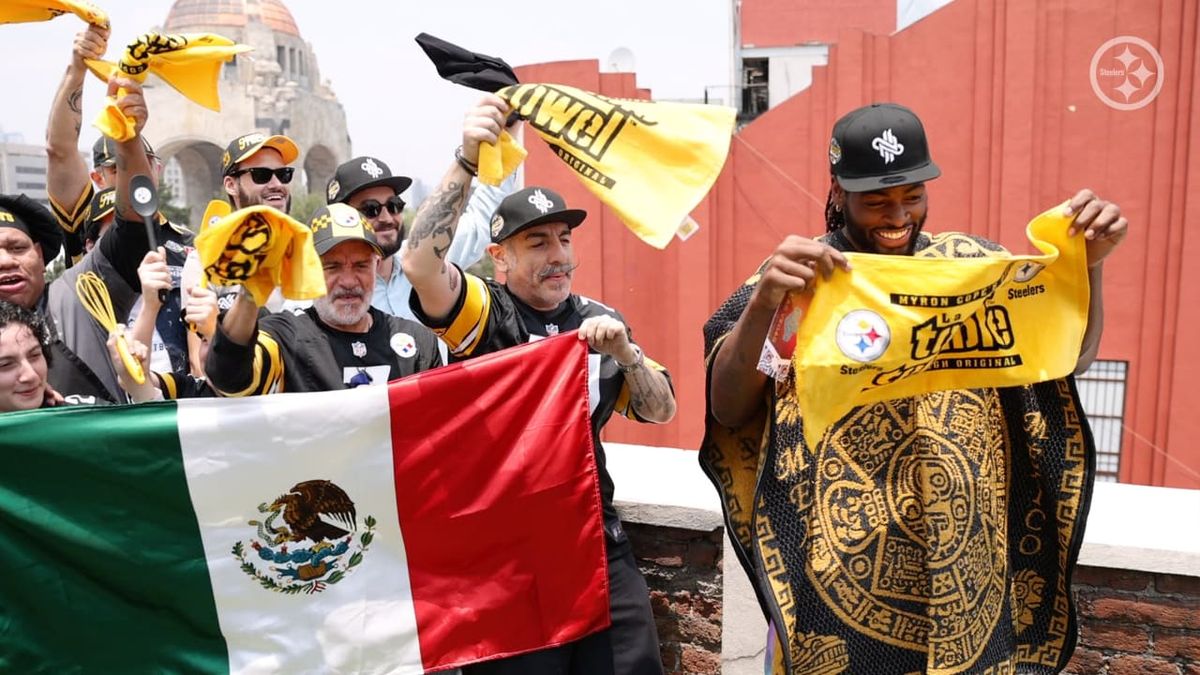
Running back Najee Harris traveled to Mexico, where the Steelers have a huge fan base, to announce the team's fourth-round selection in the 2022 NFL Draft.
This piece looks at how a franchise from a mid-sized American steel town built the international fanbase it carries today. The story runs through family ownership, a 1970s dynasty that defined televised NFL coverage, and a steady modern expansion into the UK, Mexico, and Germany.
The Rooney Family Foundation That Made the Long Build Possible
The Steelers have been owned by the Rooney family since Art Rooney Sr. founded the franchise in 1933. The team was called the Pittsburgh Pirates for its first seven seasons before becoming the Steelers in 1940. Continuous family ownership across more than nine decades is a rarity in American professional sport.
That ownership stability shaped how the franchise built its fanbase. The Rooneys resisted the splashy relocations and ownership flips that reshuffled other NFL franchises through the 1960s and 1970s. The team stayed in Pittsburgh, kept its identity, and gave multiple generations of fans a stable team to grow up with.
Family ownership also meant the Steelers were slower than some franchises to lean into the full commercial reshape of the modern NFL. The Terrible Towel remains a fan-created and fan-owned tradition that pre-dates the licensing-heavy era. The Rooney Rule, named after Dan Rooney, became the league's standard framework for diverse coaching interviews. The Rooneys shaped the broader league in ways that went well beyond the franchise.
The 1970s Dynasty That Put Pittsburgh on the Global Map
The 1970s Steelers won four Super Bowls in six seasons, taking Super Bowl IX, X, XIII, and XIV. No franchise in NFL history had won that many titles in that compressed a timeframe at the point they completed the run.
The dynasty teams were built around the Steel Curtain defense, with Joe Greene, L.C. Greenwood, Dwight White, and Ernie Holmes anchoring one of the most feared defensive front lines in professional football history. On offense, Terry Bradshaw at quarterback and the Franco Harris and Lynn Swann skill-position group gave the team the ability to win in the air and on the ground.
The Pro Football Hall of Fame has enshrined more Steelers from that era than any other franchise's single-decade run. The historical record of the 1970s dynasty is why the Steelers brand carried further internationally than most NFL teams of the era. Televised Super Bowl coverage reached further than regular-season NFL coverage did at the time, and the Steelers were the team people around the world saw winning.
The NFL International Series Appearances That Took the Brand Overseas
The modern phase of Steelers international growth tracks closely with the NFL International Series. The team played Minnesota at Wembley Stadium in 2013 in front of a sold-out London crowd, and the broadcast reach of that game produced a visible step-up in UK fan interest.
Later London and Munich appearances added further international visibility. The NFL's expansion of its International Series schedule through the 2020s gave UK, German, and Mexican fans more chances to see the team live rather than only through late-night broadcasts. Each international appearance tends to produce a measurable bump in merchandise sales and club memberships in the host country.
The pattern is now self-reinforcing. International fans who grew up watching the team in the 1990s and 2000s are now bringing their children to London Series games. The generational handoff of the fan identity is happening across borders rather than only in Pittsburgh.
Steeler Nation Chapters and the Diaspora Culture
Steeler Nation is organized loosely but visibly through fan clubs, bars, and watch-party chapters around the world. The team's official international supporters' network lists hundreds of Steelers Bars across the US and dozens more across Europe, Latin America, and Asia Pacific.
The UK alone carries active Steelers supporter groups in London, Manchester, Dublin, and Edinburgh, with regular watch parties through the NFL season. The German chapters cluster around Munich, Berlin, and Frankfurt. Mexican supporter groups in Mexico City, Guadalajara, and Monterrey are among the oldest NFL fan organizations in Latin America.
Karl Roser / Pittsburgh Steelers
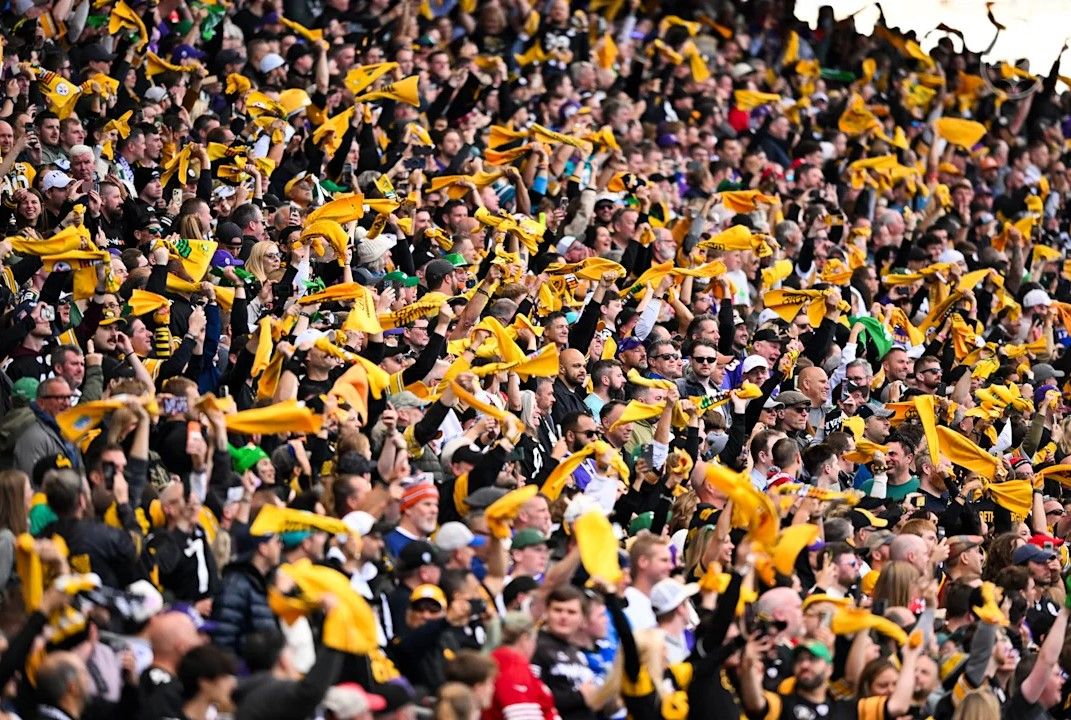
Steelers fans cheer during a regular season game against the Minnesota Vikings in Dublin, Ireland in 2025.
The common thread is that Steeler Nation chapters tend to run on fan energy rather than franchise-led coordination. Local fans organize the watch parties, print the chapter shirts, and keep the social channels going. The franchise's role is to acknowledge and amplify the existing culture rather than to manufacture it from scratch.
What Following the Steelers from Abroad Looks Like Today
The modern international Steelers fan has far more access to live games than their counterpart from a decade earlier. NFL Game Pass International, Sky Sports NFL coverage in the UK, DAZN in Germany, and ESPN Deportes in Latin America all carry regular Steelers coverage through the season.
UK fans in particular have built a weekly rhythm around late-night Sunday and Monday NFL kickoffs. The pub watch-party culture that goes with American football in Britain treats the game as both a sporting event and a social evening. NFL betting markets available at JeffBet and other UK operators sit alongside the broadcast coverage as part of the matchday experience for the UK-based Steelers community. The combination of live broadcast, pub watch-party, and prop markets gives the UK Steelers fan a different relationship to the team than their Pittsburgh-based counterpart.
Ongoing Steelers trade coverage from the Pittsburgh press and the international fan sites keeps the diaspora informed in near real-time. The gap between following the team from Pittsburgh and following from abroad has narrowed to effectively nothing. The international Steeler Nation is not a secondary audience. It is now part of how the franchise understands its own reach.