


A player at a digital blackjack table makes an unexpected decision. Someone in the chat questions the call. A laughing emoji pops up in the chat. The dealer doesn’t react and just deals the next round. Still, the table feels different now. You’re no longer alone with a screen, you’re sharing a room with strangers.

Instagram: @snfonnbc
That’s the odd thing about watching other players. Their jokes catch your eye, their bets make you check your own, and a stranger’s win can sting as if it were yours. Live casino and online poker both have this, but poker players affect your game far more directly than roulette players do.
The Feeling of Sharing a Table
A traditional slot is largely a private experience. In a standard online game, you’re just dealing with software, and the result comes back without anyone else being involved. Shared tables change that. At a shared table you can see who else is playing: their usernames, their bets, and sometimes their chat messages.
Say you’re comparing the best live online casino options. You’ll check the dealer, the video quality and the game list, sure. But you’ll also notice who’s sitting at the table. Packed tables feel lively, and a half-empty one can feel a bit dead, though nothing about the rules is different.
Why Other People's Decisions Attract Attention
Picture five players stacking chips on the same number. It looks like they know something, and that pull has a name: social proof. When we’re unsure, we borrow confidence from the people around us.
At a table, though, the borrowed confidence is empty. Those five could be playing a birthday, a superstition or a coin flip in their heads. The wheel can’t see their chips, so the next spin is no more likely to land there.
Poker Makes Observation Part of the Game
Poker is different from most casino games: your opponents are other people, not a game the house runs. What you do next can depend on how they played the hands before.
So watching the table isn’t just a distraction. Bet sizes, timing and earlier moves all give you clues, though none of them will ever tell you for sure what someone is holding. On online poker sites, you can’t read a face, so you end up reading the digital habits instead: how much they bet and in what order they act.
The Difference Between Watching and Competing
At a live roulette table, nobody else’s bet can touch the result. The ball lands where it lands. Poker works the other way round: each move changes the pot and shapes what your opponents do next. So poker feels like a contest, and roulette feels more like watching the same spin together.
Feature | Live roulette | Online poker |
Role of other players | Share the same round | Compete against one another |
Effect of another player's bet | Does not change the wheel's outcome | Can influence decisions and pot size |
Social interaction | Often optional chat | Interaction through betting and sometimes chat |
Main uncertainty | Where the ball will land | Opponents' cards, decisions and future community cards |
So the same busy-looking table can mean very different things. In roulette, other players change the atmosphere but never the result. In poker, they are the game
When a Chat Window Changes the Atmosphere
A single chat message can make a digital table feel oddly human. Someone cheers a winner, grumbles about a bad round or asks the dealer a question, and suddenly it feels like you’re all in the same room.
But the chat isn’t a fair picture of who’s playing. The loudest people get noticed, and everyone else stays silent. A few excited messages can make a perfectly ordinary run of results look like a big moment.
How Interfaces Make a Crowd Feel Larger
Many online platforms try to make a game feel like a busy room. You get avatars, player counters, animated reactions and chat messages scrolling past, and even a simple game starts to look like an event.
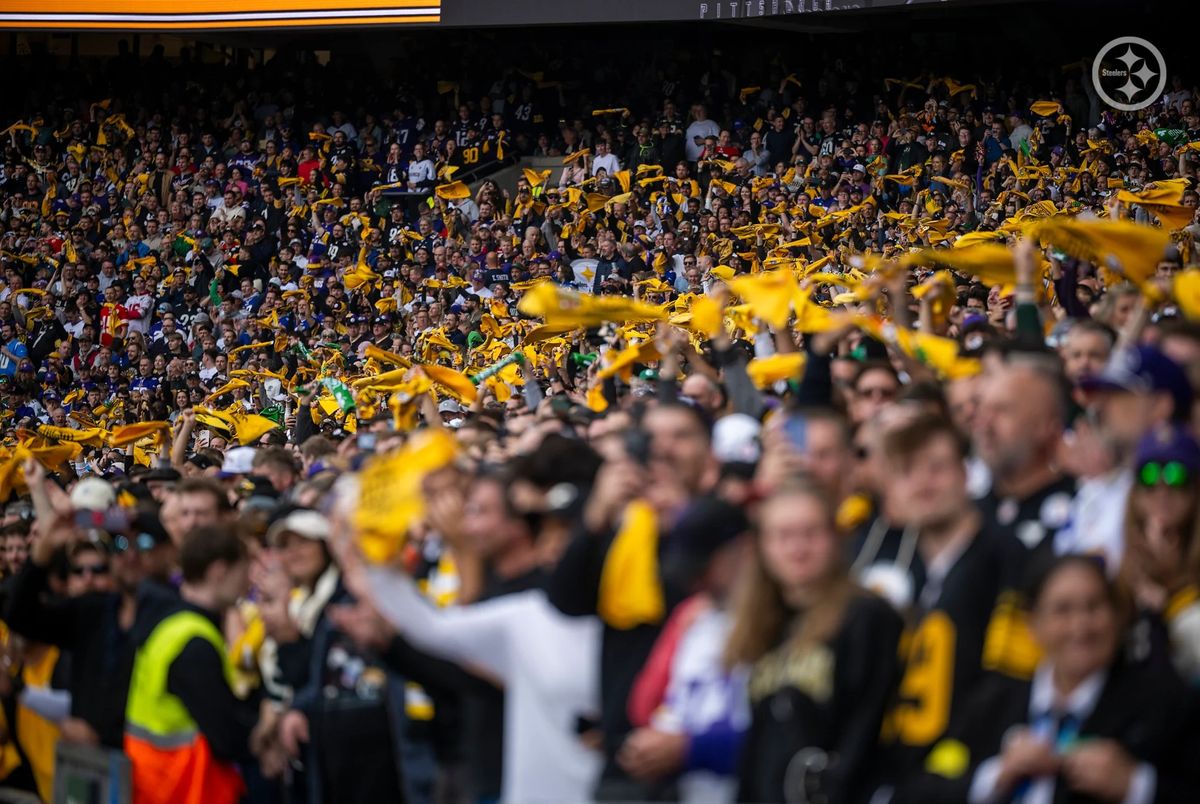
Shauna Clinton / Pittsburgh Steelers
Steelers fans waving their Terrible Towels at Croke Park in Dublin, Ireland during the Steelers' 24-21 win over the Minnesota Vikings on September 28, 2025.
Some of that is real activity. Some of it is just there for atmosphere. A crowded screen doesn’t tell you the game is popular, independently audited or run responsibly.
When Social Pressure Becomes a Distraction
When you're playing alone, it's easier to take your time. At a poker table, though, the ticking timer and other players waiting for your move can make you rush. A few comments in the chat might add even more pressure. A few warning signs are worth recognising:
Copying another participant's wager without understanding the game.
Treating a visible winning streak as evidence of an upcoming result.
Increasing stakes after seeing someone else's payout.
Making hurried decisions because other players appear impatient.
Assuming an active chat means the platform is trustworthy.
These behaviours aren't inevitable. They illustrate how social information can influence decisions even when it offers little useful evidence about the outcome.
Conclusion
Part of the fun of an online table is the company. Whether those other players matter, though, depends on the game. Take roulette. Ten people can pile onto red and the wheel won’t notice. It spins once for everybody, and nobody’s chips touch the outcome. Poker is a different animal. One big raise and the whole table has to stop and think again.
Then there’s the chat. Someone hits a huge win, the emoji start flying, and it’s easy to get swept up. Don’t. Their luck is theirs. Yours hasn’t changed at all. And a friendly, active table doesn't mean the website can be trusted. That's especially worth remembering in Australia, where real-money online poker and casino services are subject to strict legal restrictions.
SteelerNation in your inbox
The biggest Steelers stories, free, straight to your email.