




Pittsburgh and Baltimore will not meet until Week 15 of the 2026 NFL season, then face each other again in Week 18. The first fixture is scheduled for December 20 at Acrisure Stadium; the return takes place in Baltimore. Two divisional encounters arrive when opportunities to repair a poor result are running out.
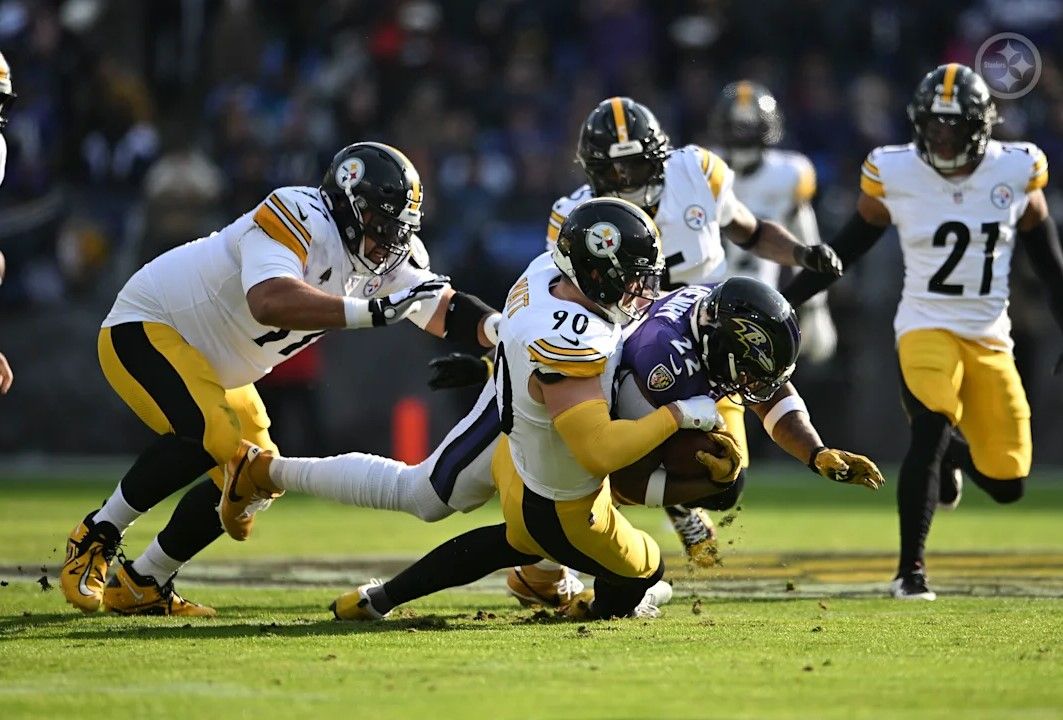
Alysa Rubin / Pittsburgh Steelers
TJ Watt takes down Derrick Henry during a regular season game for the Steelers against the Baltimore Ravens in 2025.
Both meetings arrive late enough for the first result to shape preparations for the second. Pittsburgh and Baltimore will have little time to adjust between them. Pittsburgh’s November 15 loss at Cincinnati also provides a recent reason to examine its defence closely, rather than assume every divisional game follows the same low-scoring pattern.
The calendar creates unequal preparation
Pittsburgh is scheduled to play at Jacksonville on Monday, December 14 before hosting Baltimore the following Sunday. The Ravens have a Sunday home game against Tampa Bay on December 13. The difference gives Pittsburgh one fewer calendar day between fixtures, along with a journey home.
An extra day is not a prediction of the result. Its value depends on injuries, snaps played and how much practice a team needs to install its plan. Track the workload of the units that must perform the most demanding assignments, rather than treating rest as an automatic advantage.
Cincinnati’s 38 points complicate the old script
The Steelers’ official schedule records an 18–38 defeat at Cincinnati on November 15. Pittsburgh’s earlier divisional results included a 30–27 win over the Bengals, a 24–27 loss at Cleveland and a 27–6 home win over the Browns. The range is more informative than the assumption that AFC North football always produces the same kind of score.
The Baltimore preview should therefore examine how possessions develop. An opponent scoring after a short field presents a different problem from one repeatedly driving the length of the field. Separate turnovers, explosive gains and sustained drives before diagnosing the defence.
Watch the first decision after the snap
Against pressure, does the quarterback have an immediate outlet, or does the play require time the protection cannot supply?
After a run fake, does a defender preserve his assignment, or open a passing lane by following the wrong action?
On third down, does the receiver reach the required yardage before turning for the ball?
Pittsburgh conceding after a turnover is a different defensive problem from conceding after an 80-yard drive. Starting field position helps separate the two. A live assessment in the RolsBet mobile app becomes clearer when the score is read with down, distance and the length of the next field to defend. The points are identical on the scoreboard, but the possessions behind them are not.
Short fields and long drives use the clock differently
A team protecting a lead may reduce the exposure of its passing game. Its opponent can respond by committing more defenders near the line, making a later play-action attempt more consequential. The effect of a turnover therefore extends beyond the possession on which it occurs.
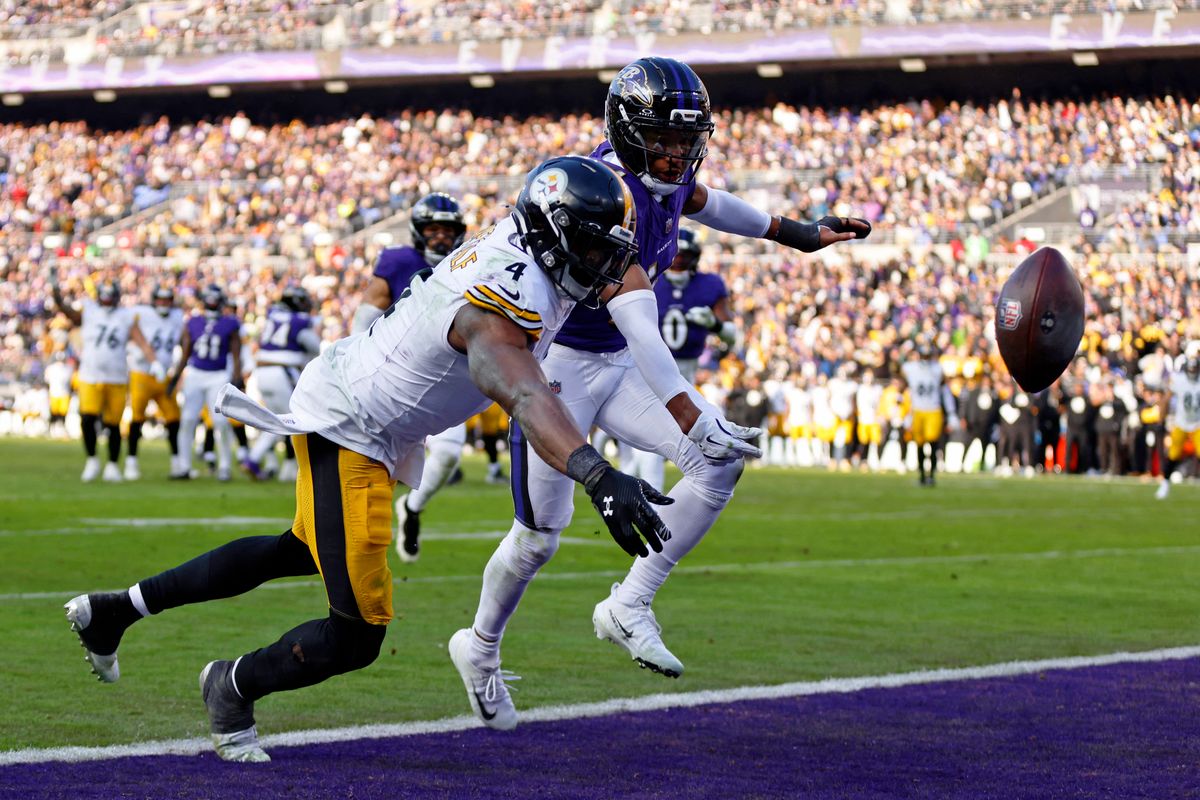
Peter Casey / Imagn Images
Dec 7, 2025; Baltimore, Maryland, USA; Baltimore Ravens cornerback Marlon Humphrey (44) breaks up a pass intended for Pittsburgh Steelers wide receiver DK Metcalf (4) during the first half at M&T Bank Stadium.
A short drive after an interception can put points on the board with little time used. A long drive can add the same points while removing several minutes. Under RolsBet sports betting, those sequences can move a match-winner assessment and a total-points assessment in different directions. The time left for further possessions explains why.
The rematch needs a new report
The Week 18 game at M&T Bank Stadium has its own preparation cycle and availability questions. Do not reuse the December 20 lineup without checking it. An injury, a replacement’s performance or an altered protection call can make the same formation function differently.
The first meeting supplies evidence about specific interactions, not a permanent solution. Mark the plays on which the opponent forced a change, then check whether the second game uses the same personnel. That is where a familiar rivalry produces a genuinely new tactical question.
SteelerNation in your inbox
The biggest Steelers stories, free, straight to your email.