

The NFL is no longer just about what happens between the lines on Sunday. Over the past few years, crypto and blockchain technology have quietly worked their way into how teams operate, how sponsors spend money, and how fans interact with the sport. For Pittsburgh Steelers fans, this shift is happening at a time when the franchise is going through its biggest changes in two decades.
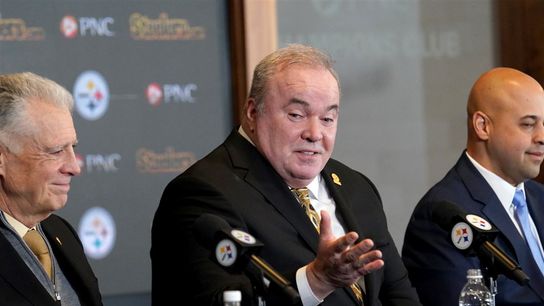
Matt Freed / Pittsburgh Post-Gazette
Steelers' new head coach, Mike McCarthy, with Team President Art Rooney II and General Manager Omar Khan at McCarthy's introductory press conference in Pittsburgh, PA.
With Pittsburgh hosting the 2026 NFL Draft in April, a new coaching staff led by Mike McCarthy, and the league pushing further into digital innovation, the intersection of football and blockchain has never been more relevant. Crypto platforms like those where fans can play casino with crypto have noted a sharp increase in NFL related engagement over the past two seasons, reflecting how deeply digital currency culture has merged with the sports world. But the story here is bigger than any single platform. It is about how the entire fan experience is being rebuilt from the ground up.
The NFL's Growing Relationship With Blockchain
The NFL was once cautious about crypto. In September 2021, the league temporarily banned teams from making deals with crypto and NFT companies. But by March 2022, the policy loosened. Teams were allowed to pursue blockchain related sponsorships, though they still could not promote specific cryptocurrencies or tokens directly.
By 2023, more than 30% of NFL teams had some form of blockchain related deal in place. Katherine Phillips, an experienced educator and career advisor who studies the intersection of technology and sports, projected that by 2025, over half of NFL teams would have a blockchain-based fan engagement platform. That projection has largely held true as we enter 2026.
What Fan Tokens Actually Are
One of the most visible ways blockchain is touching the NFL is through fan tokens. These are digital assets tied to a specific team that let holders vote in polls, unlock exclusive content, earn rewards, and interact with their club in ways that were not possible before.
Fan tokens are not traditional cryptocurrencies. Their value is tied to engagement, demand, and the experiences that come with owning them. In European soccer, clubs like Paris Saint Germain and Juventus have been using fan tokens since 2019. Fans vote on things like kit designs, walkout songs, and exclusive merchandise drops. The NFL has been slower to adopt this model, but the momentum is building.
The Miami Dolphins were among the first NFL teams to accept crypto payments for tickets and merchandise. Other teams have explored digital collectibles, blockchain based tickets, and rewards programs that use token mechanics. For now, the NFL still prevents teams from launching their own tradable fan tokens in the way European clubs do. But industry insiders expect that restriction to ease in the coming years as the technology matures and regulations become clearer.
Digital Collectibles and NFL NFTs
The NFL partnered with Dapper Labs to create exclusive digital video highlight NFTs. Fans can purchase and collect Moments, which are short video clips of the best plays from each season. These are stored on the blockchain, meaning each one has a verified owner and can be traded on a dedicated marketplace.
Joe Ruggiero, Senior Vice President of Consumer Products at the NFL, described the partnership as a way to let fans own the game in a new way. The idea is simple: instead of just watching highlights, fans can own them. It is a digital version of collecting trading cards, but with video and built in proof of authenticity.
For Steelers fans, this means there will eventually be a market for verified digital collectibles of iconic Pittsburgh plays. Think T.J. Watt sacking a quarterback or a Aaron Rodgers touchdown pass. As the technology develops and fan adoption grows, digital collectibles could become as common as traditional sports memorabilia.
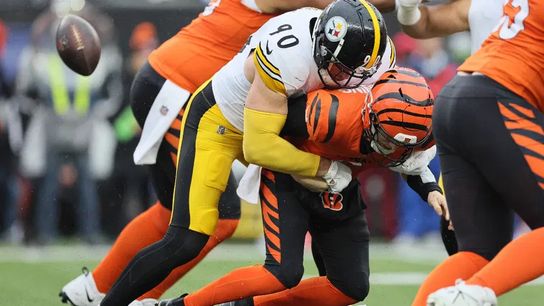
Lucy Schaly / Post-Gazette
Steelers star edge rusher TJ Watt sacks 49ers' Brock Purdy.
How This Connects to the Steelers' 2026 Season
Pittsburgh is in a unique position this year. The city is hosting the 2026 NFL Draft from April 23 to 25, with events spread across Acrisure Stadium and Point State Park. Between 500,000 and 700,000 fans are expected to attend over three days, and the economic impact is projected at $120 million to $160 million.
The draft already uses technology like the NFL OnePass app, which fans must download to access the free Draft Experience festival. But as blockchain adoption grows, future drafts could incorporate tokenized entry, digital only merchandise drops, and fan engagement platforms that reward attendance and participation in real time.
On the field, the Steelers are entering a new era under Mike McCarthy. The team holds 12 draft picks this year, including five in the top 100. McCarthy has brought in a nearly full new coaching staff and plans to call offensive plays himself. The roster rebuild happening in Pittsburgh mirrors the digital transformation happening across the league. Both are about building new systems that are faster, smarter, and more connected to the fan base.
Crypto Sponsorships and the Revenue Impact
Crypto sponsorships have become a serious revenue stream for NFL teams. When Blockchain.com signed with the Dallas Cowboys, the deal included branding throughout AT&T Stadium, advertising opportunities, and co branded digital wallets. Jerry Jones, the Cowboys' owner, praised the partnership as something that brings "Wall Street to Main Street."
The New England Patriots also signed a deal with a major crypto exchange, and the resulting stadium branding reportedly increased the exchange's user base by 25% in the region. These are real, measurable business results that other teams are watching closely.
For teams like the Steelers, which are entering a period of roster investment and infrastructure spending, crypto related partnerships could provide additional revenue without raising ticket prices or cutting other sponsorship deals. The Steelers have historically been careful with their brand partnerships, but the financial upside of blockchain sponsorships is becoming hard to ignore as the league moves further in this direction.
Blockchain Beyond Marketing: Player Safety and Contract Transparency
The impact of blockchain in the NFL goes beyond marketing and fan engagement. One area that does not get enough attention is player health and safety. Medical records stored on the blockchain are secure but can be quickly accessed by authorized team doctors and trainers. Wearable devices that track heart rate, hydration, and impact data can store information on a tamper proof ledger, making sure the data is always accurate and available in emergencies.
There is also a growing conversation about using smart contracts in player deals. These are self executing agreements coded on the blockchain that can automate payments, bonuses, and endorsements based on pre set conditions. If a player hits a certain number of sacks or catches, the smart contract triggers the bonus automatically. It removes disputes and speeds up the process for both sides.
This kind of technology could be especially useful for the Steelers, who are navigating a complicated offseason. Jalen Ramsey's $17.2 million cap hit needs to be restructured. Aaron Rodgers' potential return involves free agent negotiations. Multiple key players are hitting free agency. Smart contracts and blockchain based financial tools could streamline these processes and bring more transparency to how deals get done.
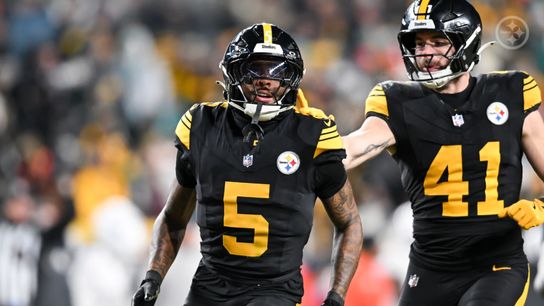
Karl Roser / Pittsburgh Steelers
Steelers defenders Jalen Ramsey (5) and Payton Wilson (41) after a big play during a Monday Night Football matchup in Week 15 of 2025.
What Fans Should Watch For in 2026
The 2026 season is shaping up to be a turning point for how the NFL uses blockchain. Several developments are worth watching:
Fan engagement platforms: More teams are expected to launch or expand blockchain based fan reward programs that go beyond simple loyalty points. Expect token gated content, digital voting, and experience based rewards.
Draft tech: The 2026 NFL Draft in Pittsburgh will be the most digitally connected draft in league history. The NFL OnePass app is just the starting point. Look for digital only merchandise, augmented reality features, and interactive fan challenges tied to the event.
Crypto sponsorship growth: As the 2026 salary cap is projected to exceed $300 million, teams will need every revenue stream they can get. Blockchain partnerships will continue to expand across the league.
Player-driven crypto: More NFL athletes are expected to take portions of their salary in cryptocurrency, launch personal NFT collections, or partner with blockchain based brands. Young players coming into the league through the draft are especially open to this.
The Bigger Picture
Blockchain and crypto are not replacing traditional football. Nobody is watching Sunday football on a decentralized app instead of CBS. But the technology is quietly reshaping the infrastructure around the sport. How tickets are sold, how fans are rewarded, how sponsors measure ROI, and how players get paid are all being rethought through the lens of blockchain.
For Steelers fans, this is worth paying attention to because Pittsburgh is at the center of two converging stories in 2026. The franchise is rebuilding on the field with a new head coach, a loaded draft class, and a roster that needs upgrades at several positions. At the same time, the city is about to host the biggest NFL offseason event in the country, bringing global attention and millions of dollars in economic activity.
The teams that figure out how to combine on-field success with smart digital engagement will have an edge in the years ahead. Pittsburgh has always been a city that adapts. From steel to tech to sports, the city reinvents itself. The Steelers have a chance to do the same.