


You wake up on Tuesday, check the board, and the Pittsburgh Steelers line is 1.5 points different than it was yesterday. Naturally, your group chat turns into a crime scene investigation. “Vegas knows.” “Sharp money hit it.” “Someone’s out.” Maybe. Or maybe the market just did what markets do: react, rebalance, and keep moving.
Getty Images
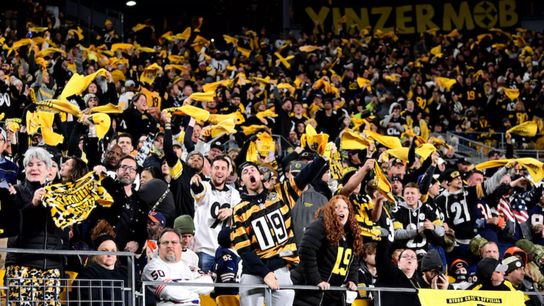
Pittsburgh Steelers fans wave their Terrible Towels aggressively as Styx famous song, Renegade plays during a home game at then-Heinz Field in Pittsburgh, PA.
Line movement is a change in the spread, total, or price, driven by new information and the flow of bets. It can signal something real, but it is not a prediction machine, and it is definitely not a command to smash the button because the number shifted. This guide breaks down what line movement actually means, what it does not mean, and how to react like a disciplined bettor instead of a guy chasing ghosts five minutes after a notification.
What line movement is (and what it isn’t)
At its core, line movement is price discovery. Books post openers, bettors respond, information enters the ecosystem, and numbers adjust. Sometimes the move reflects real news. Sometimes it reflects early action that forces an adjustment. Sometimes it reflects books managing risk and balancing their exposure. In short, it is the market doing math in public.
The key mindset: movement is information, not instruction. It is a clue, not a guarantee. A move can be sharp-driven, public-driven, or book-driven. It can also be a head fake where the number moves but the underlying “why” is mostly noise.
If you want a broader, academic framing of how prices respond to information and trading flow, the NYU Stern paper on market behavior is a useful reference for the big-picture concept of information getting absorbed into price.
What line movement is not:
Not proof the “smart side” is automatically correct
Not a guarantee a team covers
Not always tied to a single headline you can point at
Not something you can blindly tail without context
The most common triggers (the short list)
Most NFL movement comes from a handful of predictable triggers. The hard part is figuring out which one is driving today’s move, and how much it matters.
1) Injuries and meaningful absences
Quarterbacks move everything, but clusters matter too. Offensive line issues can swing both sides and totals if protection collapses and the playbook shrinks. A missing top corner can turn a conservative total into a sweat, fast.
2) Weather, especially for totals
Wind is the classic totals bully. Heavy wind can make downfield passing ugly, push teams toward conservative game plans, and change the profile of scoring chances. Rain matters less than people think unless it is paired with wind or truly poor field conditions.
3) Scheduling and rest
Short weeks, long travel, and weird spots like early kickoffs after a physical divisional game can nudge a line. The market is not sentimental about “toughness.” It is looking for fatigue signals that show up in efficiency.
4) Matchup and scheme edges
Some teams can hide weaknesses. Some cannot. If a pass rush matches up cleanly against a shaky line, or a team’s tempo forces extra possessions, you may see movement even without injury news.
5) Liquidity timing
Early in the week, limits are lower and the pool of bettors is smaller. Late week and game day bring bigger volume and more public influence. That timing difference alone can move a number, even if nothing “happened.”
6) Narratives and prime-time bias
Public money loves stars, offense, and the team everyone just watched. That does not make the public wrong every time, but it does mean late-week movement can be as much psychology as it is information.
For general evidence that meaningful player absences can impact markets and outcomes, the academic literature on injuries and team performance is a helpful grounding point when you’re thinking about why absences move numbers in the first place.
Steelers-specific example: how movement shows up in real spots
Steelers lines tend to move in familiar ways because Pittsburgh games often sit in the NFL’s most sensitive betting neighborhood: physical matchups, weather games, and totals that can flip based on one or two key availability notes.
A classic Steelers “move” is when the market reacts to trench news. If the offensive line outlook shifts midweek, the spread can tick against Pittsburgh and the total can sag because the offense is expected to play smaller. Another common pattern is totals reacting to late-week weather updates in outdoor games. The public sees “rain” and panics. The market cares more about wind and the style matchup.
If you want an example of how this gets tracked in a game-by-game way, SteelerNation’s breakdown on tracking betting line movement in the Steelers’ first four games shows how point spreads and totals can shift across the week.
The takeaway is not “movement equals truth.” It is that Steelers movement often reflects the same repeatable inputs: availability, trench health, and game environment.
Steelers.com
Steelers LBs Nick Herbig and Alex Highsmith stand on the sideline during the national anthem.
How to react without overreacting (the discipline framework)
Here’s a practical system you can run every time the line shifts, without turning into a full-time detective.
Step 1: Identify what moved
Did the spread move, or did the price move? A shift from -2.5 to -3 is different than staying at -2.5 while the juice changes. Points matter near key numbers. Price matters long term.
Step 2: Ask what new information exists
Check the official injury report. Check credible beat reporting. Check weather, but focus on wind and extreme conditions. If you cannot find a real information change, assume the move is flow-driven or book-driven.
Step 3: Decide your mode: early positioning or confirmation
Early positioning means you are betting before the market fully reacts, based on your own read. Confirmation means you are waiting for information to become official, then betting when uncertainty is lower. Both can work. Mixing them is how people end up late and paying the worst number.
Step 4: Avoid two traps
Chasing steam: Betting just because it moved. If you do not know why, you are usually the exit liquidity.
Reverse logic: Assuming any move against the public is automatically sharp. Sometimes it is. Sometimes it is a book shaping action, or the public is simply right.
Step 5: Shop the number
If you are going to bet, act like price matters. Because it does. The difference between -2.5 and -3, or +3.5 and +3, adds up across a season.
Tools and books: what actually helps
You do not need a secret model to be smarter than most bettors. You need cleaner inputs and better habits. Build a routine around line shopping, key numbers, and knowing how your book grades bets. If you want a fast way to compare which major apps/books offer a strong mix of pricing and NFL market coverage, The Playoffs’ NFL betting sites overview is a useful reference point for scanning the landscape in one place.
Use an odds screen mindset, even if it is just comparing two or three books
Track key numbers (3, 6, 7) and avoid paying extra to cross them late
Learn each book’s settlement rules for pushes, voids, and live markets
Keep notes on what moves Steelers lines most often, so you recognize patterns
Responsible gambling, Steelers-fan edition
A disciplined process is great, but it only matters if you’re betting within limits. Keep stakes consistent, avoid “get it back” bets after a bad beat, and take breaks if betting stops being fun. If you need support in the US, 1-800-GAMBLER is a straightforward first step for free, confidential help.
Getty Images
A solo Steelers fans gets captured having a moment of anger about his favorite team.
Final whistle
Line movement is the market talking, not the market predicting. Sometimes it is reacting to real information. Sometimes it is just the number finding its level as money flows in. The edge comes from patience: identify what moved, find the actual reason, shop the number, and skip the urge to sprint after every shift like it’s a breaking news alert. If you can do that, you’ll read Steelers lines like a grown-up, even when the board tries to bait you into chaos.