


The Steelers enter the offseason balancing short-term competitiveness with long-term roster planning. Decisions at quarterback, along the offensive line, and in the secondary can shape both weekly consistency and late-season ceiling, as West Ace underscores the importance of strategy and resource allocation. The front office must also weigh contract timelines, depth, and special teams roles when allocating resources.
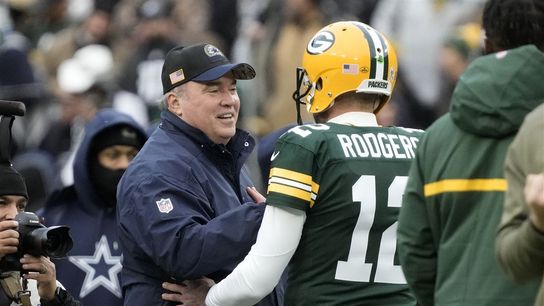
Associated Press
Steelers new Head Coach Mike McCarthy catching up with his former Quarterback Aaron Rodgers while coaching the Dallas Cowboys.
Offseason work for the Steelers typically centers on keeping the roster sturdy in the trenches while developing young contributors at premium positions. Any plan has to account for injuries, aging curves, and how specific roles fit the coaching staff’s preferred schemes. With the draft and veteran moves serving different purposes, the biggest question is where immediate help is required versus where internal development can carry the load. Position battles in camp often reflect those choices, especially when a swing starter can change unit cohesion.
Quarterback And Skill-Position Continuity
Quarterback remains the most consequential variable because it affects protection calls, third-down efficiency, and how defenses play the run. The Steelers have to evaluate whether the current options can operate the full playbook with consistent timing, particularly in the intermediate passing game where anticipation and pocket management matter. If competition is expected, the structure of reps in spring practices and training camp becomes part of the roster-building strategy rather than a formality.
At the skill positions, continuity is often about role clarity as much as talent. Wide receiver usage, tight end personnel groupings, and running back rotation all influence how predictable the offense feels snap to snap. Depth also matters here because availability over a full season can turn a “starter-level” group into a patchwork unit if there is no reliable next option. The Steelers’ offseason checklist typically includes identifying which specialists can expand their responsibilities without weakening what they already do well.
Offensive Line And Defensive Front Priorities
For the Steelers, the offensive line evaluation goes beyond individual grades and into how five players function as a single organism. Communication on twists, consistency in combo blocks, and the ability to handle speed-to-power rushers are common pressure points that show up against top opponents. Offseason additions can be aimed at stabilizing a single position, but improvement can also come from settling players into their best spots and building continuity in technique and calls.
On defense, the front is central to the Steelers’ identity: setting edges, collapsing pockets without heavy blitzing, and forcing offenses into long-yardage situations. Rotation depth is critical because late-game pass rush often depends on fresh legs, not just star power. The Steelers must also consider how coverage structure and pass-rush plan complement each other, since a disruptive rush can allow more conservative coverage calls, while shaky coverage can force the front into higher-risk approaches.
Secondary, Special Teams, And Development Pipeline
The secondary is frequently where small mismatches turn into explosive plays, so the Steelers’ offseason work often targets communication, leverage discipline, and matchup flexibility. Whether the priority is outside corner depth, slot reliability, or safety versatility, the goal is to reduce coverage busts and improve tackling efficiency in space. Competition can be healthy here, but only if roles are clearly defined so players can master technique rather than preparing for multiple positions without enough reps.
Special teams and developmental planning are also part of roster management because the back end of the roster is built on players who can dress on game day. The Steelers must identify which young players can contribute on coverage units while also projecting into offensive or defensive roles later. That pipeline influences decisions on veterans who may be steady but limited in upside, especially when roster spots must serve multiple purposes across units.