


The word “dynasty” used to sound simple. In Pittsburgh, it meant the 1970s Steelers, four Lombardi Trophies in six seasons, and a defense that bent the decade to its will. Today, with a hard salary cap, free agency, and a 17‑game schedule, pinning down the idea is more challenging.
Getty Images
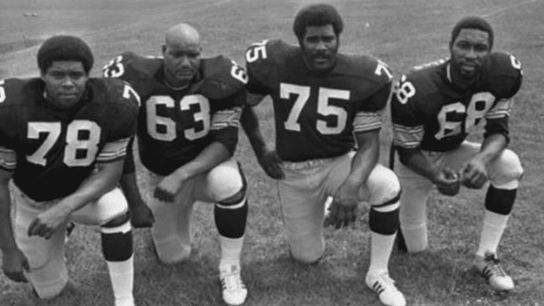
Dwight White, Ernie Holmes, Joe Greene and L.C. Greenwood made up the greatest defensive line of the Super Bowl era.
Defining a Dynasty in a Parity League
At the surface level, a dynasty is countable: rings, conference titles, years of relevance. Under Chuck Noll, the Steelers won the Super Bowl in the 1974, 1975, 1978, and 1979 seasons. It remains the classic benchmark: four championships in six years, with the same head coach and the same core of Hall of Famers. Later, the New England Patriots set their own standard, reaching nine Super Bowls and winning six between 2001 and 2018 with Tom Brady and Bill Belichick joined at the hip.
But if it were only about trophies, the conversation would be dull. Part of what makes a dynasty feel real is the tension surrounding it: years in which the team is still feared even when it falls short, seasons in which every opponent treats them as the measuring stick. Even far from Pittsburgh or Foxborough, some fans now live that tension through their phones, loading depth charts, advanced stats, and betting lines via melbet login tanzania that packages local access to odds and mobile tools for a growing audience of NFL followers in East Africa.
For readers of SteelerNation.com, the foundational case study is familiar but never tired. The 1970s Steelers were built patiently after decades of mediocrity: ownership that finally committed to stability, a head coach in Noll who stayed in place, and draft classes that bordered on the miraculous. Between 1969 and 1974, the team added Joe Greene, Terry Bradshaw, Franco Harris, Jack Lambert, Lynn Swann, John Stallworth, and others who would anchor four Super Bowl wins.
Patriots and Chiefs: The New Shape of Supremacy
The Brady-Belichick Patriots stretched the idea of a dynasty across nearly two decades. Under the same quarterback-coach pairing, New England appeared in nine Super Bowls and won six, tying Pittsburgh for the most Lombardi Trophies in league history. What stands out is not just the titles but the constant reinvention: early years driven by defense and special teams, later seasons by no‑huddle passing games and matchup nightmares like Rob Gronkowski.
The Kansas City Chiefs have forced their way into the debate. As a franchise, they now own four Super Bowl titles and seven total appearances, with the Mahomes-Reid partnership accounting for five of those trips and three of the victories. Their 40-22 loss to the Philadelphia Eagles in Super Bowl LIX in 2025 denied them the NFL’s first three‑peat. Kansas City’s run underlines that in a modern dynasty, you may not win every year, but you are present in the conversation every January.
Stability Behind the Helmets
On the surface, dynasties are built by quarterbacks and pass rushers. Underneath, they rest on quieter forms of stability. The Rooney family’s ownership of the Steelers since 1933 and the franchise’s habit of employing only three head coaches since 1969 are unique in the NFL and often cited as reasons the team rarely falls into prolonged irrelevance.
The Patriots mirrored that stability in their own way, handing Belichick unprecedented control over both the roster and the sideline. The Chiefs have given Reid and general manager Brett Veach similar latitude, trusting them to find value in drafts and free agency while building around Mahomes. In each case, there is a through‑line: patient ownership, a coherent front office, and a belief that systems matter as much as star power.
Jay Biggerstaff / USA Today
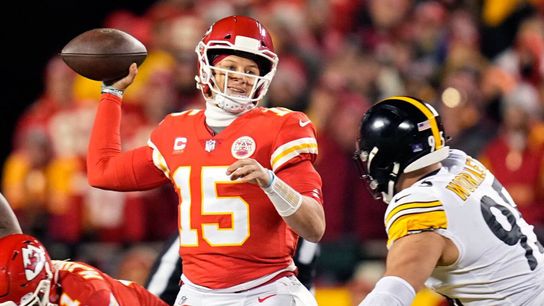
Patrick Mahomes throws the ball while TJ Watt and the Steelers' defense rushes him.
Unpredictability, Gaming, and the Thrill of the Season
For all of this, the NFL sells itself on uncertainty. The salary cap and draft order are designed so that, in theory, “any given Sunday,” any team can beat any other, a phrase that has become shorthand for the league’s competitive balance. Recent years have borne that out: even dynastic teams have stumbled, and surprise playoff runs from wild‑card squads remain part of the league’s rhythm.
That uncertainty is part of the draw for fans used to high-variance video games and casino experiences. Every season feels like a long campaign in which the outcome can pivot on a tipped pass or a blown assignment, much the way a single decision in a strategy game or crash‑style title can flip the result. Among those crash-style titles that circulate in football group chats, melbet aviator has become a shorthand for that rising-line tension: the multiplier climbs, the risk grows, and at an unpredictable moment, the round ends, echoing the way a promising drive or a 13-win season can collapse in one cold night.
What Steeler Nation Can Take from the Dynasty Debate
For Steeler Nation, talk of dynasties is not just nostalgia; it is a challenge. The franchise still shares the all-time Super Bowl lead with New England at six titles, even as Kansas City narrows the gap. The question is what the next version of sustained excellence looks like in a league tilted toward chaos.
The historical record points to a few constants: stable ownership, a head coach with time to impose a philosophy, a quarterback capable of lifting the rest, and a front office that treats draft capital as lifeblood rather than loose change. Because no matter how strong a roster looks on paper, nothing is guaranteed once the ball is in the air.