


Mike Tomlin’s legacy in Pittsburgh is one of the most complex and enduring in modern NFL history. Hired in 2007, Tomlin became a defining figure for a franchise that values stability, accountability, and championships above all else. Over 19 seasons, he guided the Steelers through multiple eras of football, roster overhauls, and league-wide changes while maintaining a level of consistency rarely seen in professional sports. His career blends historic achievements, prolonged success, postseason frustration, and cultural influence, all of which shape how his time in Pittsburgh will ultimately be remembered.
-544x306.jpg "Steelers Mike Tomlin")
Keith Srakocic / ASSOCIATED PRESS
NFL Commissioner Roger Goodell (left) visits with the Steelers front office and Head Coach Mike Tomlin in 2010.
Mike Tomlin’s Arrival and Immediate Impact
When Mike Tomlin was hired as head coach of the Pittsburgh Steelers in 2007, the move carried enormous weight. He became only the fourth head coach in franchise history since 1969, following Bill Cowher and inheriting a team defined by defensive toughness, organizational patience, and Super Bowl expectations. Tomlin arrived with a calm but authoritative presence, immediately establishing himself as a leader capable of commanding respect in a veteran locker room. From his first season, he demonstrated adaptability, strong communication skills, and an ability to manage high-pressure environments. His early impact went beyond wins and losses, as he successfully upheld the Steelers’ identity while subtly modernizing their approach to leadership and accountability.
Tomlin’s influence was felt almost immediately, as he guided the Steelers to consistent contention and established a foundation that allowed the franchise to remain relevant year after year. His early success erased doubts about his age and experience, replacing them with trust from ownership, players, and fans alike.
Sustained Regular-Season Excellence
One of the defining pillars of Mike Tomlin’s legacy is his unprecedented consistency during the regular season. From 2007 through the 2025 season, Tomlin never recorded a losing season, a feat unmatched by any other head coach at the start of an NFL career. Over 19 consecutive seasons, his teams found ways to remain competitive regardless of injuries, roster turnover, or shifts in offensive and defensive personnel. This consistency became a hallmark of Steelers football and a benchmark for organizational stability across the league.
Tomlin finished his tenure with a regular-season record of 193–114–2, tying Chuck Noll for the most regular season wins in Steelers history. That total reflects not only longevity but sustained effectiveness in a league designed for parity. Even during rebuilding phases and quarterback transitions, Tomlin consistently kept the Steelers in playoff contention, a testament to preparation, adaptability, and leadership that transcended weekly NFL lineups.
Playoff Appearances and Competitive Standards
Postseason football remained a constant presence during Mike Tomlin’s time in Pittsburgh. Under his leadership, the Steelers reached the playoffs 13 times, reinforcing the expectation that January football was a requirement rather than a bonus. These appearances spanned multiple eras, from the prime years of veteran rosters to later teams built around younger cores and evolving schemes.
Across those postseason runs, Tomlin compiled an 8–12 playoff record, a figure that reflects both early championship success and later struggles. While the raw numbers sparked debate, they also underscore how frequently the Steelers were in position to compete for titles. Making the playoffs consistently in a league driven by competitive balance is itself a significant accomplishment, one that cemented Tomlin’s reputation as a coach who could navigate long seasons and high-pressure environments.
Super Bowl Performances and Defining Moments
Championship moments define legacies in Pittsburgh, and Mike Tomlin delivered on the sport’s biggest stage. He led the Steelers to two Super Bowl appearances, adding to a franchise that already owned six Lombardi Trophies and eight total Super Bowl trips. These moments became central to how his career is remembered.
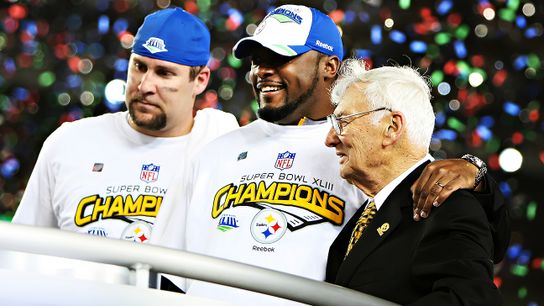
ESPN
Late Steelers owner, Dan Rooney, alongside former head coach Mike Tomlin (middle) and former quarterback Ben Roethlisberger (left) after a victorious Super Bowl XLIII.
The pinnacle came in the 2008 season when Tomlin guided the Steelers to victory in Super Bowl XLIII against the Arizona Cardinals. At just 36 years old, he became the youngest head coach in NFL history to win a Super Bowl. Two years later, he returned to the championship stage in Super Bowl XLV, where Pittsburgh fell to the Green Bay Packers. Those appearances solidified Tomlin’s place among the franchise’s most accomplished coaches and validated the organization’s faith in his leadership.
The Postseason Drought and Growing Criticism
As Tomlin’s tenure extended into its later years, postseason outcomes began to shape a different narrative. Despite continued playoff appearances, the Steelers failed to win a postseason game from the 2016 season onward. This drought became a focal point of national discussion and intensified scrutiny around Tomlin’s coaching legacy.
He ultimately finished his career tied with Marvin Lewis for the most consecutive playoff losses in NFL history at seven, a statistic frequently cited by critics. These losses, while painful, often came amid roster transitions, quarterback changes, and evolving league dynamics. Still, in a city accustomed to championships, the inability to advance deep into the playoffs became a defining point of debate surrounding his later seasons.
Late-Career Resilience and the 2025 Season
Even as criticism mounted, Mike Tomlin continued to produce winning seasons late into his career. The 2025 campaign exemplified his resilience and adaptability. The Steelers finished 10–7, capturing the AFC North title in a division known for physicality and competitiveness.
The division was clinched with a dramatic 26–24 Week 18 victory over the Baltimore Ravens, a result that highlighted Tomlin’s ability to prepare his team for high-stakes moments. The season ended with a 30–6 Wild Card loss to the Houston Texans, marking the final postseason game of his tenure. Despite the disappointing finish, the season reinforced Tomlin’s reputation for sustained competitiveness deep into his career.
Contract Extensions and Organizational Trust
Throughout his time in Pittsburgh, Tomlin benefited from unwavering trust from ownership and the front office. The Steelers’ organizational philosophy values patience and continuity, and Tomlin became a central embodiment of that approach.
In 2024, he signed a contract extension that ran through the 2027 season, a clear signal that the organization remained confident in his leadership despite postseason frustrations. That extension underscored how highly the Steelers valued stability, culture, and long-term vision, even amid external pressure for change.
Leadership Style and Player Development
Mike Tomlin’s leadership extended beyond game plans and statistics. He became known for managing diverse personalities, maintaining locker-room cohesion, and setting clear expectations for accountability. His ability to connect with players across generations helped the Steelers navigate transitions without collapsing into prolonged rebuilding phases.
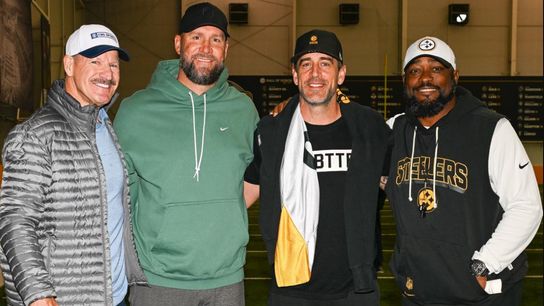
Pittsburgh Steelers / X
Bill Cowher, Ben Roethlisberger, Aaron Rodgers, and Mike Tomlin gather at Steelers practice.
From the prime years of Ben Roethlisberger to later seasons marked by quarterback changes and evolving rosters, Tomlin adjusted his approach while preserving competitive standards. His leadership style emphasized preparation, mental toughness, and adaptability, traits that allowed the Steelers to remain relevant even as personnel changed.
Historical Context Within Steelers Football
Tomlin’s tenure gains additional weight when viewed within the broader history of the franchise. Since 1969, the Steelers employed only four head coaches, a level of continuity unmatched across major professional sports. Tomlin’s 19-season run stands as the longest in franchise history, further elevating his place within Steelers lore.
Operating within such a tradition-rich environment amplified both his successes and shortcomings. Every season was measured against past champions, making longevity itself a significant achievement. Tomlin not only sustained that tradition but expanded it through modern leadership and adaptability.
Measuring Mike Tomlin’s Legacy in Pittsburgh
Mike Tomlin leaves Pittsburgh with a résumé defined by longevity, consistency, and championship pedigree. His career includes 193 regular-season wins, 13 playoff appearances, two Super Bowl trips, and one Super Bowl title, along with the unprecedented achievement of 19 consecutive non-losing seasons to start a head coaching career.
His legacy will forever spark debate, balancing early championship success against later postseason frustration. Yet in a league built on instability, Tomlin’s ability to keep the Steelers competitive year after year remains a rare accomplishment. In Pittsburgh, where standards are unforgiving, Mike Tomlin’s legacy stands as one of sustained excellence, resilience, and a benchmark few will ever match.