


The Pittsburgh Steelers have spent the last few years chasing answers in the passing game, but the biggest problem never really changed. It was not only about who lined up at quarterback or whether the team had enough firepower outside. It was about an offense that kept swinging too hard from week to week, which is exactly why this still feels like one of the biggest Steelers' news storylines of the 2026 offseason.

Jordan Schofield / SteelerNation (X: @JSKO_PHOTO)
Steelers quarterback Aaron Rodgers (8) and former offensive coordinator Arthur Smith (right) during 2025 training camp in Latrobe, PA.
Pittsburgh's passing attack was not completely broken in 2025. The concern was that it was too difficult to trust. The Steelers averaged 213.6 passing yards per game, but that number hides how uneven the unit really was. Some Sundays, the offense looked sharp enough to keep the entire game on schedule. On others, it looked like it was starting over from scratch.
That is where the frustration starts for Steeler Nation. Pittsburgh threw for 294 yards in one game and only 117 in another. There were also clunkers in the 160s mixed in with cleaner afternoons in the 240s and 280s. That is not just an offense with a middling average. That is an offense with a volatility problem.
The Average Never Told The Full Story
Fans usually talk about averages because they are simple, but averages can hide how unstable a unit really is. If you plug Pittsburgh's week-by-week passing totals into a mean absolute deviation calculator and a variance calculator, the takeaway becomes much clearer. The Steelers were not just ordinary through the air. They were unpredictable.
That matters because volatility changes how a team has to live. A steady passing game gives an offense a weekly floor. A volatile one forces the rest of the roster to keep cleaning up after it. That is why so much of the conversation around Pittsburgh keeps circling back to the same uncomfortable question: what is this offense actually supposed to be?
More Talent Alone Might Not Fix It
That is why 2026 still feels unsettled. There are still real questions about whether DK Metcalf's 2025 results matched the expectations that followed his arrival in Pittsburgh, and there are also real health and age concerns around asking Aaron Rodgers to carry the passing game again. Those are meaningful issues, but they all point to the same broader problem.
The Steelers do not just need a bigger-name answer. They require a steadier one. Another weapon can help. Better protection can help. A healthier quarterback room can help. None of that matters enough, though, if the passing game still lives between frustrating lows and brief spikes that are impossible to count on.
Karl Roser / Pittsburgh Steelers
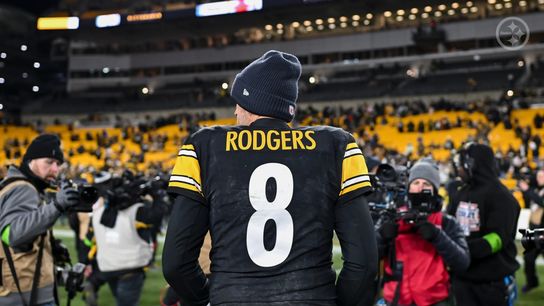
Steelers' Aaron Rodgers walks off the field after a brutal loss to the Houston Texans in the Wild Card Round.
That is the harsh truth Pittsburgh has to face. Until the offense develops a real weekly floor, every hot streak will feel fragile, and every slump will feel familiar. The Steelers can keep debating names, roles, and offseason fixes, but the real goal should be much simpler.
They have to make the passing game dependable.
If they do not, 2026 could end up feeling a lot like 2025: just enough promise to keep hope alive, and just enough inconsistency to keep the entire offense from becoming what it should be.