

On any given NFL Sunday, millions of people go through the same ebb and flow of feeling at approximately the same time during a Pittsburgh Steelers game. A big play in Pittsburgh will provoke roars in Acrisure Stadium, but also reactions in living rooms and sports bars and group chats and social media feeds all across the country. And the most interesting part isn’t merely the scale of reaction — it is the synchronizing of it.
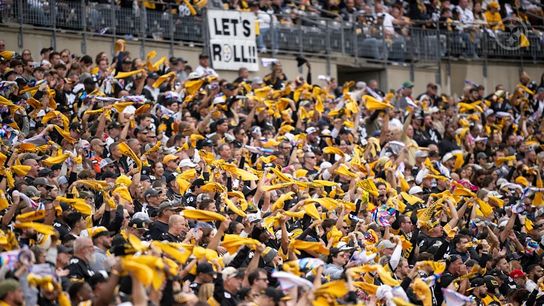
Steelers.com
NFL fan communities are often referred to (or even defined) as “audiences” but that word does not do justice to them. An audience watches. A community participates. And NFL fandom resides somewhere deeper than either — it functions like a living cultural system, where identity, emotion, memory and behavior are being shared, reinforced and iterated over time.
To understand the power of NFL fan communities, we have to look beyond football itself and toward how humans organize belonging.
NFL Fandom as an Instantiation of a Cultural System
Fandom, on its surface, may seem like entertainment consumption. Everyone watches the games, tracks the stats, tussles over plays and celebrates wins. But NFL fandom is even more regimented than that.
A real fan community features a shared identity, repeated rituals, emotional synchronization, and long-term collective memory. These factors forge something more like a cultural system than an informal interest group.
For instance, a Steelers fan doesn’t simply be there for the team during games. The identity extends into everyday life — through conversations, social media interactions, traditions and even the way ordinary people process success and failure in a sports context.
This is such a medieval way of being an NFL fan that it kind of breaks my brain. It doesn’t fire and extinguish with the scoreboard. It persists.
Identity Fusion: The Answer to Why Fans of Teams Say “We”
Perhaps the most significant psychological force behind NFL fandom is identity fusion — the merger of personal identity with group identity.
This is also why fans say we won after a victory, despite having not stepped foot in the game. The team is no longer something you watch; the team becomes an extension of self.
This shift changes everything. Wins feel personal. Losses feel emotional. Rivalries feel meaningful beyond sport. It becomes part of how someone defines themselves socially and emotionally.
Which is also why loyalty in NFL fandom is remarkably durable. Even through rebuilding seasons or losing stretches, connections to identity often stay intact. It is not just about performance anymore—it is about belonging.
Yes, It’s a 36-Year-Old Stadium That Also Amplifies Collective Emotion
They are not passive venues, NFL stadiums. They function as emotional amplifiers.
The rejoinder of thousands is condensed into one collective shout, within a stadium. Sound syncs up — chants, cheers, groans and silence become common signals. The impact is magnified with visual identity — fans are unified in a common space bearing team colors and symbols.
The design of the stadiums themselves also is important. Seating close to one another, inside buildings and near a sports field amplify perception. When emotion fires in this context, it rarely remains individual — instead, in a matter of moments, it becomes collective.
That’s why seeing a game in person is fundamentally different from watching at home. The experience is not only bigger, but it plays out in real time with thousands of others experiencing the same thing at once.
Emotional Contagion: How Energy Spreads
But one of the strongest forces in NFL fan communities is emotional contagion, how feelings spread quickly through groups.
One reaction leads to another, whether in a stadium or even online. A big defensive stop causes cheers, which cause louder reactions, which build collective energy. One moment is not inherently stronger than another, but it is multiplied socially, so the emotion grows.
In places like the internet, this process is more visible now than in history. A touchdown or controversial call doesn’t just spur stadium reaction—it sparks immediate responses across social platforms. The simultaneous reactiveness of thousands of fans reinforces and accelerates collective emotion.
NFL fandom works in a feedback loop:
emotion diffuses → response amplifies → emotion escalates → response multiplies again
It’s a big reason NFL communities seem so vital and present.
Rituals That Hold Communities Together
Fan communities in the NFL are highly ritualized. These rituals are not random habits — they’re organized behaviours that reinforce belonging.
Game day schedules, tailgating rituals, jersey-wearing routines, pre-game voodoo and watch parties all serve the same function: They offer continuity and consistency in an unpredictable setting.
Football itself is uncertain. Outcomes change week to week, injuries transform seasons and momentum rotates like a dial. Rituals offer consistency within that uncertainty.
They also create shared experience. Fans doing the same rituals, whether they’re in Pittsburgh, somewhere across the country or overseas, ties them to the same cultural physiologically.
It makes fandom into tradition, and it’s the repeated behaviors over time that do this.
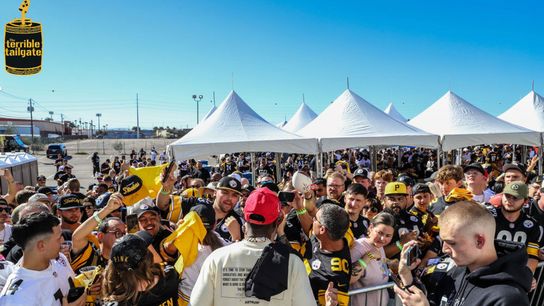
SteelerNation.com
Steelers' Antonio Brown meets with fans at the Terrible Tailgate in Las Vegas.
Logos, Colors, and Visual Identity Systems
Every N.F.L. The team has a visual identity, but it is through fan communities that those symbols gain meaning.
Colors are not mere design choices — they turn into emotional signals. Logos are no longer merely branding—they become markers of recognition. Uniforms are not mere clothing—they are embodiments of shared identity.
Widespread color and insignia for a specific team creates an immediate visual unity alongside thousands of fans. This unity reinforces emotional cohesion, as the brain is innately programmed to feel that similarity means belonging in a group.
Even small expressive identity markers in fan environments play a role in this, as they enhance the symbology of standing together visually within shared space. Sports systems today lean on well defined identity design in order to hold this cohesion, performance based ecosystems like USportsGear place visual identity as a point of connectedness between teams and fans as representation vs. individual expression.
The Digital Stadium: NFL Fandom on the Internet
NFL fandom doesn’t just live in stadiums anymore. They now live continuously online.
“Digital stadium”: Platforms such as Reddit, X (previously Twitter), YouTube and fan forums create a kind of instantaneous audience reaction. Every play becomes a conversation. Each game becomes an international occasion. Every opinion gets bundled in an emotional wave.
So what’s powerful here is this synchronization. An instantaneous tsunami of thousands of fans reacting creates an online experience replicating stadium energy.
NFL fandom is no longer limited to Sunday afternoons — it’s a thing that kicks 365 days a year, animated by analysis, debate, predictions and memory.
Shared Memory and Generational Loyalty
Memory is among the most powerful forces in NFL fandom.
Teams are not just defined by core rosters — they are defined by history. Iconic games, legendary players, rivalries and championship moments become part of a collective memory that gets passed down through generations.
And while someone may inherit their team from family, community or geography, what maintains that loyalty over time is shared storytelling.
These memories create emotional continuity. They weave past, present and future into one narrative that can be shared in tandem by fans.
Rivalries And The Strength Of “Us vs Them”
Rivalries are among the most emotionally charged elements in N.F.L. culture.
They build structure through contrast: us vs them, home vs away, tradition vs challenge. This dynamic heightens emotional investment because it lends significance to each pairing.
Games against rivals are seldom just games. They are cultural events that come with history, pride and identity.
That’s why rivalry games often have a more intense feel no matter the standings. Meaning is itself a factor that amplifies emotion, as well as competition.
THE AWE, SOLEMNITY AND HYSTERIA OF NFL FAN COMMUNITIES
Put all of this together and the power of NFL fandom emerges.
It involves not one factor — it is a system:
identity fusion
emotional contagion
ritual repetition
symbolic unity
digital amplification
generational memory
structured competition
Combined, they form one of the most potent cultural systems in modern society.
Being a fan of the NFL isn’t simply watching football. It is about belonging to something that feels bigger than oneself.
Abstract: A Community That Becomes Identity
The role of NFL fan communities in the success of the NFL fan communities are borderline cults because they exist out there in American society, not simple fans watching a game. They are identity systems, rooted in common emotion, habitual behavior, symbolic significance and collective memory.
Eventually, fandom becomes a kind of activity people do episodically. It is something they carry around with them wherever.
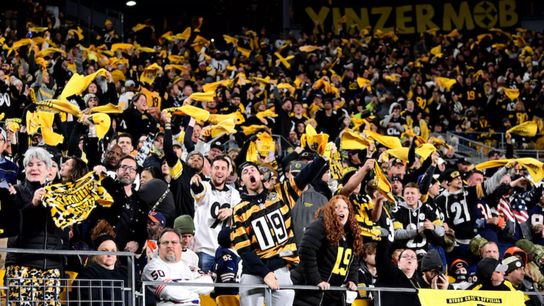
Getty Images
Pittsburgh Steelers fans wave their Terrible Towels aggressively as Styx famous song, Renegade plays during a home game at then-Heinz Field in Pittsburgh, PA.
So in that way, NFL fandom is more than just football.
It’s about belonging — to a team, to a tradition and to a community that extends deep beyond the field.