


Professional poker has evolved rapidly over the past two decades. Modern Pittsburgh Steelers fans who play now rely heavily on simulations, advanced analytics, and strategic models, while platforms featuring professional poker player profiles have helped fans follow the personalities shaping the game. Strategy has become more technical, and younger competitors often enter poker with a strong understanding of probability from the start.
Scott Olmos / USA TODAY Sports
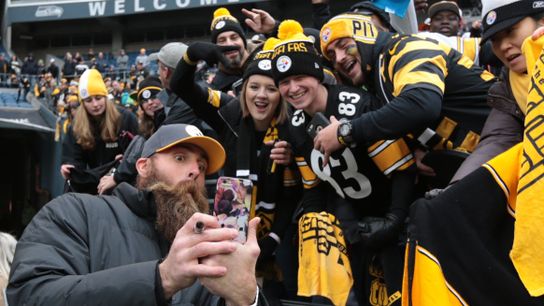
Brett Keisel, a former defensive end for the NFL's Pittsburgh Steelers, uses his mobile device with Steelers fans before a game in Seattle on Sunday, November 29.
Even so, Sam Farha continues to remain relevant.
Farha came from a very different poker era - one where personality, patience, and table presence mattered just as careeas technical knowledge. What made him stand out was not only charisma, but his understanding that poker is ultimately a human game. Mathematics matters, certainly, but numbers alone rarely explain how people behave under pressure.
Modern players still value that balance. Technical skills can be learned quickly. Emotional discipline usually takes much longer.
The Importance of Emotional Control
One reason Farha’s style still resonates is that poker continues to punish emotional overreaction with unusual efficiency. A player can make strong decisions repeatedly and still lose multiple hands in succession because variance, the unavoidable unpredictability built into the game, refuses to cooperate neatly with human expectations. This creates a psychological challenge that many technically skilled players still struggle to manage consistently.
Farha rarely appeared rushed by those moments. At the table, he projected a calmness that looked natural rather than performative. Opponents often seemed uncertain whether he was relaxed, bluffing, or simply uninterested in the surrounding tension. That ambiguity mattered strategically. In poker, emotional reactions reveal information constantly. Frustration changes betting patterns. Anxiety alters timing. Confidence affects risk tolerance. Experienced players notice these shifts immediately.
Interestingly, the same principle applies far beyond poker itself. Sports franchises often become unstable when they respond emotionally to short-term setbacks. Quarterbacks force unnecessary throws after mistakes. Coaches abandon systems too quickly after one difficult stretch. The strongest competitors, whether in football or poker, usually develop routines that prevent panic from influencing decision-making. Farha’s approach reflected exactly that type of restraint.
Getty Images
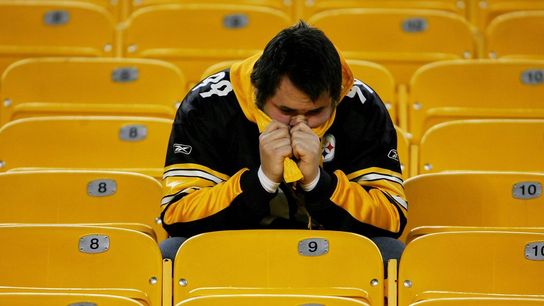
A solo Steelers fans gets captured having a moment of anger about his favorite team.
Why Human Observation Still Matters
There is now a tendency in modern poker conversations to treat software as the ultimate authority. Solvers and analytical tools unquestionably improved the overall quality of play, and no serious competitor ignores them entirely. Yet there remains a noticeable difference between understanding probabilities academically and applying them successfully against real people.
Poker still depends heavily on interpretation.
This partly explains why discussions surrounding Sam Farha’s poker career and playing style continue attracting interest among newer audiences. His reputation was built largely on observation, pacing, and emotional awareness rather than purely mechanical aggression. He understood how discomfort changes behavior. He recognized when opponents became impatient. Most importantly, he appeared comfortable operating in uncertainty rather than trying to eliminate it entirely.
That last point feels particularly relevant today. Modern culture increasingly rewards speed - immediate reactions, instant opinions, constant activity. Poker quietly rewards something else. Patience. Waiting. Observation. The ability to resist acting emotionally simply because tension exists.
Oddly enough, those qualities often become more valuable as environments grow noisier.
The Lasting Appeal of Authenticity
There is probably another reason Sam Farha remains memorable while many technically successful players fade quickly from public attention. He felt authentic. Modern competitive culture can sometimes appear overly managed, with personalities polished carefully for visibility and branding purposes. Farha belonged to an earlier generation that seemed less filtered. His confidence looked grounded rather than manufactured.
That distinction matters because audiences instinctively recognize authenticity, even when they cannot explain it precisely.
None of this means modern poker players should imitate older strategies blindly. The game evolved too much for nostalgia to function as serious advice. But certain competitive principles survive technological change remarkably well. Emotional control still matters. Human judgment still matters. And patience, despite sounding unfashionably simple, still separates disciplined competitors from impulsive ones.
ESPN
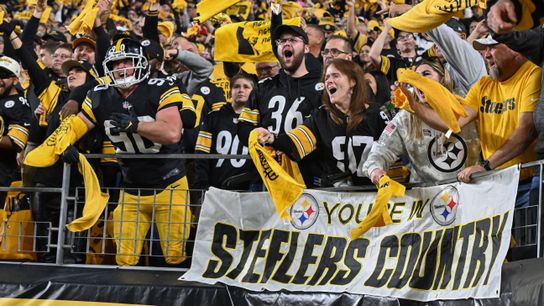
Steelers fans celebrating at a home game in Pittsburgh.
Perhaps that is why Sam Farha continues to hold relevance in modern poker culture. Beneath the algorithms, probabilities, and software models, poker remains deeply dependent on human behavior. Technology changes quickly. Human nature, generally speaking, does not.