

If you bleed Black and Gold, you already know competition isn't just something you watch on Sundays. It's something you feel. About 28% of American adults play recreational sports every week, but less than 2% ever played in college or for a pro team. That gap says a lot, but most folks don't really notice it. For years, sports looked pretty simple: you either made the team or you watched from the sidelines. But Steeler Nation has never been a passive fan base, and it turns out, they're not passive athletes either. Things started to change around 2018, and it's only gotten bigger since then.
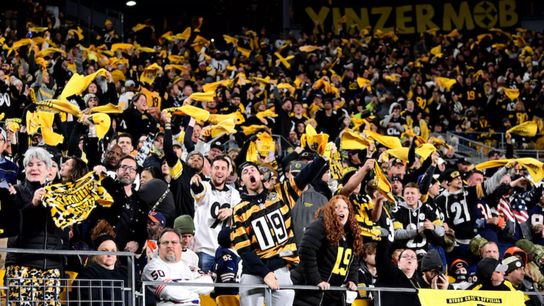
Getty Images
Pittsburgh Steelers fans wave their Terrible Towels aggressively as Styx famous song, Renegade plays during a home game at then-Heinz Field in Pittsburgh, PA.
Now, people who never wore a varsity jacket are showing up to practice twice a week, tracking their stats with apps, and cracking jokes in group chats. Not because they're chasing a pro career, but because the competition itself, the structure, the stakes, the group; it's honestly kind of addictive. Nobody's handing out participation trophies just for showing up anymore.
How Sports Culture Shifted
Spectator culture does something funny; you watch enough games, geek out on strategy, and at some point, you want in. Social media took that feeling and turned the dial way up. Scrolling through highlight reels is one thing; seeing somebody from down the street show off their new trophy is another. That feels real. That feels possible. And nowhere is that spectator-to-competitor pipeline more alive than in Pittsburgh. Steeler Nation is one of the most passionate fan bases in all of professional sports, and that obsession with competition doesn't stay parked on the couch.
Fans who spend their Sundays dissecting fourth-down decisions or debating whether T.J. Watt is the best defender in the league tend to carry that same competitive fire into their own athletic lives. The Pittsburgh Steelers have always been a blue-collar franchise built on toughness and accountability, and those values translate directly into the rec leagues popping up all over the city. So, these rec leagues are more than just a trend. They're a reaction to years of sitting on the couch and just watching.
People want to compete. They want to level up. They want something with a little bit of risk; even if it's just the risk of losing bragging rights, or handing over a $35 team jersey to someone else. And it's not just the young folks. Millennials brought their competitive gaming habits into physical sports. Gen X came for the social scene, stuck around for the workout. Boomers, who you'd never expect, are signing up for mixed-age leagues now, and it's getting pretty common. Everyone seems hungry for something.
The Magic of Paddle Sports
Let's be real: plenty of adults don't care to learn football plays or sit through slow-pitch softball rituals. They just want fun they can pick up instantly. That's why paddle sports blew up so fast. Pickleball is easy to learn, takes up almost no space, and rewards cleverness as much as speed or power. You don't have to have played in college to be decent after a few months of practice.
Steelers.com
That's way different from most sports, where experience gaps stick around for years. The playing field levels out almost immediately, which matters to adults who don't have loads of time or patience. Look at how pickleball leagues in Los Angeles have gotten so huge that courts are packed. Mornings that used to be empty are now booked solid. People are building teams based on their neighborhoods, and rearranging plans, like game night, is a sacred ritual. That's not casual. That's a real piece of the community.
Why Competition Pulls Adults Back In
So, why is the competition such a draw, not just the exercise? You could just hit the gym or stretch out in yoga class. Tons of folks do those and still find time for league play. There's something about competing, about the structure of it, that feeds a need solo workouts never touch.
It's partly accountability; if your teammates expect you, you show up even if you're tired. It's also about progress: beating someone you couldn't six months ago? That feeling gives you a rush you never find staring in a gym mirror. And, honestly, it's about identity. Saying, "I play in a league," just hits different compared to "I work out sometimes." Everyone's a little different. Some go for the social scene and stick out the competition. Others just want to see their name climb up the ranking.
Most land somewhere in between, which is why good leagues offer both: solid competition if you want it, plus post-game hangouts that keep people coming back. That same structure is something the NFL has understood for over a century. The reason football is America's sport isn't just the athleticism; it's the team accountability, the defined roles, the stakes. Rec leagues have quietly borrowed that blueprint and scaled it down to Tuesday nights at the local park.
Physical and Mental Boosts from Recreational Sports
Let's not pretend you need a research study to know moving feels good. But competitive rec sports have layers most people overlook. Fast paddle games build up coordination, reflexes, cardio, all at once. You're not slogging through boring reps; you're reacting, strategizing, and sprinting in bursts, almost like interval training disguised as a game. Competition makes you push harder without even noticing.
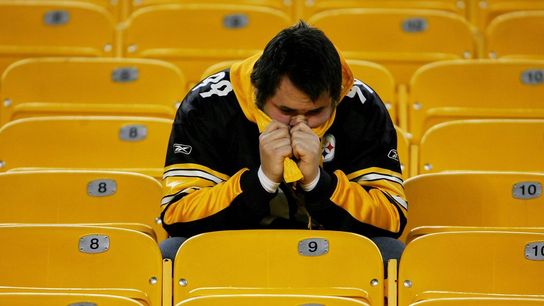
Getty Images
A solo Steelers fans gets captured having a moment of anger about his favorite team.
Mentally, it packs a punch too. Competition introduces a dose of low-level stress your brain needs to stay sharp. Solving problems under pressure, watching opponents and shifting strategies mid-game. Pickleball leagues in Austin, for example, have drawn in lots of remote workers. The mental stimulation breaks up that isolation you get from working at home, and winning a tough match feels miles better than any virtual meeting.
Where Local Sports Are Heading
Local tournaments have turned into social hubs in cities all over. You've got generations mixing on the same court; a retired teacher and a software developer teaming up, and nobody bats an eye. It's just Tuesday night. Pickleball leagues in Denver really showcase this mix. Leagues there happily run divisions with players from their twenties to their seventies, and no one acts like it's weird. That kind of cross-generational bonding is rare, honestly, and worth some attention.
Pittsburgh is no exception to this wave. The same city that rallies behind the Steelers every fall is quietly building a rec sports culture that mirrors what the franchise stands for: community, grit, and showing up for your teammates. It's not hard to imagine a rec league team in Pittsburgh taking on that same Black and Gold identity, the same "we grind together" mentality that has defined Steeler Nation for decades.
Rec sports are evolving. They're local, low-barrier, competitive, and include people in ways traditional athletics never managed. Not by design, but because almost anyone can show up and play. That openness is the real game-changer, and it's why this shift feels like it's here to stay, not just a passing fad.