


Football culture has always celebrated strength, toughness, and physical intensity. Pittsburgh Steelers fans admire explosive plays, hard tackles, and athletes capable of performing at a high level throughout an entire season.

NFL.com
Pittsburgh Steelers linebacker T.J. Watt (#90) celebrates alongside defensive tackle, Cameron Heyward (#97) and linebacker, Alex Highsmith (#56).
What often receives less attention, however, is the amount of structured preparation required to maintain that level of performance week after week. Modern football is not only about training harder. It is increasingly about balancing strength, recovery, mobility, and consistency in a smarter and more sustainable way.
For amateur athletes and football fans, this shift offers useful lessons. The goal is not to copy professional workloads or imitate elite routines designed for full-time athletes. Instead, the value comes from understanding the principles behind long-term performance. Many NFL-inspired habits focus on reducing injury risk, improving recovery quality, and building physical durability over time rather than chasing short bursts of intensity that cannot be maintained consistently.
Why strength and recovery matter in football culture
Football strength is about durability, not just power
The growing role of recovery and mobility
How amateur athletes can apply football-inspired habits
Building a realistic home setup for strength and consistency
Why strength and recovery matter in football culture
Football places unique physical demands on the body. Sprinting, collisions, changes of direction, and repeated high-intensity efforts create significant stress on muscles and joints over the course of a season. Because of this, football strength training has evolved beyond simply lifting heavier weights. Teams and athletes increasingly focus on movement quality, workload management, and recovery strategies that help players stay available and effective for longer periods.
This broader approach reflects an important mindset shift. In the past, toughness was often associated only with pushing through fatigue. Today, recovery is viewed as part of performance itself. Sleep quality, hydration, mobility work, and structured rest are now considered essential components of athletic preparation. For amateur athletes, this perspective can help create healthier and more sustainable training habits without needing professional-level resources.
Football strength is about durability, not just power
Many fans associate football training with extreme lifts and explosive power, but durability is just as important as raw strength. Athletes need to tolerate repeated impacts, maintain stability during movement, and continue performing under accumulated fatigue. This is why modern strength programs often include controlled compound exercises, unilateral work, core stability, and progressive loading rather than focusing only on maximum weight.
steelers.com
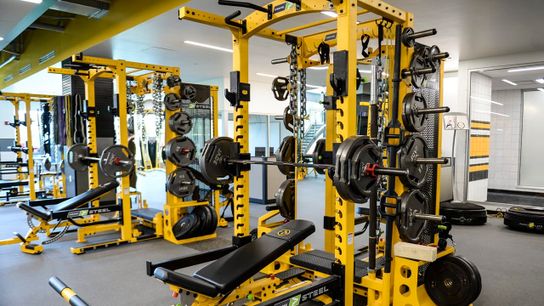
The Pittsburgh Steelers' weight room.
Functional strength supports more than performance alone. It also improves balance, movement efficiency, and resilience under stress. Exercises involving squats, presses, carries, pulls, and rotational control help create a more complete physical foundation. For recreational athletes, this principle matters because long-term consistency usually produces better results than short periods of excessive intensity followed by fatigue or injury.
The growing role of recovery and mobility
Recovery has become one of the most discussed aspects of modern sports performance, especially in physically demanding sports like football. Tight schedules, repeated contact, and high training volumes increase the importance of maintaining joint mobility, muscle quality, and nervous system recovery. As a result, football recovery routines often include mobility sessions, stretching, low-intensity conditioning, and recovery-focused habits designed to support long-term durability.
Mobility work also helps athletes maintain better movement quality under fatigue. Hips, shoulders, ankles, and the core all contribute to stability and efficient force transfer during athletic movement. Even for casual athletes, dedicating time to recovery and mobility can improve training consistency while reducing stiffness and unnecessary physical stress. In many cases, smarter recovery habits make training more sustainable than simply increasing workout intensity.
How amateur athletes can apply football-inspired habits
One of the biggest mistakes recreational athletes make is assuming that progress only comes from pushing harder every session. Professional football culture increasingly shows the opposite. Sustainable improvement depends on balancing effort with recovery, maintaining structure, and respecting progression over time. Amateur athletes can apply these principles by building more organized weekly routines that include strength work, mobility, conditioning, and proper recovery days.
This approach also reduces the pressure to train like a professional athlete. Instead of chasing extreme workouts seen online, fans can focus on developing habits that improve consistency and physical resilience. Training two or three times per week with a clear structure often delivers better long-term results than sporadic periods of excessive volume. The key lesson from football culture is not about intensity alone, but about staying physically prepared over time.
Building a realistic home setup for strength and consistency
For many people, consistency becomes easier when training is accessible and organized. A practical home gym strength setup can help support regular workouts without requiring a commercial gym environment. Compact racks, benches, dumbbells, flooring, and multifunctional equipment allow users to build routines focused on strength, mobility, and conditioning while adapting to garages, spare rooms, or smaller training spaces.
Karl Roser / Pittsburgh Steelers
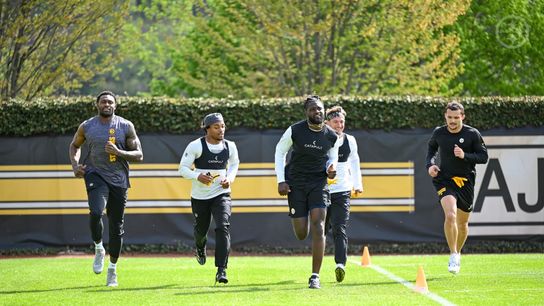
Steelers' Calvin Austin III runs alongside DK Metcalf at Phase One of voluntary offseason workouts in 2025.
The goal of a football-inspired home setup is not to recreate a professional training facility. Instead, it is about creating an environment that supports sustainable habits and regular movement. A well-organized space can reduce friction, simplify workouts, and encourage consistency over time. For football fans interested in becoming stronger and more resilient, the most valuable lesson may be that durability is built through steady habits rather than occasional extremes.