


Pittsburgh does not have a tidy top 10, because six Lombardi Trophies, 32 Hall of Famers tied to the franchise, and four title teams from 1974 to 1979 leave bruises on every cut. Lists bruise. This ranking weighs peak, longevity, playoff leverage, positional value, and what a player forced opponents to change on Sundays at Three Rivers Stadium, Heinz Field, and Acrisure Stadium. The final order: Joe Greene, Terry Bradshaw, Ben Roethlisberger, Jack Lambert, Troy Polamalu, Mel Blount, Franco Harris, Mike Webster, Rod Woodson, and Jack Ham.
Tony Tomsic / Imagn Images
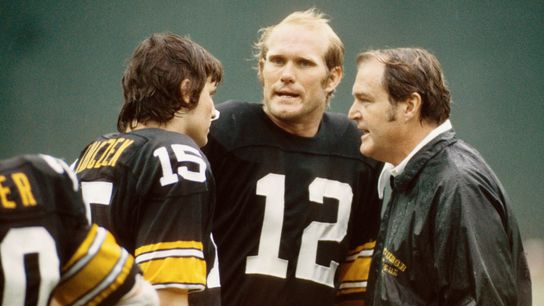
Steelers' former quarterback Terry Bradshaw speaks with Chuck Noll during the 1976 season.
The Man Who Changed The Franchise’s Temperature
Joe Greene remains No. 1 because Pittsburgh had gone 2-11-1 in 1968 before Chuck Noll used the fourth overall pick in the 1969 NFL Draft on Joe Greene, and the 1-13 reset that followed in 1969 became the start of the franchise’s rebuild. Greene won four Super Bowls, earned two Defensive Player of the Year awards, and played 13 seasons with the kind of inside leverage that wrecked trap blocks before the ball reached the mesh point. Terry Bradshaw sits second, not because his regular-season numbers outshine modern passers, but because four Super Bowl wins, two Super Bowl MVP awards, and the 1978 NFL MVP season still form the cleanest quarterback championship file in Pittsburgh. Steel wins.
Two Quarterbacks, Two Different Eras Of Command
Ben Roethlisberger belongs third, ahead of several Canton defenders, because 64,088 passing yards, 418 touchdown passes, and two Super Bowl rings connect Cowher’s power football to Mike Tomlin’s shotgun-era passing game. His defining detail was not size; it was the way he held the ball one beat longer on third-and-7, forced the rush past his hip, and let Hines Ward or Antonio Brown uncover late. The 2008 AFC Championship Game against Baltimore at Heinz Field still reads as his kind of night: pressure, broken pockets, and just enough vertical punishment to let the defense close the door. Bradshaw had the dynasty’s scoreboard; Roethlisberger had the franchise record book.
The Middle Of The Field Had Teeth
Jack Lambert ranks fourth because the 1974 second-round pick became the signal-caller for a defense that won four Super Bowls and treated the short middle as contested property. His 28 interceptions were not decorative numbers for a linebacker; they came from drops under dig routes, quick reads on backs releasing late, and a sense for when quarterbacks were running out of answers. Modern NFL fans often judge old tape while also checking injury reports, spread movement, and live totals, and the MelBet APP can fit that routine as a mobile sports betting tool for NFL markets, player props, and in-play prices before kickoff. The cleaner habit is to separate memory from price, because a Hall of Fame linebacker’s reputation does not tell anyone whether a current 37.5 total has already absorbed weather, pace, and red-zone injury news.
RVR Photos / Imagn Images
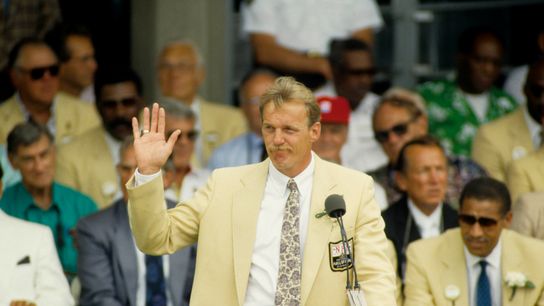
Steelers' legendary linebacker Jack Lambert gets inducted into the Pro Football Hall Of Fame in 1990.
The Safety Who Arrived Before The Throw
Troy Polamalu takes fifth because the Steelers’ 2000s defense changed shape when No. 43 moved from a two-high shell to the A-gap, then back to robber depth before the snap. His 32 interceptions, 12 sacks, 14 forced fumbles, and 2010 Defensive Player of the Year award cover the sheet, but the real number is two: Super Bowl XL and Super Bowl XLIII. The 2008 AFC Championship interception against Joe Flacco still travels: Polamalu broke toward the right sideline, turned a tight game into a 23-14 finish, and sent Heinz Field into January noise. Memory bends.
The Corner Who Bent The Rules
Mel Blount is sixth, and the ranking could be higher on a list built around rule-changing defenders. He started on four Super Bowl-winning teams, intercepted 57 passes, and played the kind of bump-and-run coverage that pushed the league toward the five-yard contact framework now baked into every Sunday broadcast. Franco Harris follows at seventh with 12,120 rushing yards, 91 regular-season rushing touchdowns, and the Immaculate Reception that gave Pittsburgh its 13-7 playoff win over the Oakland Raiders on December 23, 1972. On replay, bodies collide near midfield, the ball skids into open air, and Harris is already moving downhill before half the stadium understands what happened.
Steelers.com
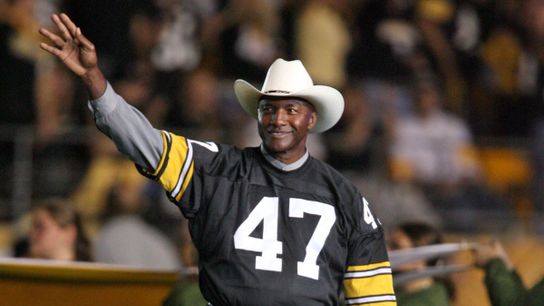
Steelers' Mel Blount waves to the Pittsburgh crowd as he gets honored by the organization.
The Line, The Corner, And The Hardest Omission
Mike Webster ranks eighth because of seven All-Pro selections, nine Pro Bowls, and four Super Bowl rings at center, making the Steelers’ inside run game feel orderly even when the box was crowded. Rod Woodson is ninth after 38 interceptions as a Steeler, the 1993 Defensive Player of the Year award, and return ability that punished quarterbacks for missing outside the numbers. Social media now turns these arguments into hourly scorecards, and MelBet Instagram Somalia can sit in that same football-scroll pattern with fixture reminders, short betting updates, and platform news while fans compare Hall of Fame cases with current odds boards. Jack Ham closes the top 10 with 32 interceptions, 21 fumble recoveries, six All-Pro selections, and the cleanest weak-side linebacker tape in the franchise archive.
The Next Names Still Crowd The Door
Leaving Hines Ward, Lynn Swann, James Harrison, Dermontti Dawson, Jerome Bettis, Jack Butler, and L.C. Greenwood outside the top 10 says more about Pittsburgh’s depth than their flaws. Ward owns the franchise, receiving marks with 1,000 catches, 12,083 yards, and 85 touchdowns, while Swann’s Super Bowl X line of 4 catches for 161 yards still looks outrageous in a 21-17 game against Dallas. Harrison’s 100-yard interception return off Kurt Warner in Super Bowl XLIII is the greatest single defensive play in Steelers postseason history, even if his overall résumé lands just behind Ham and Webster here. Ten spots vanish fast in a room this crowded.