


The era of evaluating NFL performances for Pittsburgh Steelers fans solely through traditional box scores—passing yards, tackles, and touchdowns—is officially over. Today, the National Football League operates on a foundation of advanced analytics, transforming how front offices build rosters and how diehard fans consume the sport. With the implementation of player tracking technology and sophisticated machine learning algorithms, the focus has shifted from what happened on the field to why it happened and what is statistically most likely to happen next.
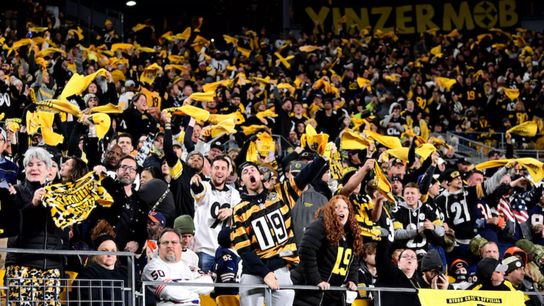
Getty Images
Pittsburgh Steelers fans wave their Terrible Towels aggressively as Styx famous song, Renegade plays during a home game at then-Heinz Field in Pittsburgh, PA.
This data-driven revolution empowers enthusiasts to transition from passive viewers to active strategic analysts. For modern fans looking to apply these predictive insights effectively, pairing statistical knowledge with reliable sports platforms is crucial. Top-tier operators like Te Apuesto recognize this analytical shift, and utilizing the te apuesto digital hub provides fans with the dynamic odds, lines, and forecasting environments needed to leverage high-level football metrics in real-time.
The Evolution of NFL Data Integration
The primary catalyst for this analytical transition was the widespread implementation of Next Gen Stats (NGS). By placing RFID (Radio Frequency Identification) tags in player shoulder pads and the football itself, the league now captures location, speed, and acceleration data at a rate of 10 times per second. This hardware array generates millions of data points per game, which algorithms synthesize to evaluate micro-movements, spacing, and player efficiency during every single snap.
Key Metrics Redefining Football Strategy
For diehards mastering the intricacies of the modern game, several advanced metrics have replaced traditional stats as the definitive measures of player and team success:
Expected Points Added (EPA): Measures the value of individual plays in terms of points. It calculates the expected point differential before and after a play, contextualizing yardage by factoring in the down, distance, and field position.
Completion Percentage Over Expectation (CPOE): Evaluates a quarterback's accuracy by factoring in the mathematical difficulty of each throw. It uses tracking data—such as receiver separation, pass rusher proximity, and throw distance—to determine the baseline probability of a completed pass before grading the quarterback's execution.
Yards After Catch Expected (xYAC): Isolates a receiver's open-field ability by estimating exactly how many yards they should gain after a reception, calculated based on the speed, trajectory, and location of all nearby defenders at the exact moment the ball is caught.
Pass Rush Win Rate (PRWR): Identifies how often a defensive lineman successfully beats his block within 2.5 seconds, providing a much higher-fidelity measure of defensive disruption than highly variable traditional sack totals.
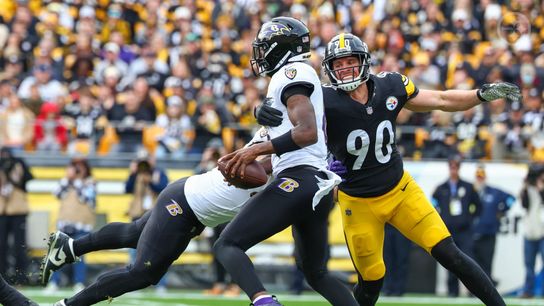
Jared Wickerham / Pittsburgh Steelers
Steelers' TJ Watt goes to sack Ravens QB Lamar Jackson.
Translating Analytics into Actionable Predictions
Advanced metrics are no longer confined to coaching booths or front offices. NFL diehards utilize this granular data to construct intricate predictive models, optimize fantasy football rosters, and execute highly strategic forecasting. Instead of relying on abstract assumptions regarding a team's running game, modern analysts examine Rushing Yards Over Expected (RYOE) to objectively determine whether ground success is driven by the running back's individual vision or the offensive line's blocking efficiency.
Furthermore, machine learning models process decades of situational data to map out optimal game management. Decisions regarding whether to go for it on a critical fourth down, when to attempt a two-point conversion, or how to manage the play clock are no longer debated subjectively. They are dictated by strict win-probability graphs. Fans equipped with these data structures can accurately anticipate coaching decisions, identify tactical mismatches, and adjust their strategic projections before the ball is even snapped.
FAQ: Advanced NFL Analytics
How do advanced analytics directly influence in-game NFL coaching decisions?
Advanced analytics influence coaching by providing real-time win probability algorithms directly to the sidelines. Coaches and dedicated analytical staff rely on data models to dictate optimal fourth-down aggressiveness, two-point conversion attempts, and end-of-half clock management. By mathematically processing thousands of identical historical scenarios, teams can execute decisions that maximize their statistical probability of winning, effectively overriding emotional bias, momentum fallacies, or outdated traditional play-calling conventions.