


Canadian NFL betting changed when single-event sports wagering moved from a restricted category into a regulated provincial framework. Before that shift, many Pittsburgh Steelers fans understood betting mainly through parlays, office pools or informal predictions. Now the more important question is not only which team covers the spread. It is whether the market, operator and betting habit can be read responsibly.

Scott Olmos / USA TODAY Sports
Brett Keisel, a former defensive end for the NFL's Pittsburgh Steelers, uses his mobile device with Steelers fans before a game in Seattle on Sunday, November 29.
For NFL followers in Canada, this matters because Sunday football creates a fast rhythm: early games, late games, prime time, injury updates, player props and live odds. Some readers compare legal terms, provincial access, line movement and neutral resources such as a 1xbet review before deciding what information is useful, but the deeper skill is simpler: understand the framework before looking at any market.
That framework has three layers. First, single-event betting is handled through Canadian law and provincial or territorial authority. Second, Ontario has a distinct open regulated internet-gaming model, while other provinces and territories often work through government lottery corporations or their own regulated channels. Third, responsible play is not an accessory to betting. It is the part that protects the fan from treating entertainment as income.
What changed with single-event betting in Canada?
Canada’s modern sports betting era is often linked to the arrival of legal single-event betting in 2021. The practical change was significant because fans could legally bet on one sporting event where their province or territory permitted it, rather than needing to combine selections into a parlay.
For NFL fans, the difference is easy to understand. A parlay forces several outcomes into one ticket, which increases complexity and risk. A single-event wager can focus on one game, one spread, one total or one moneyline. That does not make it safe by default, but it does make the structure more transparent.
The key point is jurisdiction. Canada is not one single sportsbook market with identical rules everywhere. Provinces and territories decide how betting is conducted and managed in their own regions. That means a fan in Ontario may see a different online environment than someone in British Columbia, Alberta, Quebec or Atlantic Canada.
This is where expertise starts. A Canadian NFL bettor should not begin with odds. The first question is location. The second is whether the operator is authorized for that location. The third is whether the account tools, limits and terms are understandable before money is deposited.
Why Ontario feels different from the rest of Canada
Ontario is the most visible example because it opened a regulated private-operator internet-gaming market in 2022. In practical terms, that created a competitive online environment where operators can serve players in Ontario if they meet the province’s registration and operating requirements.
This is different from a simple national model. Ontario’s framework separates the roles of regulator, market conductor and operator in a way that shapes the user experience. Fans may see more brands, more product variety and more marketing than they would in provinces where a lottery corporation is the main digital sports betting route.
That does not mean one province is automatically easier or safer than another. It means the reader needs to know which rulebook applies. A site that appears in search results or social media is not automatically authorized for every Canadian resident. The visible brand is less important than the licence or registration status behind it.
A careful fan should treat provincial availability as a first filter. If the platform cannot clearly explain where it is authorized, how account verification works and what responsible gambling tools are available, that is a warning sign. Legal access should not require guesswork.
How NFL betting markets should be read
NFL betting is attractive because the league is highly structured. Games happen on predictable days, injury reports are heavily followed, and the regular season is short enough that each matchup feels meaningful. That structure can make betting feel more knowable than it really is.
A market is not a prediction from the sportsbook. It is a price. That price moves because of information, trading decisions, public demand and risk management. When a point spread shifts from -3 to -4.5, it does not simply mean a team became stronger overnight. It may reflect injury news, weather, betting volume or a correction to the opening number.
For Canadian NFL fans, four market types are especially common:
Moneyline: a bet on which team wins the game.
Spread: a handicap that adjusts the expected margin.
Total: a bet on whether combined points finish over or under a number.
Player prop: a bet tied to an individual statistic, such as passing yards or receptions.
The last category needs extra caution. Player props can feel familiar because fans know star players, but they depend on play-calling, game script, injuries and coaching decisions.
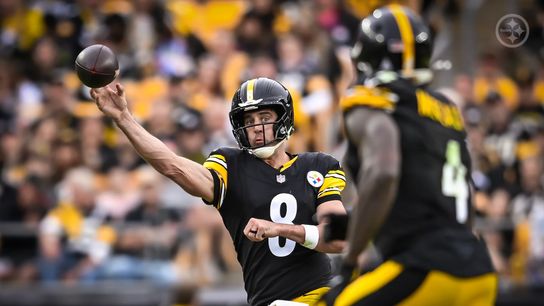
Karl Roser / Pittsburgh Steelers
Steelers' Aaron Rodgers throws to DK Metcalf during a win over the Cleveland Browns during the 2025 season.
A receiver’s talent does not guarantee targets. A running back’s role can change if his team falls behind early.
Player protection is part of the product
Responsible gambling is sometimes presented as a footer link, but it should be understood as part of the product itself. A sportsbook that offers markets without useful control tools leaves the player to manage every risk alone. In a fast NFL environment, that is not enough.
Limits are especially important because football betting can cluster around emotional moments. A missed field goal, a late interception or an overtime touchdown can push fans toward chasing losses. Pre-set limits reduce the chance that a short-term reaction becomes a long session.
There is also a difference between knowledge and control. A fan may understand football very well and still make poor betting decisions. Knowing a team’s offensive line injuries does not remove variance. Understanding a quarterback’s tendencies does not make a fourth-quarter bounce predictable.
A safer approach is to separate analysis from staking. Analysis asks what might happen in the game. Staking asks what amount of money can be risked without affecting rent, food, bills, debt, family obligations or mental health. If those two questions merge, the betting decision becomes weaker.
What E-E-A-T means in a betting article
For Canadian betting content, E-E-A-T should not mean louder opinions. It should mean transparent boundaries. Experience is useful when it explains how a market works. Expertise is useful when it clarifies terminology. Authoritativeness comes from regulatory and institutional grounding. Trust comes from not pretending that betting is a shortcut to income.
That is why a serious NFL betting guide should avoid guaranteed language. It should not frame odds as predictions, bonuses as value without conditions or player props as easy extensions of fandom. The reader deserves clear explanations and friction where friction is healthy.
A strong piece of betting content should answer these questions:
Is the legal framework explained without exaggeration?
Are provincial differences made clear?
Are markets defined before examples appear?
Are risks explained before tactics?
Are responsible gambling tools treated as central rather than optional?
This standard is especially important in Canada because the market is not uniform. Readers need location-specific thinking, not one-size-fits-all claims copied from another jurisdiction.
The evergreen lesson for Canadian NFL bettors
Canada’s single-event betting era gave NFL fans more direct ways to engage with games, but more access also means more responsibility. The central skill is not predicting every Sunday correctly. Nobody does that. The central skill is knowing when the market is clear, when the rules are clear and when personal limits are already set.
NFL betting should remain entertainment. It should fit around the game, not replace the game. A Canadian fan who understands licence, limits and player protection is better prepared than one who only tracks odds movement.
The useful habit is simple: check the jurisdiction, read the rules, set limits, then decide whether the market is worth attention at all. That order protects the fan. It also keeps football where it belongs, as a sport first and a betting market second.