


Watching football every weekend is one thing for Pittsburgh Steelers fans. Stepping onto the field and trying to read a defense, run a route, or make a tackle yourself is a completely different experience. While many players first encounter organized football at school, missing that opportunity does not necessarily mean the sport is closed to you as an adult. Recreational leagues, flag football, and amateur teams can provide ways to start playing later in life. Before joining, however, it helps to know what to expect.
Steelers.com
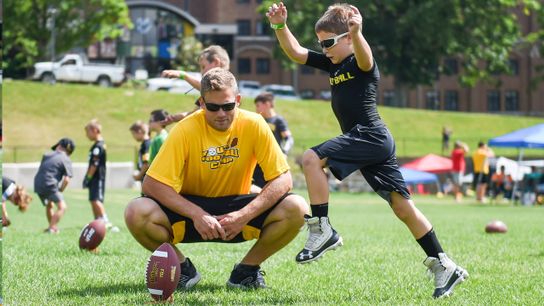
Former Pittsburgh Steelers kicker Shaun Suisham helps a child during one of the many different programs that the organization puts on.
Choose the Right Version of Football
Your first decision is what kind of football you actually want to play. Full-contact tackle football offers the experience closest to the NFL game, but it also requires more equipment, coaching, and physical preparation.
Flag football provides a more accessible alternative. Tackling is replaced by removing a flag from the ball carrier, reducing contact while retaining many familiar elements such as passing, receiving, route running, and defensive coverage.
For both sports, look for local leagues and find out what level of experience they expect. Beginner-friendly groups can make the transition much easier.
Get the Correct Equipment
Equipment requirements vary considerably between flag and tackle football. A tackle league may require a helmet, shoulder pads, mouthguard, padded pants, and other protective equipment. Some teams supply certain items, so check before buying everything yourself.
Footwear matters in either version of the game. Purpose-designed football cleats can provide traction when accelerating, cutting, and changing direction on suitable playing surfaces. Check your league's equipment rules and consider the type of field you will usually play on before choosing a pair. Comfort and fit should take priority over appearance. Equipment that does not fit correctly can become distracting once practice begins.
Build Your Fitness Gradually
Football demands a particular combination of speed, strength, coordination, and short bursts of intense effort. Even someone who regularly runs or goes to the gym may find the movements surprisingly tiring at first. Start gradually. Sprint work, agility drills, strength training, and exercises involving changes of direction can all help prepare your body for practices and games. Recovery matters too. Adult players often have work and family commitments alongside training, making adequate sleep and rest particularly important.
steelers.com
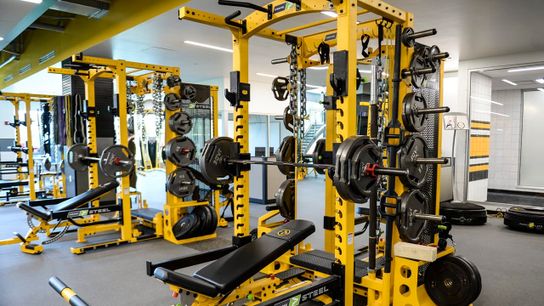
The Pittsburgh Steelers' weight room.
Learn a Position Before Learning Everything
Football can seem overwhelmingly complicated when you try to understand every player's responsibility at once. Instead, concentrate initially on the position you are likely to play.
A receiver can focus on routes, catching, releases, and blocking responsibilities, for example. A defensive back can concentrate on coverage, positioning, and reading receivers. As you become more comfortable, your understanding of the wider game will naturally improve.
Expect a Learning Curve
Knowing football as a fan does not automatically translate into knowing what to do on the field. Plays happen quickly, terminology can be unfamiliar, and techniques that look simple from the stands require practice. Ask questions and be willing to make mistakes. Good recreational teams understand that new players need time to develop.
Most importantly, remember why you joined. Adult football offers exercise, competition, teamwork, and a chance to experience the sport from an entirely different perspective. You may never run out of an NFL tunnel, but lining up for your first real snap can still feel pretty special.