


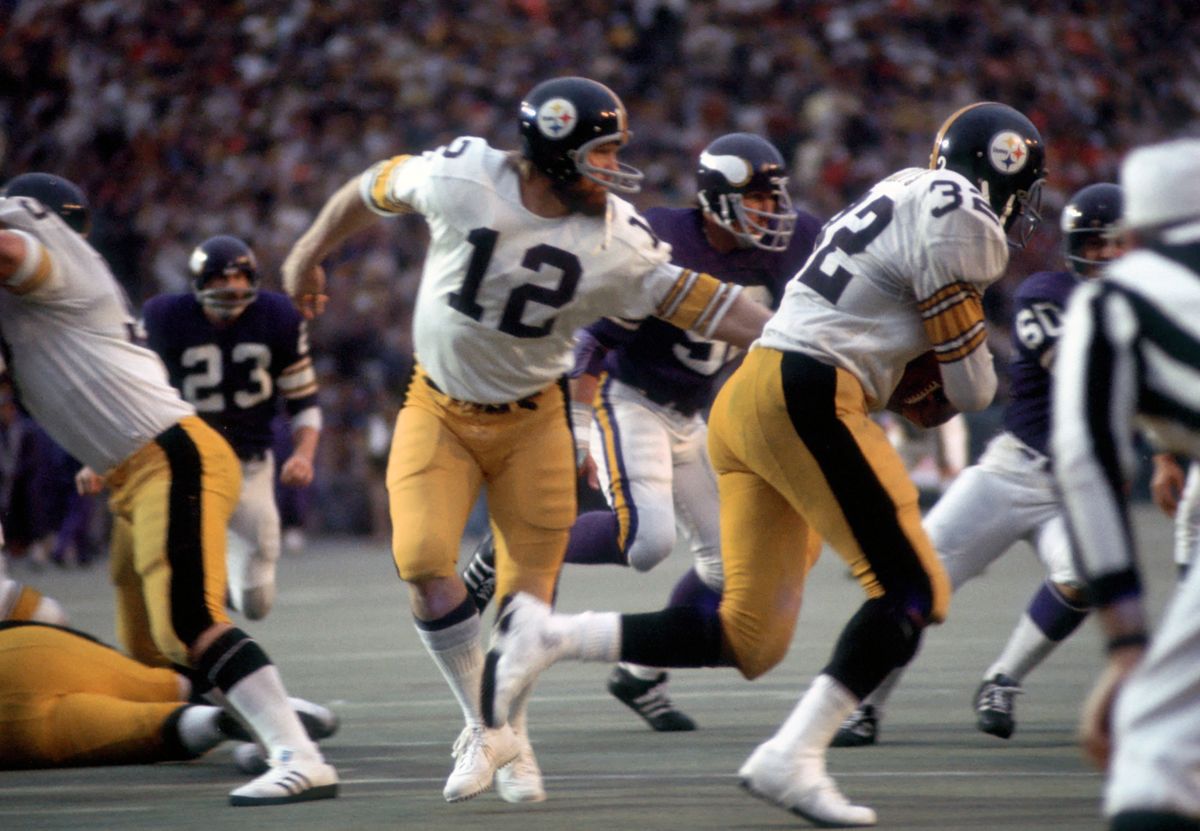
On 12 January 1975, the Pittsburgh Steelers defeated the Minnesota Vikings 16–6 in Super Bowl IX, claiming the first championship in franchise history. Just six years earlier, Pittsburgh had finished the 1969 season with a single victory, making the transformation one of the most remarkable turnarounds in professional football.
Tony Tomsic / Imagn Images
Steelers' former quarterback Terry Bradshaw hands the ball off to Franco Harris during Super Bowl IX.
The Steelers went on to win four Super Bowls in six seasons, establishing a dynasty that helped define the NFL during the 1970s. Decades later, the franchise remains central to Pittsburgh’s identity, influencing everything from local businesses and game-day traditions to television audiences and the growing market for sports entertainment.
Two Football Eras Compared
The Steelers of the 1970s and the modern franchise operate in very different versions of the NFL. During their championship dynasty, Pittsburgh relied on a dominant defense, a powerful running game and a relatively stable roster. Today’s teams compete in a league shaped by free agency, salary caps, advanced analytics and increasingly sophisticated passing offenses.
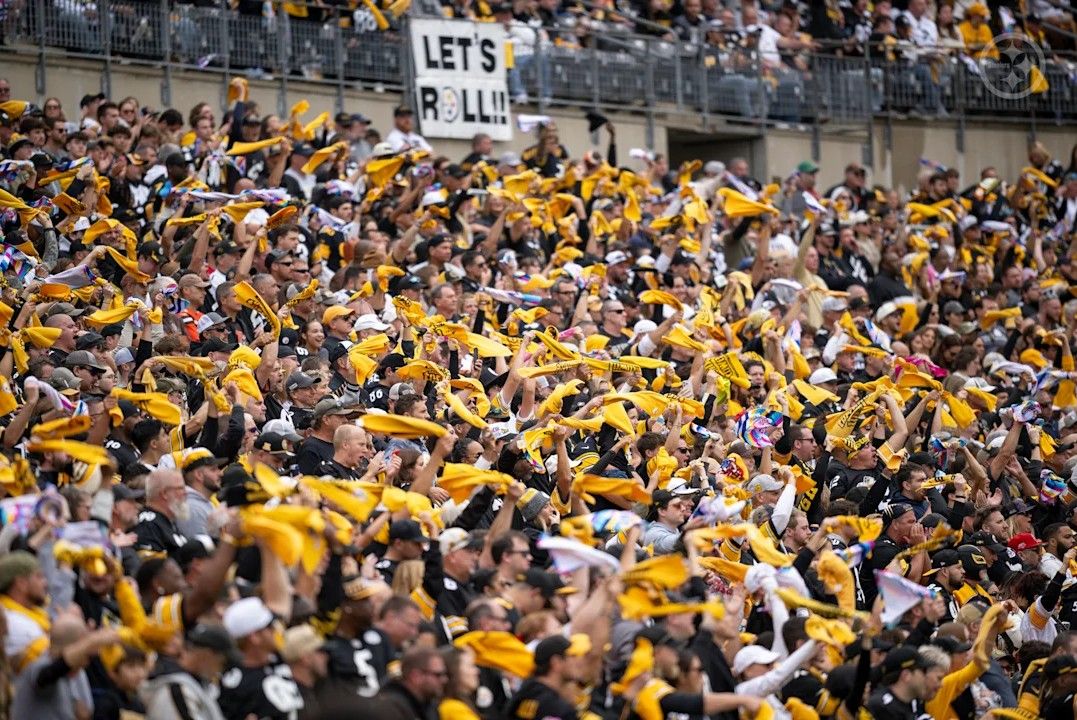
What has remained consistent is the connection between the franchise and its supporters. Steelers fans are known for traveling to away games in large numbers, frequently turning opposing stadiums into seas of black and gold. The Terrible Towel, introduced in 1975 by broadcaster Myron Cope, became one of professional football’s most recognizable fan traditions.
The economic environment surrounding football has also changed dramatically. Television rights, merchandise, sponsorships and digital media now generate substantial revenue across the NFL. Sports betting has become another part of the broader entertainment landscape, although wagering markets operate under separate state regulations rather than rules established directly by the league.
The Steel Curtain, the Defense That Built Pittsburgh
The Steelers’ rise was built around one of the most formidable defensive units in NFL history. Known as the Steel Curtain, Pittsburgh’s defense featured players including Joe Greene, Jack Lambert, Jack Ham and L.C. Greenwood, whose physical approach helped establish the team’s reputation for toughness.
The defense was particularly effective during the 1974 and 1975 championship seasons. Pittsburgh limited opposing offenses through relentless pressure, disciplined tackling and exceptional defensive line play. In Super Bowl IX, the Vikings managed only 119 total offensive yards, demonstrating how completely the Steelers could control a game.
That defensive identity continues to influence how supporters evaluate the franchise. Even as modern football increasingly rewards explosive passing attacks, Pittsburgh fans still place considerable value on pass rushers, physical defenders and disciplined defensive schemes.
Football analysis has also become more accessible outside traditional broadcasts. Fans can compare player statistics, study matchups and examine betting markets through numerous digital platforms. Some also explore other forms of online entertainment, including an online casino such as 7gear, where understanding licensing, game rules and financial limits is important. Unlike football statistics, casino outcomes generally depend on mathematical probabilities rather than team performance, making the distinction essential when evaluating different types of gaming entertainment.
Five Turning Points
The Steelers’ transformation from a struggling franchise into one of professional football’s most recognizable organizations did not happen overnight. It resulted from several decisions involving ownership, coaching, player development and the changing structure of the NFL. The five turning points below explain how Pittsburgh established its identity and maintained a prominent position in American football.
A Franchise Finds Its Direction
Art Rooney founded the Pittsburgh Pirates football team in 1933, beginning a professional football tradition that would eventually become synonymous with the city. The franchise adopted the Steelers name in 1940, reflecting Pittsburgh’s steelmaking industry and its importance to the local economy. Success was initially limited. The team spent decades struggling to compete consistently with the league’s strongest organizations, experiencing numerous losing seasons and relatively few postseason opportunities.
The arrival of Chuck Noll as head coach in 1969 marked a decisive change. Noll emphasized disciplined coaching, systematic player development and building through the NFL Draft. His approach provided the foundation for a championship team rather than relying on short-term solutions.
The Draft Changes Everything
The 1974 NFL Draft became one of the most important events in Steelers history. Pittsburgh selected four future Pro Football Hall of Fame players: Lynn Swann, Jack Lambert, John Stallworth and Mike Webster. Those selections strengthened several positions simultaneously. Swann and Stallworth provided receiving talent, Lambert became a central figure in the defense, and Webster developed into one of the league’s most respected offensive linemen.
Combined with earlier draft selections such as Terry Bradshaw, Franco Harris and Joe Greene, the 1974 class created a roster capable of competing for championships over multiple seasons. The Steelers demonstrated how effective scouting and long-term planning could establish sustained success in professional football.
The First Super Bowl Victory
Pittsburgh’s breakthrough arrived during the 1974 season. After defeating Buffalo and Oakland in the playoffs, the Steelers faced the Minnesota Vikings in Super Bowl IX on 12 January 1975. The game was dominated by Pittsburgh’s defense. Minnesota struggled to move the ball, while Franco Harris rushed for 158 yards and earned Super Bowl MVP honors. The Steelers secured a 16–6 victory, delivering the franchise’s first NFL championship of the Super Bowl era.
The championship transformed the team’s standing within Pittsburgh. At a time when the city’s traditional steel industry faced mounting economic pressures, the Steelers provided a powerful source of civic pride and national recognition.
The Dynasty Takes Shape
The Steelers repeated as champions the following season, defeating the Dallas Cowboys 21–17 in Super Bowl X. Pittsburgh later added consecutive championships in Super Bowls XIII and XIV, becoming the first NFL franchise to win four Super Bowls. Terry Bradshaw developed into a championship quarterback, while the combination of elite defense, experienced coaching and talented offensive players made Pittsburgh one of the league’s most complete teams.
The rivalry with Dallas became particularly significant during this period. Their Super Bowl meetings helped establish both franchises as national attractions, drawing enormous television audiences and contributing to the NFL’s growing popularity.
By the end of the decade, the Steelers had established a standard against which future Pittsburgh teams would be measured.
A New Generation and a Changing League
The Steelers entered a different era after their original championship core retired. Although the franchise remained competitive at various points during the 1980s and 1990s, another Super Bowl victory did not arrive until the 2005 season. Under head coach Bill Cowher, Pittsburgh defeated the Seattle Seahawks 21–10 in Super Bowl XL. Three seasons later, Mike Tomlin guided the Steelers to another championship, defeating the Arizona Cardinals 27–23 in Super Bowl XLIII.
Those victories brought Pittsburgh’s total to six Super Bowl championships, reinforcing the franchise’s reputation for organizational stability and competitive longevity. The modern NFL has introduced additional challenges. Player movement, salary-cap management, evolving offensive strategies and increasingly detailed performance analysis have made roster construction more complicated. Pittsburgh continues to operate within that environment while maintaining many of the traditions established during its championship years.
What Pittsburgh Still Does Better
Although the Steelers face strong competition across the NFL, several characteristics distinguish the franchise and help maintain its national following:
A recognizable football identity. Pittsburgh’s reputation for physical defense, disciplined play and competitive resilience remains closely associated with the Steelers brand.
Organizational stability. The franchise has historically favored long coaching tenures, with Chuck Noll, Bill Cowher and Mike Tomlin providing continuity across different generations.
A passionate national fan base. Steelers supporters regularly attend road games, and the Terrible Towel remains a recognizable symbol throughout the league.
Historic rivalries. Games against the Baltimore Ravens, Cleveland Browns and Cincinnati Bengals provide recurring divisional storylines, while the rivalry with Dallas carries additional historical significance.
A strong connection to the city. The Steelers reflect Pittsburgh’s industrial heritage, and football remains an important part of the city’s cultural identity.
These characteristics do not guarantee success on the field, but they provide the franchise with a foundation that extends beyond individual seasons. Pittsburgh’s challenge is to preserve that identity while adapting to the tactical and financial demands of contemporary football.
Steelers.com
Conclusion
The Pittsburgh Steelers became one of the NFL’s most influential franchises through a combination of effective drafting, stable leadership and a defensive identity that reflected the character of their city. The championships of the 1970s established the foundation, while later Super Bowl victories demonstrated the organization’s ability to succeed across different generations.
The next chapter depends on developing competitive rosters, adapting to changing offensive strategies and maintaining the connection between the team and its supporters. As football entertainment continues to expand through digital media, fantasy sports and regulated wagering, responsible participation remains important. Fans who choose to gamble should understand the risks, establish financial limits and avoid treating sports predictions as guaranteed outcomes.
FAQ
When did the Pittsburgh Steelers become a dominant NFL team?
The Steelers established themselves as a dominant franchise during the 1970s under head coach Chuck Noll. Their first Super Bowl victory came in January 1975, followed by three additional championships before the end of the decade.
How successful are the Pittsburgh Steelers compared with other NFL teams?
Pittsburgh has won six Super Bowl championships, placing the franchise among the most successful teams in NFL history. The Steelers share that total with the New England Patriots, and their achievements span multiple generations of players and coaches.
Why is the Steel Curtain defense so famous?
The Steel Curtain became famous for its physical style, exceptional defensive players and ability to limit opposing offenses. Led by stars including Joe Greene, Jack Lambert and Jack Ham, the defense played a central role in Pittsburgh’s four Super Bowl victories during the 1970s.
Who owns the Pittsburgh Steelers?
The Steelers are controlled by the Rooney family, which has been associated with the franchise since Art Rooney founded the team in 1933. The family has maintained a central role in the organization’s management and long-term direction.