


Pittsburgh reaches October with more questions than its 2-1 record initially suggests. The Steelers have already seen sharp shifts in offensive production, while injuries and an approaching schedule add further uncertainty about their direction.
Sam Greene / The Enquirer / USA TODAY NETWORK via Imagn Images
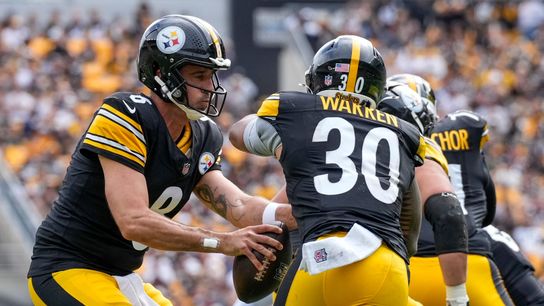
Steelers' Aaron Rodgers hands the ball off to Jaylen Warren during a home win over the Bengals in 2026.
That uncertainty extends to season expectations. Several factors could reshape the picture during the next month, from Aaron Rodgers' performance to secondary depth. October therefore becomes an important evaluation period for a team still establishing what its strongest version can consistently look like this season.
Steelers Odds Drift as Market Confidence Cools
Preseason expectations placed Pittsburgh within reach of another AFC North challenge. Their odds opened around +500 for the division, +2500 for the AFC and +5000 for Super Bowl LXI.
Those numbers have since moved outward. Pittsburgh Steelers odds now sit around +850 for the AFC North, +4500 for the conference and +10000 for the Super Bowl, creating a consistent pattern across all three markets.
The movement suggests early results have created more uncertainty than confidence. Pittsburgh has reached 2-1, but its performances have varied considerably, including a 20-3 loss to New England followed by a 30-27 victory over Cincinnati.
That inconsistency makes October especially important. Stronger performances could change how Pittsburgh is viewed, while additional uneven results could reinforce the current direction. The schedule offers four immediate opportunities to determine which interpretation carries more weight.
October Slate Tests an Untested Roster
Pittsburgh returns home to face Indianapolis before traveling to Tampa Bay, creating different tests without much room for adjustment between them.
The month ends differently. Pittsburgh travels to Paris for its international matchup with New Orleans, adding logistical demands after consecutive games against opponents that test different areas of the roster.
Each result adds another layer of evidence. Indianapolis provides a home test, and Tampa Bay requires another road performance before the Steelers shift their preparation overseas.
That sequence can clarify whether Pittsburgh's uneven September represented normal early-season development or something more persistent. Much of that answer will depend on the offense, where the quarterback position remains the most influential variable.
Rodgers's Durability Becomes the Season's Swing Variable
Aaron Rodgers gives Pittsburgh extensive quarterback experience, but his age naturally keeps durability and week-to-week performance in focus. His partnership with Mike McCarthy also places him at the center of an offense still developing its identity.
One path has Rodgers remain available and run the system efficiently through October. Consistent quarterback play would give Pittsburgh a stronger foundation while the rest of the offense settles around him.
The alternative creates greater uncertainty. Any decline in performance or missed time would force Pittsburgh to adjust at the position that influences virtually every element of its passing game.
That makes Rodgers' month particularly significant to expectations surrounding the Steelers. His performance will not operate independently, however. Keeping the offense balanced also requires production from a backfield currently dealing with its own questions.
Backfield Health Determines Offensive Balance
Pittsburgh's running-back situation enters October without complete clarity. Rico Dowdle's toe injury creates uncertainty about his immediate availability, increasing the importance of Jaylen Warren's workload.
Warren can provide continuity, but the broader question concerns how Pittsburgh distributes carries if Dowdle remains limited. A settled rotation would give McCarthy greater flexibility when structuring early downs and maintaining different offensive approaches.
Continued uncertainty could create the opposite effect. Reduced backfield depth can place additional demands on Warren while potentially increasing the offense's reliance on Rodgers and the passing game during a demanding stretch.
October should provide greater clarity either way. Yet offensive health represents only part of Pittsburgh's challenge. The defense faces a broader set of concerns, particularly in the secondary.
Secondary Attrition Threatens Defensive Depth
Pittsburgh's secondary enters the next phase of the schedule with several issues that need attention. Jalen Ramsey managing a wrist injury has become one consideration, while Brandin Echols has undergone concussion evaluation and Jamel Dean has dealt with an ankle issue.
Each situation can be managed individually. Together, they place greater pressure on Pittsburgh's depth because injuries can change personnel combinations, coverage responsibilities and the flexibility available to the defensive staff.
The concern grows when absences overlap. Indianapolis and Tampa Bay can each force the secondary to handle different passing concepts before Pittsburgh adds international travel to its preparation for New Orleans.
How quickly players return could therefore influence the defense's October ceiling. Fortunately for Pittsburgh, instability behind the defensive front is balanced by one familiar constant closer to the line of scrimmage.
Watt's Pass Rush Anchors Defensive Odds Stability
T.J. Watt remains the defensive presence capable of changing possessions before pressure reaches the secondary despite recent concerns over his form. His ability to disrupt quarterbacks from the edge gives Pittsburgh a way to influence passing situations regardless of the personnel operating behind him.
Charles LeClaire / Imagn Images
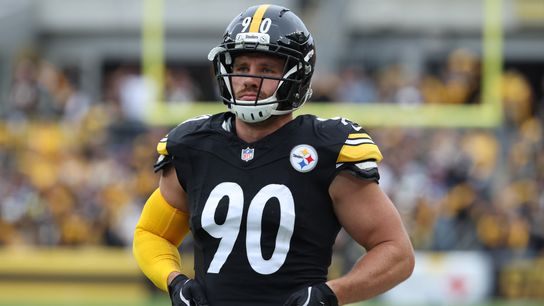
Pittsburgh Steelers’ T.J. Watt looks on at Acrisure Stadium in 2026.
Pressure can shorten the time defensive backs must maintain coverage. It can also create hurried throws, force quarterbacks away from preferred reads, and make longer-developing passing concepts harder to execute. Broader NFL analysis can help place that impact in context by tracking pass-rush production, opponent tendencies and the matchup conditions surrounding Pittsburgh’s upcoming games.
That becomes especially valuable while Pittsburgh works through secondary uncertainty. Watt cannot erase every depth concern, but consistent disruption can reduce how often those concerns are exposed during extended passing situations.
October Should Provide the Answers
Pittsburgh doesn't need October to answer every question about its season. The next games should nevertheless provide substantially more evidence about where the Steelers stand within the AFC picture.
Rodgers' durability, backfield availability and secondary depth will all shape that evaluation, while Watt offers continuity on defense. Add a varied schedule culminating in an international game, and Pittsburgh has a month that can quickly change perceptions. How those factors develop will determine whether September's uncertainty strengthens or begins to fade.
Content reflects information available as of 2026/10/01; subject to change.