


The Pittsburgh Steelers spent most of Sunday trying to make Cincinnati uncomfortable and received very little evidence that it was working. The Bengals moved the football, their quarterback kept finding answers and Pittsburgh reached the fourth quarter without a sack. Then the texture of the game changed. It did not begin with a highlight, either. One small procedural crack was enough for the Steelers' most experienced defender to feel the afternoon starting to tilt.
Barry Reeger / Imagn Images
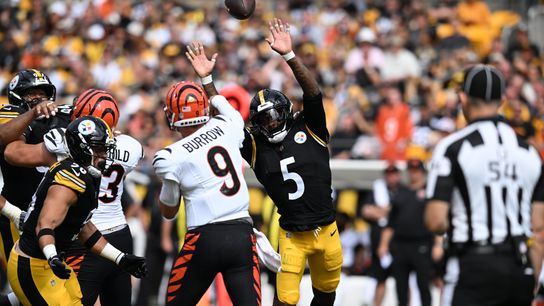
Steelers' Jalen Ramsey attempts to bat down a pass while playing the Cincinnati Bengals in 2026.
Cameron Heyward believes the first real sign of vulnerability came before Cincinnati even ran a play on its final possession. The Bengals had to spend a timeout with 2:08 remaining simply to beat the play clock. For Heyward, that was the moment Pittsburgh could sense something had shifted after spending most of the afternoon chasing an offense that had been operating comfortably. Cincinnati later acknowledged the timeout came because of a procedural mistake.
The Steelers eventually turned that tiny opening into the play that decided the game. Derrick Harmon stripped Joe Burrow at the Pittsburgh 38-yard line with 53 seconds remaining, and Sebastian Joseph-Day recovered the loose football at the Cincinnati 49 with 44 seconds on the clock. It was Pittsburgh's first sack of the afternoon, which is one way to make waiting nearly 60 minutes for one feel a little less inconvenient.
During a recent episode of The Rich Eisen Show, Heyward explained how the defense sensed Cincinnati finally giving it something to attack.
“I think the last two drives, we started to really settle in, which was crazy because Burrow had been on fire to start the game… You felt a little bit like there was a little [chink] in the armor when they had to spend a timeout to start the series… We created a situation where we were tackling well, keeping [them] in bounds… left with one timeout to go down the field. I think they convert early and then Derrick and Sebastian Joseph-Day step in,” Heyward said.
The timeout itself did not sack anybody, obviously. Cincinnati came out of it and immediately completed a 17-yard pass to reach its own 47 before the two-minute warning. What it changed was the math surrounding every snap after that. The Bengals entered the possession with two timeouts and burned one before the offense could even get started, leaving Pittsburgh with an extra weapon that does not show up on a defensive depth chart: the clock.
That made tackling almost as important as coverage. After the two-minute warning, Pittsburgh held a short completion to a four-yard loss and another underneath throw to six yards, allowing chunks of valuable time to disappear while Cincinnati moved only two yards forward over those two snaps. The Bengals eventually converted third-and-8 and reached the Steelers' 38, but only 53 seconds remained.
Barry Reeger / Imagn Images
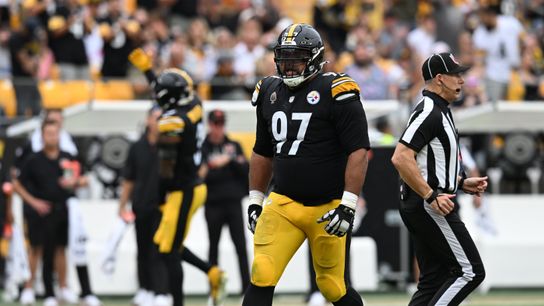
Pittsburgh Steelers’ Cameron Heyward reacts after a sack at Acrisure Stadium in 2026.
This was an enormous departure from the first three quarters. Burrow completed his first 14 passes and spent much of the afternoon making Pittsburgh's rush look decorative. Cincinnati did not have its first three-and-out until its previous possession in the fourth quarter, after the Steelers had tied the score at 27. Heyward's point about the final two series starts there: Pittsburgh finally stopped being dragged around by Cincinnati's rhythm and began dictating what the offense had to solve.
That earlier stop also gave the defense evidence that the game had changed before the timeout ever happened. For most of the afternoon, getting Burrow off schedule felt like trying to catch smoke with oven mitts. Late in the fourth quarter, the Steelers suddenly stacked a three-and-out with a final possession that began with Cincinnati spending a timeout on itself.
The situation still was not comfortable. Cincinnati reached the Pittsburgh 38, already close enough to make the possibility of a tying field goal very real. But the Bengals had one timeout left, less than a minute remained and the Steelers could rush knowing Burrow had very little appetite for taking a sack.
That is where Harmon changed the afternoon. He beat the right guard with a bull-pull move, reached Burrow and knocked the football loose as the quarterback tried to avoid going down. Joseph-Day won the race to the ball and survived the pile underneath it, completing a game-ending recovery that looked considerably more chaotic than the final line in the play-by-play.
Steelers Finally Made Cincinnati Play Their Game
The most interesting part of Heyward's explanation is that Pittsburgh's decisive defensive moment began before Harmon ever won his rush. The Steelers had spent most of the game reacting to Cincinnati. Late, they created a situation where every tackle in bounds squeezed the Bengals a little harder and every second removed another option from the play sheet.
That is situational defense in a form that does not produce many individual statistics. No one gets credited with half a sack for keeping a six-yard completion in bounds. There is no box-score column for making an offense feel rushed because it carelessly burned a timeout. Those details only become obvious when the final snap arrives and the quarterback is trying to make something happen before the clock makes the decision for him.
Pittsburgh still has plenty to correct from a game in which Burrow threw for 282 yards and three touchdowns. One late stand should not disguise how comfortable Cincinnati looked for long stretches. What it showed, however, was a defense capable of changing the terms of the game when its margin for error had nearly vanished.
Heyward sensed the first crack when Cincinnati had to stop the clock before its final drive really began. The Steelers spent the next 84 seconds widening it. Harmon only needed one snap to break the whole thing open.
#SteelerNation