


The Pittsburgh Steelers have plenty of questions to answer about their offensive approach after showing signs of life late in their latest game. Head coach Mike McCarthy faced one of those questions during his Monday press conference when reporter Chris Carter challenged the team's fourth-quarter play-calling. Carter pointed to what he described as 17 consecutive dropbacks and suggested Pittsburgh's offense began moving the football more consistently during that stretch. McCarthy, however, was quick to dispute one important detail of the question.
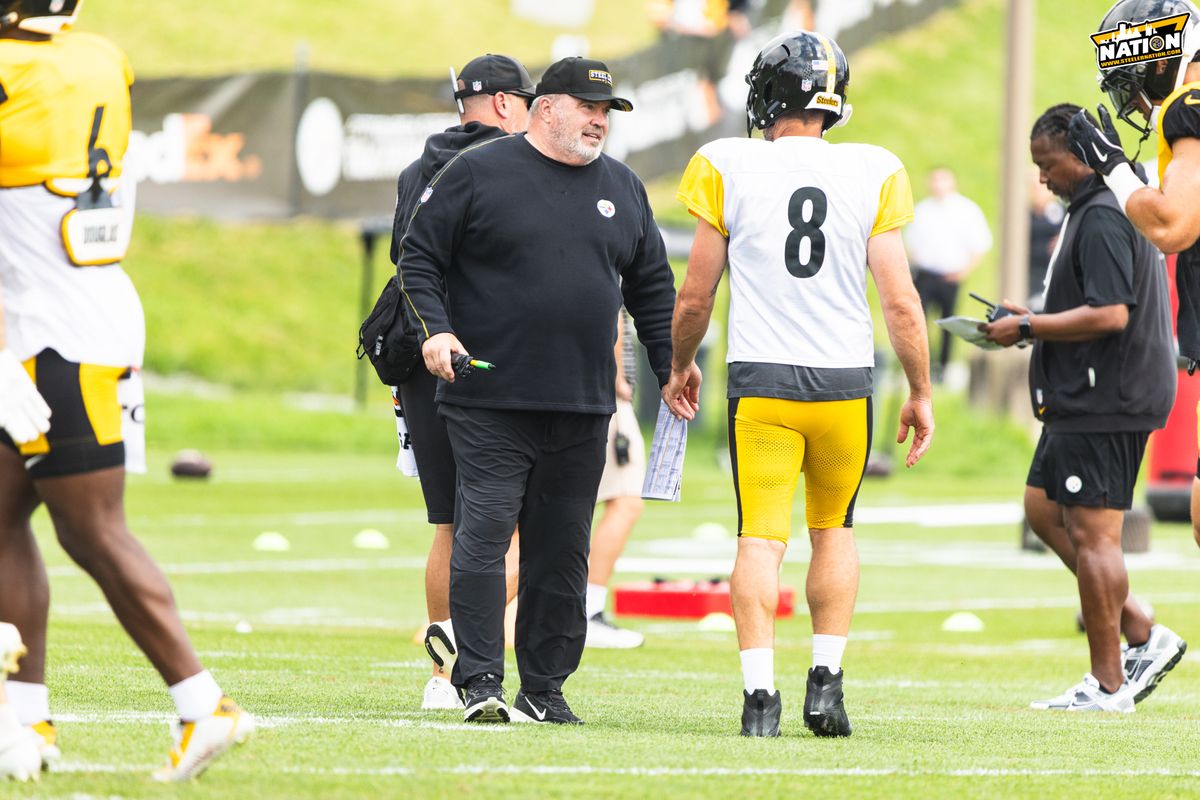
Jordan Schofield / SteelerNation (X: @JSKO_PHOTO)
Pittsburgh Steelers Head Coach Mike McCarthy (left) and quarterback Aaron Rodgers (8) during 2026 training camp at Saint Vincent College in Latrobe, PA.
Pittsburgh's offensive strategy has become an interesting topic because of the contrast between its struggles to sustain drives and its ability to generate momentum when throwing the football. With Aaron Rodgers at quarterback, the Steelers have a veteran capable of recognizing defensive adjustments and getting the ball out quickly. That naturally raises questions about whether Pittsburgh should give him more opportunities to operate through the passing game. However, McCarthy appears unwilling to accept the idea that the fourth-quarter improvement can be explained by one simple statistic.
During his weekly Monday media availability, Carter asked McCarthy about the reported stretch of 17 straight dropbacks in the fourth quarter. The reporter noted that Pittsburgh appeared to find a better offensive rhythm during that portion of the game. McCarthy responded by discussing the flow of the contest, the opposing defense's approach, and the adjustments made throughout the game.
"I think you see the way the game went and clearly how they were playing too, and the adjustments that were made," McCarthy said. "But yeah, they were not 17 straight dropback passes."
McCarthy's response is significant because he challenged the premise rather than simply agreeing that Pittsburgh's passing attack had become more effective. The head coach did not deny that adjustments influenced the offense's performance, but he disputed the specific characterization of the play sequence.
That distinction matters when evaluating whether the Steelers should have abandoned their earlier approach. Without an accurate accounting of the plays, it would be difficult to determine whether a pass-heavy strategy was responsible for the improvement.
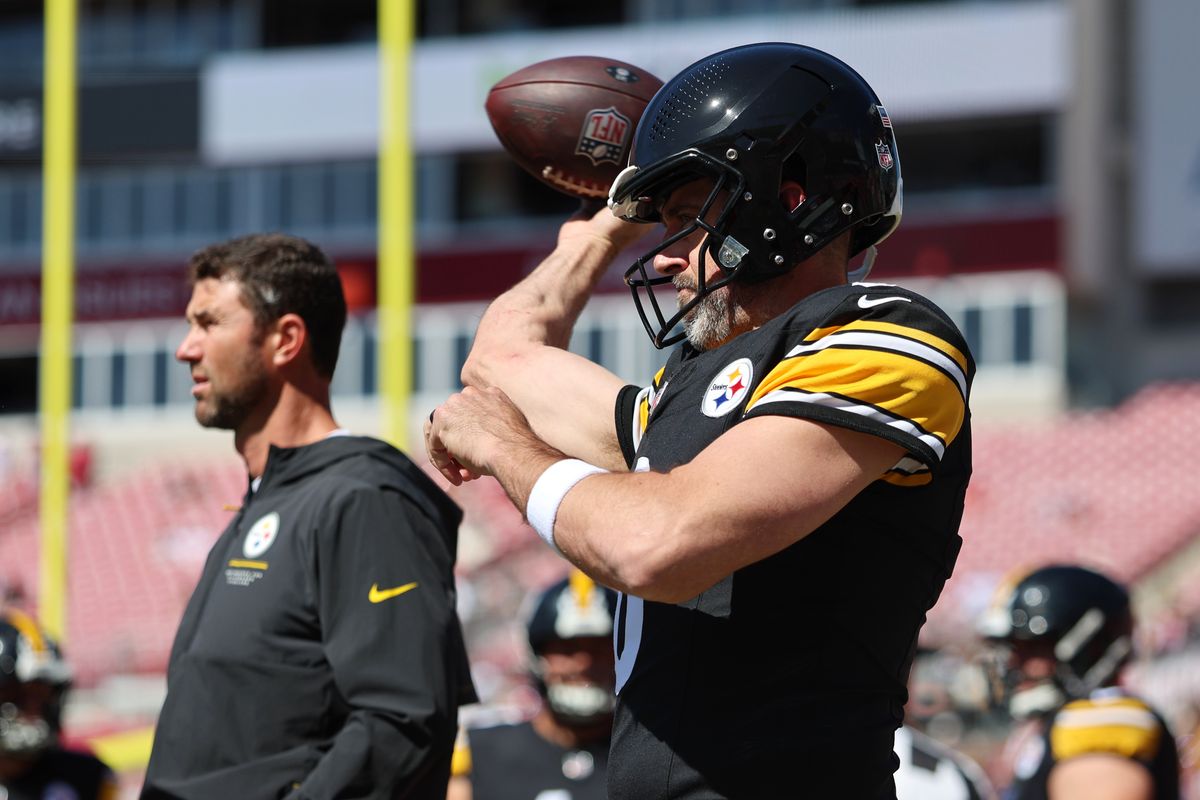
Morgan Tencza / Imagn Images
Pittsburgh Steelers quarterback Aaron Rodgers (8) warms up before the game against the Tampa Bay Buccaneers at Raymond James Stadium in October of 2026.
Still, Carter's broader observation raises a worthwhile question about Pittsburgh's offensive identity. If Rodgers and the passing game were finding more success late, the coaching staff must determine which elements of that stretch can be incorporated earlier in games. Waiting until the fourth quarter to establish a consistent rhythm can leave an offense with fewer opportunities to influence the outcome. The Steelers need to identify what worked without assuming that simply throwing more frequently is the answer.
The opponent's defensive approach is also an important part of the equation. Defenses frequently adjust their coverage and pressure packages based on the score, time remaining, and offensive tendencies. A passing concept that succeeds late in a game might face a different look earlier in the contest. McCarthy's reference to adjustments suggests he views the improvement within the broader context of how the game unfolded.
Steelers Face Important Questions About Their Passing Attack
Pittsburgh's offensive challenges cannot be reduced to a debate over running versus passing. The Steelers must consider down and distance, protection, defensive alignment, and how effectively their personnel execute each assignment. A balanced offense is not necessarily one that divides its plays evenly between runs and passes. It is one that can consistently exploit what the defense is giving it.
Rodgers' experience should give Pittsburgh opportunities to adjust when opponents begin anticipating certain tendencies. His ability to diagnose coverage and identify favorable matchups can be especially valuable when the offense needs to regain momentum.
However, even an experienced quarterback needs adequate protection and receivers who can create separation. Those factors influence whether a more aggressive passing approach produces sustainable results.
Do you think Mike McCarthy should give Aaron Rodgers more opportunities to throw the football earlier in games, or should the Pittsburgh Steelers maintain their current offensive approach? Follow me on X @anthonyghalkias and share your thoughts with Steeler Nation.
#SteelerNation