


The Pittsburgh Steelers have seen some encouraging signs from Robert Spears-Jennings, but the excitement around the seventh-round rookie still needs some perspective. Spears-Jennings has the kind of athletic profile that makes him easy to notice in offseason practices, but he is still a developmental safety with real work ahead of him.
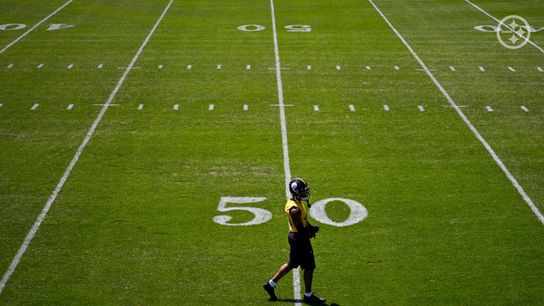
Taylor Ollason / Pittsburgh Steelers
Steelers' Robert Spears-Jennings walks on the field during Organized Team Activities (OTAs) in 2026.
That is the part that can get lost during the quietest stretch of the NFL calendar. A young player flashes in shorts, the roster conversation starts to build, and suddenly a seventh-round pick is treated like a lock to become something more than he has proven to be. Spears-Jennings may absolutely have a path to the 53-man roster, but it is not going to come just because he looks fast in June.
Christopher Carter of the Pittsburgh Post-Gazette put the situation into fair context during a recent Steelers chat. Carter did not dismiss the rookie, but he made it clear that the early conversation should stay grounded.
“I don't think there's any undue hype about him,” Carter wrote. “It's just that he's a seventh-round pick with size and speed, and that could be a useful utility to have on special teams.”
That is probably the healthiest way to view Spears-Jennings right now. The Steelers did not draft him expecting an immediate defensive starter. They drafted a traits-based safety with size, speed, and potential special teams value. Those are good things to have late in the draft, but they do not erase the reasons he was still available in the seventh round.
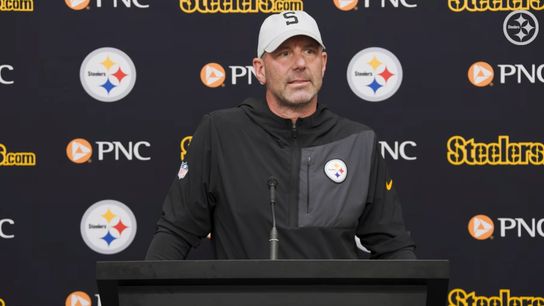
Steelers.com
Steelers' new special teams coordinator Danny Crossman speaking with the media.
Spears-Jennings became a player worth watching because of his movement skills and early spring impression. The Steelers needed more young athletic depth in the secondary, and he fit that mold. His size-speed combination gives the coaching staff something to work with, especially in a position group where special teams value can be the difference between making the roster and landing on the practice squad.
The early buzz was understandable, especially after Spears-Jennings started to make a stronger push during the spring. For a seventh-round pick, simply getting noticed during OTAs and minicamp is a positive step. He did what a late-round rookie is supposed to do. He gave the Steelers a reason to keep watching.
Still, there is a major difference between being interesting in the spring and being trusted on defense in the regular season. The latter requires much more than straight-line speed. Safeties have to process route combinations, communicate, tackle cleanly, understand spacing, and avoid being late with their eyes. If any of those areas lag behind, quarterbacks and coordinators will find it quickly.
Carter pointed to those concerns when explaining why Spears-Jennings lasted as long as he did.
“He lasted that late in the draft because he wasn't strong in coverage,” Carter wrote. “While he'd make solid plays on the ball when everything was kept in front of him, he wasn't a good defensive back in man coverage and looked slow in his processing of route concepts to know when and how to jump routes as a safety.”
That is the warning inside the hype. Spears-Jennings can run, but safety is not just about running. His speed matters only if he is diagnosing quickly enough to use it. If he is late to recognize route concepts or uncomfortable in man coverage, he will need time before the Steelers can trust him with defensive snaps.

Sam Greene / The Enquirer
The Steelers defense celebrates on the way to a James Pierre touchdown in 2025.
The good news for Pittsburgh is that Spears-Jennings does not need to be a polished safety immediately. His rookie path should begin on special teams. If he can cover punts, run on kickoff units, tackle well in space, and use his speed in controlled assignments, he gives himself a realistic chance to stick. That is where many late-round defensive backs have to prove their value first.
The Steelers also have a roster need for players who can help in that phase. New special teams coordinator Danny Crossman will have several young players fighting for roles, and Spears-Jennings has the athletic profile to stand out if he handles the details. That is where his college experience and physical tools could translate before his defensive game fully catches up.
The challenge is that special teams value alone may not be enough if the Steelers believe they can stash him. A seventh-round pick has to make a convincing case, especially on a roster with several young defensive backs competing for limited spots. If Spears-Jennings is only an athletic project and not one of the best special teams players in camp, the practice squad becomes a real possibility.
Steelers Need Patience With Robert Spears-Jennings
The Steelers should be intrigued by Spears-Jennings, but they should also be careful not to rush the evaluation. Training camp and preseason will matter far more than anything that happened in shorts. That is when coverage issues, processing speed, tackling angles, and special teams value will become easier to judge.
Spears-Jennings has a chance to become a useful utility player for Pittsburgh. He has the size and speed teams want to develop, and those traits are why he is getting attention. The part Carter highlighted is important, though. The hype should not skip over the developmental work that still has to happen.
For now, Spears-Jennings is a name to watch, not a finished answer. That can still be a good thing for the Steelers. It just needs to be viewed the right way.
#SteelerNation