


The Pittsburgh Steelers drafted Rashard Mendenhall to be a physical running back, but one collision with Ray Lewis changed the way he thought about surviving in the NFL. Mendenhall entered the league with the confidence of a first-round pick. He left one of his earliest rivalry moments with a damaged shoulder and a new understanding of what professional football demanded.
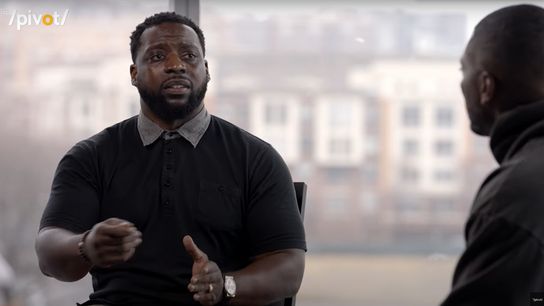
The Pivot Podcast
Former Steelers RB Rashard Mendenhall on The Pivot Podcast.
Mendenhall’s rookie season in Pittsburgh came with big expectations. The Steelers had selected him in the first round of the 2008 NFL Draft, and his combination of speed, power, and college production made him look like a natural long-term answer in the backfield. He was not supposed to be a finished product right away, but Pittsburgh clearly saw him as part of its offensive future.
That early plan took a harsh turn against the Baltimore Ravens. Mendenhall had already talked about wanting to introduce himself to Lewis and the Steelers-Ravens rivalry by refusing to hesitate. He did exactly that, but the result was a fractured shoulder that ended his rookie season and forced him to rethink what kind of runner he had to become.
During an appearance on the NFL Players Second Act podcast, Mendenhall explained that the Lewis hit did more than injure him. It changed how he viewed the difference between college physicality and NFL physicality.
“I broke my whole shoulder trying to run over Ray Lewis,” Mendenhall said. “When I come back out here, I got to find a different way.”
That quote gives important context to the way Mendenhall was later viewed by some Steelers fans. He was criticized at times for spinning, dancing, or looking for extra movement instead of always lowering his pads and attacking downhill. From the outside, that could look frustrating. From Mendenhall’s perspective, it was an adjustment that came from experience.
The NFL teaches lessons quickly. Mendenhall had been able to run through defenders at earlier levels, but Lewis represented a different class of opponent. He was not just a hard hitter. He was the kind of linebacker who could punish the smallest mistake and make a young back understand that contact in the AFC North carried a different price.
Mendenhall did not say he stopped being physical. He said he learned to pick his spots. There is a major difference between running scared and running smarter. After the injury, Mendenhall had to understand when to deliver punishment, when to avoid a clean shot, and when to use the athleticism that made him a first-round talent in the first place.
That led to a different version of his game.
“That’s when I started adding a little bit more finesse, a little more ballet to my game,” Mendenhall said.
That is a memorable way to explain it. Mendenhall was not trying to become a soft runner. He was trying to become a more complete one. Ballet may sound like an unusual word for a Steelers running back, but the idea makes sense. Running back is not only about force. It is about timing, balance, rhythm, spacing, and knowing how to make defenders miss without losing forward momentum.
The Steelers have always valued physical players, but even Pittsburgh’s best backs needed more than brute strength. Jerome Bettis was known for power, but he also had rare feet for a player his size. Le’Veon Bell later became famous for patience and tempo. Mendenhall’s adjustment fits into that larger truth about the position. The best backs do not survive by running into every collision the same way.
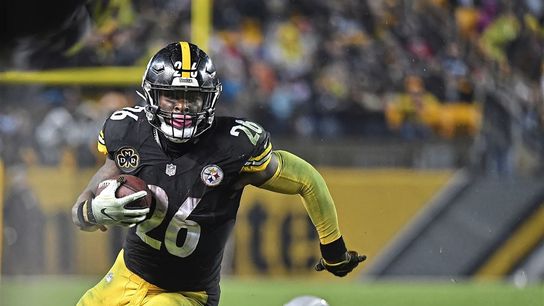
Peter Diana / Pittsburgh Post-Gazette
Former Steelers running back Le'Veon Bell runs past the New England Patriots defense in an NFL game.
Mendenhall eventually became a productive player for Pittsburgh after that lost rookie season. He rushed for more than 1,000 yards in both 2009 and 2010 and helped the Steelers reach Super Bowl XLV. His career in Pittsburgh included both strong production and criticism, but his explanation of the Lewis hit adds a layer to how fans should remember his style.
Some of the spinning and movement that bothered fans came from a real NFL lesson. Mendenhall had tested himself against one of the most feared defenders in league history and paid for it physically. When he returned, he was not going to play the exact same way. He had to protect his body while still producing for an offense that needed him.
That is also why evaluating young offensive players can be complicated. Pittsburgh still looks for players with toughness and versatility, but carving out a role often requires adaptation. A current example is how Eli Heidenreich may need to find multiple jobs to stick with the Steelers, because raw talent alone rarely guarantees a clean NFL path.
Steelers Saw Mendenhall Learn Survival In Real Time
Mendenhall’s story is not just about one hit. It is about the evolution that hit forces. A rookie running back wanted to prove he belonged against Lewis. He did not hesitate. He got hurt. Then he had to rebuild part of his game around the reality that not every collision was worth taking head-on.
That does not make him less physical. It makes him more honest about what the league requires. The NFL can humble even the most talented players, and Mendenhall’s first major lesson came from one of the hardest possible teachers.
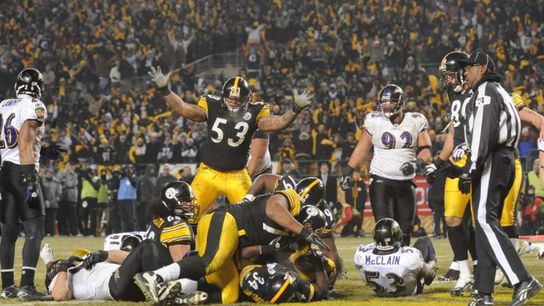
Pittsburgh Steelers
Former Steelers running back Rashard Mendenhall at the bottom the pile after carrying the ball in for the game-sealing score against the Baltimore Ravens in the 2010 AFC Divisional Round.
The Steelers eventually got a better, more complete runner because of it. Mendenhall still had power, but he added movement. He still attacked defenses, but he learned to avoid giving every defender the clean shot they wanted.
The Ray Lewis hit wrecked his shoulder. It also changed his running style. Years later, Mendenhall’s explanation makes the “dancing” criticism sound a lot different.
Sometimes the spin move was not hesitation. Sometimes it was survival.
#SteelerNation