


The Pittsburgh Steelers have always wanted to be known as a physical football team, but Rod Woodson remembers when that identity was sharpened in a very direct way. The Hall of Fame defensive back played for two legendary head coaches in Pittsburgh, and the transition from Chuck Noll to Bill Cowher brought a noticeable shift in energy.
Pittsburgh Steelers
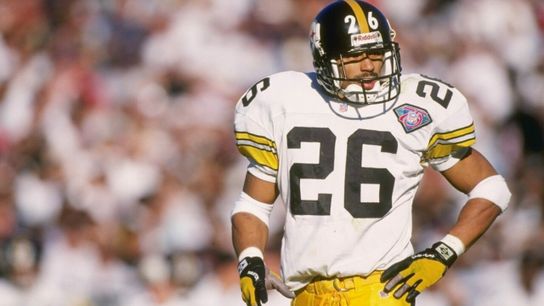
Steelers legendary cornerback Rod Woodson with his hands on his hips during an NFL game.
Woodson’s early years with the Steelers came under Noll, who built the franchise’s championship standard and carried himself with a calmer, more measured style. Cowher arrived in 1992 with something different. He was younger, louder, more fiery, and much more willing to challenge the team’s leaders in front of everyone.
During an appearance on Not Just Football with Cam Heyward, Woodson explained how quickly Cowher changed the tone in Pittsburgh. Cowher did not walk into the Steelers’ building trying to ease into the job. He made it clear that the team was going to be physical, demanding, and direct.
Woodson pointed to Cowher’s message after the Steelers failed in a short-yardage situation. It was not just about one play. It was about what kind of team Pittsburgh was going to become.
“If we can’t get three effing yards when we effing needed, then we’re not going to be winners,” Woodson said.
That is the type of line that explains Cowher’s Steelers better than any stat sheet could. His teams were not built around finesse. They wanted to run the football, defend with violence, and make opponents understand what kind of game they were entering. Cowher’s message was simple. If Pittsburgh could not win the most basic physical downs, it could not become the team he expected.
Tom Uhlman / Associated Press
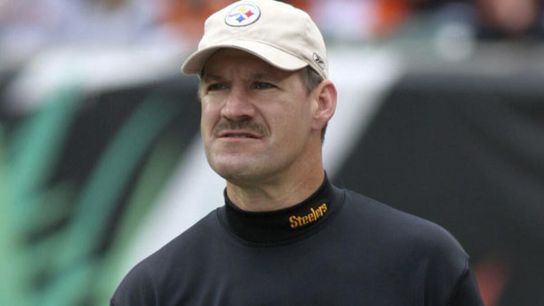
Former Steelers head coach Bill Cowher looks out onto the field from the sidelines during an NFL game.
That mindset became part of the Steelers’ identity throughout the 1990s. Pittsburgh did not always have the most explosive offense, and the team had its share of postseason heartbreak, but Cowher’s teams were almost always difficult to play. They were physical at the line of scrimmage, aggressive on defense, and comfortable turning games into a test of will.
Woodson said Cowher also made it clear that the Steelers were not trying to trick teams into submission. They wanted to impose their will even when opponents knew what was coming.
“They might know what we’re doing, but we’re still going to get it accomplished,” Woodson said.
That is a powerful football philosophy. It is one thing to win because the opponent is confused. It is another to win because the opponent knows the plan and still cannot stop it. For Cowher, that was the standard. The Steelers were going to line up, execute, and force the other team to match their physicality.
There is a reason Woodson’s comments still connect to the current version of the Steelers. Pittsburgh has spent years trying to rediscover a more complete version of that edge, especially on defense and in the trenches. SteelerNation recently covered how Yahya Black is facing a crucial technique challenge, and that kind of line-of-scrimmage development is exactly the type of physical standard Cowher demanded from his teams.
Cowher’s approach also required buy-in from the team’s best players. Woodson was already one of the most talented players in football, but Cowher did not treat stars as separate from the rest of the roster. If anything, he challenged them first. That gave the message more credibility inside the locker room.
David J Phillip / AP Photo
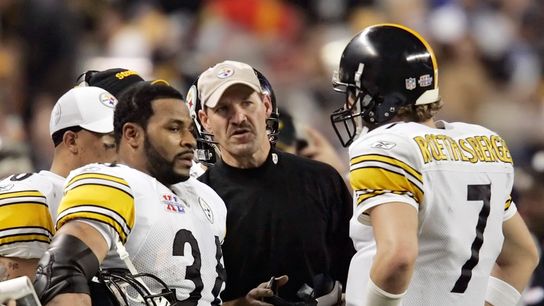
Steelers offensive leaders Jerome Bettis and Ben Roethlisberger meet with Head Coach Bill Cowher on the sideline.
The Steelers had plenty of leaders during that era. Woodson, Greg Lloyd, Kevin Greene, Carnell Lake, Levon Kirkland, and others helped give Pittsburgh one of the most intimidating defenses in the league. Cowher’s personality fit that group. He did not have to fake intensity. His sideline presence matched the way his team wanted to play.
The results followed quickly. Cowher took over a franchise that had missed the playoffs often near the end of Noll’s tenure and immediately helped push Pittsburgh back into contention. The Steelers became a regular AFC threat under Cowher, and Woodson was one of the defining players of that early stretch.
Steelers Were Built On Cowher’s Physical Edge
Woodson’s comments are not just nostalgia. They explain why Cowher’s early Steelers teams became so respected. Pittsburgh was not perfect, but opponents knew the game would be physical. The Steelers wanted to make teams uncomfortable, and short-yardage failures were treated like something bigger than missed opportunities.
That is the part modern teams still chase. Scheme matters. Quarterback play matters. Explosive plays matter. Still, at some point, a team has to win the obvious downs. Third-and-short. Goal line. Four-minute offense. Backed-up defense. Those are the moments where a team’s identity becomes clear.
Cowher wanted the Steelers to own those moments. Woodson saw it up close, and his story shows how quickly that message reached the locker room. Pittsburgh was not just trying to be competitive. It was trying to become the team no one wanted to deal with.
That standard became one of the defining pieces of Cowher’s tenure. Decades later, Woodson still remembers the message because it was blunt, demanding, and completely tied to what the Steelers wanted to be.
#SteelerNation