


The Pittsburgh Steelers spent years hearing the same phrase attached to Mike Tomlin, and eventually, it started to feel less like praise and more like a punchline. Tomlin never had a losing season in Pittsburgh, but that accomplishment became strangely complicated as the playoff drought kept growing.
Erin Hooley / Associated Press
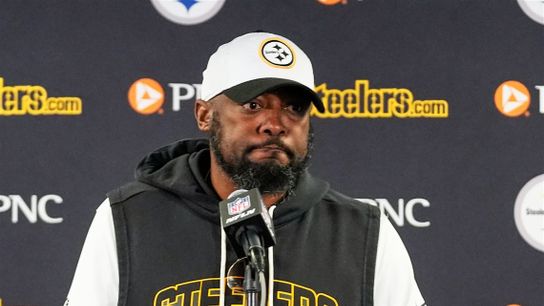
Steelers' Mike Tomlin looks shocked as he speaks with the media after a loss in the 2025 season.
That is what made a recent comment from Charles Davis stand out. During a recent YouTube appearance on BIGPLAY Baltimore, Davis defended the bigger picture of what Tomlin represented in Pittsburgh. He did not frame the Steelers’ approach as some empty talking point or a meaningless streak. He viewed it as a reflection of how the organization wanted to operate, even when fans were understandably frustrated by the lack of postseason success.
"Pittsburgh said, 'We are not just tanking to get a draft pick. We want to be competitive every year,'" Davis explained. "That became an albatross on Mike Tomlin. 'He’s never had a losing season.' If I hear that one more time, I’m gonna lose my mind. It became a negative. It was the craziest thing I’ve ever seen in my life."
That is an interesting way to look back at the final stretch of Tomlin’s time in Pittsburgh because it gets to the heart of the debate. The Steelers were not bad enough to justify a full rebuild, but they were not good enough to satisfy a fan base that measures success by playoff wins and Super Bowl contention. Tomlin’s ability to keep the team above water became both his shield and his burden.
There is no denying why some fans got tired of hearing about the streak. The standard in Pittsburgh has never been simply avoiding losing seasons. The Steelers have six Super Bowl titles, one of the most demanding fan bases in football, and a history that makes average results feel unacceptable. When the team kept getting bounced early in the postseason, or missing the playoffs altogether, the “never had a losing season” line started to feel like a consolation prize.
At the same time, Davis’ point is fair. It is rare for an NFL team to stay competitive for that long without completely falling apart. Plenty of franchises would have traded years of dysfunction for what the Steelers considered frustrating stability. Pittsburgh never became a bottom-feeder under Tomlin. The locker room never completely collapsed. The team kept finding ways to remain relevant, even in seasons where the roster clearly had flaws.
That is what made the conversation so strange. Tomlin was criticized for something that most teams spend decades trying to achieve. The Steelers were never drafting at the very top because they were usually too competitive to get there. That limited their access to elite quarterback prospects and premium draft positioning, but it also meant Pittsburgh never surrendered seasons just to reset the roster.
Davis seemed to be pushing back against the idea that this should be viewed only as a failure. In a league where losing can spiral quickly, Tomlin kept Pittsburgh steady. That does not erase the playoff issues, but it does explain why the “no losing seasons” line became more complicated than fans wanted it to be. It was a real achievement, even if it eventually stopped being enough.
The problem for Tomlin was that the conversation changed over time. Early in his tenure, the consistency looked like a foundation. Later, it started to look like a ceiling. The Steelers were not embarrassing themselves, but they were also not breaking through. That is where the frustration grew. Fans did not want to hear about nine or 10 wins if those seasons kept ending the same way.
That frustration helped define the end of the Tomlin era. Pittsburgh has since turned the page from Tomlin to Mike McCarthy, and the organization now enters a very different stage. McCarthy is not stepping into a patient environment. He is stepping into a franchise that expects the stability to remain, but wants the postseason results to change.
That will be the real test of how people look back on Tomlin. If McCarthy wins quickly, fans may argue that the Steelers needed a new voice all along. If Pittsburgh slips backward, Tomlin’s consistency may start to look more impressive than it felt in the moment. That is usually how these things work. Stability is often easier to criticize when it is still there.
Steelers Must Separate Stability From Stagnation
The difficult part is that both sides of the Tomlin debate can be right. The Steelers needed more playoff success. That is obvious. Tomlin was not above criticism, and the franchise’s inability to win a postseason game for so long could not be ignored forever. At some point, competitive regular seasons were not enough to justify the same results.
Still, Davis’ point should not be dismissed. There is a difference between being stuck and being irrelevant. Pittsburgh was stuck, but it was not irrelevant. Tomlin kept the Steelers in the mix almost every year, and that required leadership, preparation, and a level of consistency that should not be treated like nothing.
Matt Freed / Pittsburgh Post-Gazette
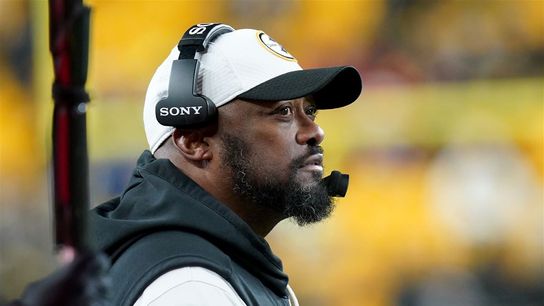
Former Steelers head coach Mike Tomlin looks on from the sidelines during a home game in 2025 season.
That is why the “never had a losing season” debate became so exhausting. It was used by one side as a defense and by the other as proof that expectations had been lowered. The truth was somewhere in between. The streak mattered, but it was not the whole story. It showed Tomlin could keep a team competitive, but it did not solve the bigger problem of getting Pittsburgh back to championship contention.
Davis captured that tension well. What once should have been viewed as one of Tomlin’s strongest accomplishments eventually became something fans rolled their eyes at. That says as much about the Steelers’ standard as it does about Tomlin himself.
Pittsburgh does not celebrate being decent. It never has. That is why Tomlin’s consistency became so polarizing near the end. Fans respected the floor, but they wanted a higher ceiling. Now McCarthy has to prove the Steelers can have both.
#SteelerNation