


The Pittsburgh Steelers have spent the summer talking about how much they like the depth of their roster. General Manager Omar Khan is still making sure the front office has a backup plan for the backup plan. Pittsburgh’s scouts are using the preseason to study every other roster in the NFL, essentially turning August into 31-team homework before injuries or surprise cuts force the Steelers to start looking for answers in a hurry.
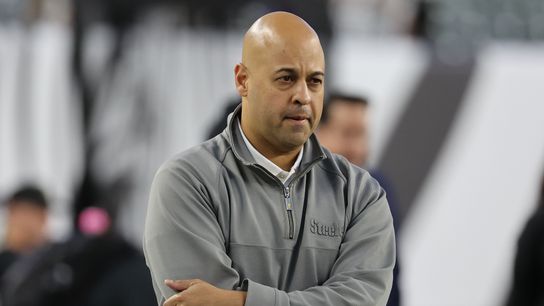
Joseph Maiorana / Imagn Images
Steelers GM Omar Khan.
The approach fits the point Pittsburgh has reached in camp. The roster does not have one obvious hole screaming for an emergency signing, and several position battles are producing more viable candidates than open jobs. It is a good problem until somebody gets hurt or another team releases a player who is simply better than the option already in the building.
Khan does not want those moments to begin with a Google search and a prayer. The personnel department is already building its board by watching preseason games across the league, tracking players who could become available and preparing for the churn that arrives when all 32 clubs begin making harder decisions.
During a recent training camp interview, Khan explained why Pittsburgh’s scouting work does not slow down just because its own roster currently looks deep.
“We have scouts scouting all the preseason games and getting ready,” Khan said. “We need to know all 31 other teams. We don’t know who’s going to get cut, but we’ve got to be prepared because, like I said, if we have an injury, we’ve got to be ready to replace them right away.”
The timing makes the work especially important. NFL teams do not have to cut their rosters to 53 players until Aug. 30, which means hundreds of players will become available in a short window. Some will be developmental prospects. Others will be veterans squeezed out by younger, cheaper options. A few will be good enough that a team with no obvious need suddenly finds one.
Pittsburgh has benefited from that type of patience before. The best August additions are rarely the ones a front office starts chasing after the problem appears. The scouting has usually been done weeks earlier, allowing a general manager to act before the rest of the league starts making the same phone calls.
Khan has already left room for a training camp addition if the right opportunity appears. The difference between adding a player because he became available and adding one because the roster suddenly needs help can be measured in hours. Pittsburgh wants its evaluations finished before that clock starts.
Scouts also have to study players who may look buried on another team’s depth chart. A fourth cornerback in one city could become Pittsburgh’s third corner after an injury. A reserve tackle playing behind two established starters might suddenly make sense if the Steelers lose an offensive lineman. Depth charts are local documents. Talent is portable.
The preseason gives Pittsburgh a cleaner look at those players than spring workouts ever could. Scouts can see how a reserve handles live pass protection, whether a defensive back tackles in space or whether a linebacker contributes on special teams. The evaluation is not about collecting recognizable names. It is about identifying players who can step into an NFL game without requiring a month-long tutorial.

© Charles LeClaire / Imagn Images
Steelers' Art Rooney II during Mike McCarthy's introductory press conference.
The Steelers’ first preseason game against the Green Bay Packers will also begin exposing their own roster to the same league-wide scrutiny. Pittsburgh may love its depth, but other teams will be watching the players who appear unlikely to survive the final cut. The homework assignment works both ways.
Khan is not only deciding which outside players might improve Pittsburgh. He has to determine which Steelers could be lost if they are waived, which ones might return to the practice squad and whether keeping an extra player at one position is worth sacrificing depth somewhere else.
The club’s 2026 draft class makes those decisions even more complicated. Pittsburgh used 10 selections, and not every rookie is guaranteed a place simply because the team invested a pick. Veterans with special teams value are fighting younger players with more long-term upside. The final handful of roster spots may come down to which players can solve multiple problems on Sundays.
Injuries can rearrange the entire calculation overnight. A position that looks overcrowded on Friday can look thin by Monday. Khan’s emphasis on being ready “right away” reflects how quickly the available market can move. Waiting several days to begin researching a replacement can mean the best option is already wearing somebody else’s helmet.
Steelers Want The Shopping List Finished Before They Need It
Pittsburgh’s scouting operation is essentially preparing a late-summer emergency menu. Hopefully, nobody has to order from it. If the Steelers do, Khan does not want the staff staring at the options for the first time while a position coach is asking who can practice tomorrow.
The Aug. 30 cutdown day will create the largest wave of available players, but movement can happen earlier through trades, injury settlements and teams deciding they no longer have enough snaps for a veteran. The Steelers have to know which situations are worth monitoring before the rest of the league begins scrambling.
Mike McCarthy will have a voice in what skill sets fit his roster, but Khan’s staff provides the inventory. The more accurately Pittsburgh evaluates the other 31 teams, the easier it becomes to find a player who can contribute immediately instead of merely filling an empty locker.
A deep roster is valuable. A front office prepared for the moment that depth disappears is better.
Khan sounds pleased with the group Pittsburgh has assembled. He also knows August has a habit of changing plans without asking permission. The Steelers’ answer is to study everybody else now, so if the phone has to ring later, they already know who should be on the other end.
#SteelerNation