


The Pittsburgh Steelers did not give Drew Allar much worth framing from Friday night's 17-0 preseason loss to the New York Jets. Pittsburgh never scored, Allar completed fewer than half his passes and the rookie spent too much of the second half dealing with pressure. Somewhere underneath the ugly box score, though, Allar believes one part of his quarterbacking quietly became more NFL-ready.
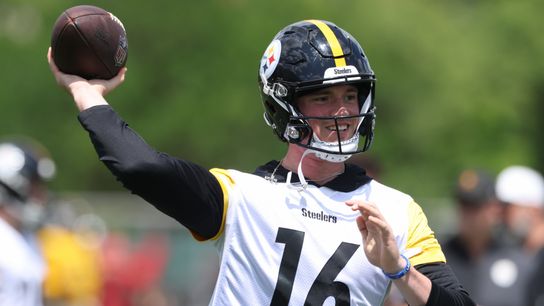
Charles LeClaire / Imagn Images
Steelers' Drew Allar throws the ball during Organized Team Activities (OTAs) in Pittsburgh in 2026.
Allar completed 11 of 23 passes for 110 yards and was sacked three times after taking over for the second half. The performance was a sharp contrast from his explosive preseason debut, but Pittsburgh is evaluating considerably more than completions, touchdowns and whatever number eventually appears beside QB rating. How a quarterback operates everything before the snap can determine whether the offense even gives itself a chance once the play begins.
For Allar, that process felt cleaner against New York. He was more comfortable receiving the call, communicating it, breaking the huddle and getting Pittsburgh organized before the play clock started becoming an unwanted 12th defender. Those pieces are easy to ignore from the stands because none produce a highlight unless they go terribly wrong.
During his postgame media availability, Allar explained why playing under a real game clock has started accelerating that part of his development.
“I feel like my operation was a little bit cleaner, and I think that’s a little bit just getting more experience and more reps in a game-like environment,” Allar said. “Because, you know, practice, we have the play clocks, but obviously you’re not going to get penalized in practice. So having that stress element in a game, O-line did a great job of communicating up front with me. They did a great job of getting in and out of the huddle as well. So that makes my job a lot easier. So I felt like my operation took a step forward. There’s other things I’m sure I did better, but overall, there’s a lot of things I know I can improve on.”
That distinction between practice and games gets to something Mike McCarthy has emphasized throughout Allar's development. Pittsburgh can put a play clock on the practice field and create situational periods, but nobody walks the offense backward five yards because a rookie quarterback took too long getting everybody organized. Friday supplied consequences that a whistle and a reset cannot completely reproduce.
NFL quarterback operation begins well before the throw. Allar has to hear McCarthy's call, relay it correctly, make sure the personnel and formation are set, understand the defensive front, communicate protection information and still leave himself enough time to diagnose whatever changes after the defense shows its hand. A quarterback can possess a cannon and still turn the offense into an airport security line if all of that takes too long.
Pittsburgh has already seen encouraging signs that the mental traffic is slowing down for him. Allar said earlier this week that the play calls themselves were beginning to sound slower in his headset and that he felt increasingly comfortable processing what was coming through. His growing comfort in the offense is now beginning to show up in the mechanics of running the huddle rather than only his understanding inside the meeting room.
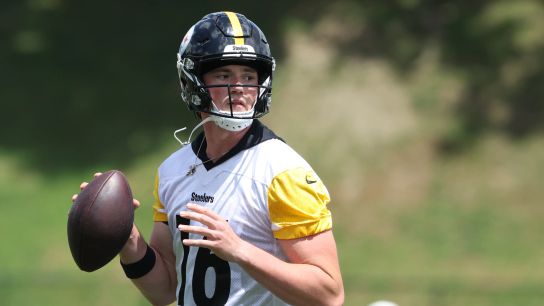
Charles LeClaire / Imagn Images
Pittsburgh Steelers’ Drew Allar participates in training camp drills at Saint Vincent College in 2026.
His offensive line deserves part of the credit. Allar specifically praised the communication happening in front of him, which becomes especially useful when young linemen and backups are rotating through preseason combinations. Clean protection communication allows the quarterback to spend less of the play clock solving problems that should already have answers attached.
The Jets still exposed plenty Allar will want corrected before Pittsburgh finishes the preseason in Buffalo. Three sacks reflect pressure around him, but quarterbacks share responsibility for avoiding some negative plays through quicker decisions and pocket management. His 47.8% completion rate also looked considerably different from the 10-of-13 debut that sent preseason optimism into its traditional August sprint.
Allar seemed appropriately uninterested in pretending cleaner operation erased the rest. He immediately followed his positive assessment by acknowledging there were plenty of things he could improve. That balance is probably healthier for Pittsburgh than either extreme. The rookie does not need to treat a shutout like a secret masterpiece, and he does not need to throw away useful progress because the scoreboard looked like it had run out of ink.
Steelers Can Find Development In The Boring Parts
The Steelers drafted Allar because of the obvious traits. His size and arm strength announce themselves without much explanation, while McCarthy has spent the summer working on the footwork and processing required to make those tools useful on Sundays. Pittsburgh's quarterback project will eventually be decided by whether the boring pieces become automatic enough that Allar can devote his attention to beating the defense.
Friday was useful precisely because the football around him was not comfortable. The offense struggled, protection broke down and Allar had to manage the huddle while the game kept moving. Practice can reproduce the assignment. It cannot perfectly reproduce the mild panic of watching the play clock shrink while 10 teammates wait for the rookie to get everyone pointed in the same direction.
His throws still need to improve, and Pittsburgh certainly would have preferred a few points attached to the progress. Allar nevertheless left the Jets game believing his command before the snap was better than it had been one week earlier.
A 17-0 loss will not create much rookie hype. For McCarthy, that might make the quieter improvement easier to appreciate.
#SteelerNation