


The Pittsburgh Steelers changed coaches, reshaped their personnel and spent an entire offseason talking about building a more versatile attack. Week 1 finally provided the first meaningful look at what all of that work produced. Pittsburgh won, which matters most, but one part of the afternoon looked familiar enough to make the optimism surrounding the new operation feel slightly less comfortable.
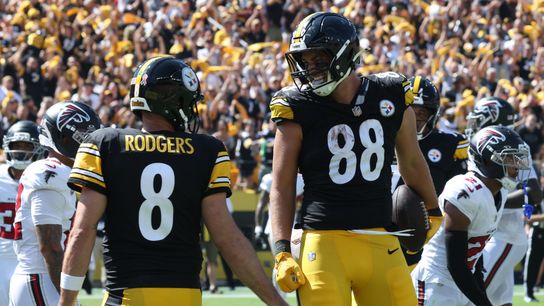
Charles LeClaire / Imagn Images
Steelers' Pat Freiermuth with Aaron Rodgers after the two connected on a touchdown in the 2026 season opener.
During a recent postgame review, the analysts pointed out that Pittsburgh's offense still resembled last season's inconsistent unit in one important area: sustaining drives. The Steelers were able to capitalize when the defense shortened the field, but they struggled to create long touchdown marches on their own against the Atlanta Falcons.
“Similar to last year with the Steelers’ offense, very inconsistent. They took advantage of the short fields, but they didn’t put together a drive over like 41, 42 yards. So, there’s some questions there as far as Pittsburgh’s offense and their consistency, but the defense was really impressive,” the analysts said.
That is the part Mike McCarthy will probably care about more than whether the final score looked respectable. Pittsburgh won 20-13, but seven of those points came from the defense, and its only offensive touchdown arrived after an interception gave the offense possession at Atlanta's 31-yard line. Four plays later, Aaron Rodgers found Pat Freiermuth for six points.
That sequence showed Pittsburgh can punish an opponent for giving it a gift. It did not necessarily prove the Steelers can consistently manufacture scoring opportunities when forced to travel most of the field themselves.
There were encouraging individual moments. Rodgers completed 24 of 40 passes for 221 yards and a touchdown, and several throws were better than the final result because of drops or missed opportunities. Michael Pittman Jr. led Pittsburgh with 58 receiving yards, while Freiermuth contributed five catches for 46 yards and the touchdown.
The problem was connecting enough of those moments together.
Pittsburgh repeatedly found itself needing one more block, one more completion or one cleaner sequence to turn possession into pressure. A productive individual play would be followed by a penalty, an incompletion or another issue that put the offense back into an unfavorable situation. That kind of stop-start rhythm is exactly what McCarthy's arrival was supposed to help eliminate.
The running game did not offer much assistance for most of the afternoon either. Pittsburgh eventually found enough production late to help finish the game, but the ground attack was not consistently creating easy second and third downs early. When the run game cannot keep the offense ahead of schedule, sustaining a 70-yard drive becomes much more dependent on repeatedly converting obvious passing situations.
That places extra pressure on Rodgers, the offensive line and the receivers to be nearly perfect for extended stretches.
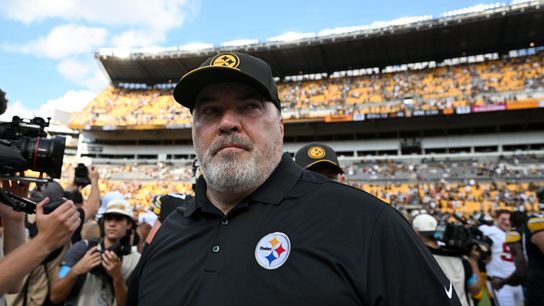
Barry Reeger / Imagn Images
Pittsburgh Steelers head coach Mike McCarthy after a game against the Atlanta Falcons at Acrisure Stadium.
The contrast with Pittsburgh's defense only made the offensive issue more noticeable. Jaquan Brisker provided the short field that led to the offense's touchdown, while TJ Watt later supplied seven points himself on a 35-yard interception return. The defense created the kind of margin that allowed Pittsburgh to survive without the offense ever truly taking control of the game.
That formula can win plenty of Sundays. The Steelers have been proving that for years.
The concern is whether relying on it begins to look too familiar.
Pittsburgh's early offensive growing pains are understandable with McCarthy installing a new system and several important players adjusting to new roles. One game is nowhere near enough evidence to decide what the offense will look like by November. The opener does, however, establish the first issue that needs to change if Pittsburgh wants this version to become meaningfully different from the one it replaced.
Short fields should become bonuses rather than requirements.
Steelers Need To Prove They Can Own A Full Drive
There will be weeks when the defense does not hand Pittsburgh the football around midfield. Turnovers fluctuate, field position changes and some opponents will protect possession well enough that Rodgers has to take the offense 70 or 80 yards if the Steelers want seven points.
That is where McCarthy's offense will ultimately be judged.
The pieces are available. Pittsburgh has experienced receivers, multiple tight ends, two running backs it trusts and a quarterback who still showed Sunday that he can make difficult throws. The next step is turning those individual answers into possessions where the offense stops needing outside help to finish the job.
The analysts' comparison to last season feels uncomfortable because everyone around Pittsburgh has spent months expecting something different.
Week 1 produced a new coach, new personnel and a win. Now, the Steelers need their offense to start producing a new kind of drive.
#SteelerNation