


The Pittsburgh Steelers have discovered an uncomfortable flaw in the idea that more answers automatically create a better offense. Two games into Mike McCarthy's return to calling plays for Aaron Rodgers, Pittsburgh has produced one offensive touchdown, struggled to stay on schedule and followed an uneven opener with a 20-3 loss in New England. The playbook may contain an answer for nearly every defensive picture. The larger question is whether the offense has been carrying too many of them at once.
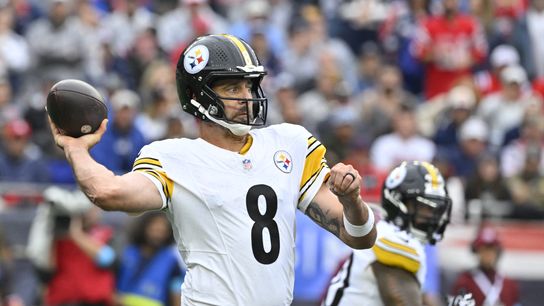
Eric Canha / Imagn Images
Steelers quarterback attempts to throw a pass during Week 2 defeat against the Patriots.
McCarthy acknowledged Monday that Rodgers' experience may have tempted him to give Pittsburgh more offense than the entire unit was ready to execute cleanly. The admission shifts part of the Week 2 failure away from a single missed block, route or throw and toward how the game plan itself was constructed.
During his Monday media availability, McCarthy explained that Rodgers' ability to process an enormous amount of information can become a temptation if the coaching staff assumes everyone around him can operate comfortably at the same volume.
“I think you know we may have been guilty of playing doubleheaders with the volume because the ability of our quarterback,” McCarthy said. “Aaron brings a tremendous wealth of knowledge and experience, and I'm guilty of maybe relying on that too much at times.”
That is a fascinating mistake because Rodgers is not the player McCarthy is worried about overwhelming. The 42-year-old has spent more than two decades identifying coverages, changing protections and manipulating defenses before the snap. Pittsburgh reunited him with a coach who knows exactly how much football he can absorb. The mistake, by McCarthy's own description, was treating the quarterback's capacity like the offense's capacity.
Every adjustment still has to travel through 10 other players. A receiver has to recognize the same coverage and alter the route correctly. The offensive line has to sort pressure without communication breaking down. Running backs and tight ends have protection responsibilities that can change with the front. A quarterback can have the right answer in his head and still watch the play fall apart if one other player is half a beat late getting there.
The New England Patriots exposed that disconnect repeatedly. Rodgers completed 23 of 39 passes for 187 yards, was sacked four times and turned the ball over twice as Pittsburgh finished with only 235 total yards. The Steelers produced only one play of at least 20 yards, and that did not arrive until the fourth quarter, when Jaylen Warren turned a checkdown into a 26-yard gain. The menu may have been large. New England made almost all of it taste the same.
The pressure looks were especially telling. Pittsburgh entered the game expecting New England to attack its protections aggressively, and the Patriots did exactly that. McCarthy said afterward that he has traditionally welcomed pressure because it creates opportunities for explosive plays when an offense identifies where the defense has left itself vulnerable. Instead, Pittsburgh failed to generate those answers while Rodgers spent too much of the afternoon operating under stress.
McCarthy had already accepted responsibility for Pittsburgh's missing run-game details after the loss. His newest admission expands the diagnosis. The offense is not simply struggling because one position group needs cleaner technique. Pittsburgh may have been asking a unit still learning McCarthy's system to carry an advanced version of the playbook because the quarterback at the center of it can handle one.
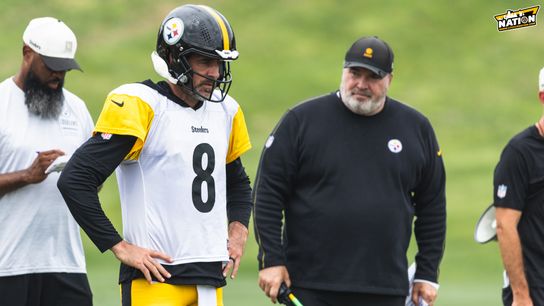
Jordan Schofield / SteelerNation (X: @JSKO_PHOTO)
Steelers' Aaron Rodgers (8) during 2026 training camp as Head Coach Mike McCarthy looks on in Latrobe, PA.
There is an important distinction between simplifying the offense and making it predictable. McCarthy does not need to remove every adjustment Rodgers has mastered or reduce a veteran quarterback to a beginner's menu. The goal is to cut away enough clutter that Pittsburgh can execute its core concepts quickly, confidently and with all 11 players reaching the same answer.
That could also help the offensive line. Protection becomes harder when the pre-snap picture produces multiple checks, responsibilities and possible reactions, particularly for a group that has already struggled to provide Rodgers with a consistent platform. Fewer moving pieces will not magically win a one-on-one block, but clarity can eliminate the hesitation that makes a difficult assignment even harder.
The same logic applies to the receivers. Pittsburgh has not consistently created separation or finished enough opportunities through two weeks, and timing becomes even more fragile when routes can change according to leverage or coverage. Complexity has value only when everyone converts it into the same picture. Otherwise, sophistication starts looking suspiciously like confusion.
Steelers Need Rodgers' Knowledge To Help The Offense, Not Outrun It
McCarthy's admission creates a clear coaching consequence for Week 3. Pittsburgh does not need Rodgers to know less. It needs the rest of the offense to play faster, and that may require McCarthy to resist using every answer his quarterback makes available to him.
There is some irony in that realization. Rodgers' familiarity with McCarthy was supposed to shorten Pittsburgh's transition into a new offense. It still can. His command should allow the Steelers to identify what works, communicate corrections and eventually add complexity without needing months to teach the quarterback why a concept exists.
For now, Pittsburgh has earned the right to be simpler. One touchdown in eight quarters does not suggest an offense missing one clever call. It suggests a group that needs to execute ordinary football before worrying about how many answers it can carry into a Sunday. McCarthy has already said the volume is being reduced after admitting he felt the offense struggling during the week and did not respond quickly enough.
McCarthy clearly believes Rodgers could handle a doubleheader's worth of offense. New England showed that Pittsburgh could not.
The next correction is not asking its smartest player to know less. It is making sure his ability to know more does not convince Pittsburgh to put two games' worth of football into one afternoon.
#SteelerNation