


The Pittsburgh Steelers spent the offseason promising that their expensive collection of edge rushers would no longer live at one permanent address. Through two weeks, the flexibility looked like a genuine feature of the new defense. Then Cincinnati arrived with one side of its protection playing like a locked door and another matchup that looked considerably less secure, turning all that advertised freedom into a pretty useful Sunday exam.

Charles LeClaire / Imagn Images
Pittsburgh Steelers’ TJ Watt looks on at Acrisure Stadium during the 2026 season opener against the Atlanta Falcons.
Sam Monson believes Pittsburgh left opportunities on the table even while escaping with a 30-27 win over the Cincinnati Bengals. His issue was not that TJ Watt failed to beat Amarius Mims often enough. Mims was excellent. Monson's criticism was that once that became obvious, the Steelers did not adjust aggressively enough to hunt better matchups elsewhere.
The result makes the complaint easier to shrug off, but the game itself makes it difficult to dismiss. Cincinnati moved the ball for most of the afternoon, and Pittsburgh did not record its first sack until the final minute, when Derrick Harmon produced the strip sack that effectively ended the game. Before that rescue, a pass rush that had terrorized opponents through two weeks spent far too much time arriving after the football was gone. Cincinnati finished with 282 passing yards and three touchdowns through the air, evidence that the quiet rush had a real cost.
During a postgame breakdown, Monson argued that Pittsburgh needed to react more aggressively once Mims showed he could control Watt.
“Mims is playing so well right now that him winning on that side is kind of accepted, but Pittsburgh maybe didn’t do enough in the other positions where they had advantages… Should Highsmith have won more given his advantage? Should you have moved TJ Watt to the other side more given who he was going up against on his side? They didn’t do enough to take advantage of where they did have a plus edge because Mims was dominating his side,” Monson said.
There is an important distinction inside that criticism. Moving Watt because he loses a few reps is panic; moving him because the offense has revealed where its protection is strongest and weakest is strategy. The whole appeal of Pittsburgh's current edge room is supposed to be that the defense can stop treating one matchup like a four-quarter marriage.
Mims also earned the right to influence the plan. He entered Sunday as one of the league's hottest young pass protectors and then backed up the reputation against Pittsburgh's biggest defensive name. A great tackle winning against a great rusher happens. Allowing that matchup to remain the center of the afternoon when other stress points exist is where the coaching conversation gets more interesting.
Pittsburgh had already identified the matchup entering Sunday. Mims had been protecting exceptionally well, while the opposite side of Cincinnati's line had presented more favorable early-season opportunities. The Steelers also spent the offseason building a defense under Patrick Graham that was supposed to make those differences exploitable rather than merely interesting.
That philosophy has not been theoretical. Watt has spoken positively about Pittsburgh's willingness to move its rushers, and Alex Highsmith has already shown he can flip sides. The point is not to turn the front into a weekly shell game for the sake of looking clever. It is to prevent an offense from deciding before kickoff exactly which blocker gets Pittsburgh's most dangerous assignment.
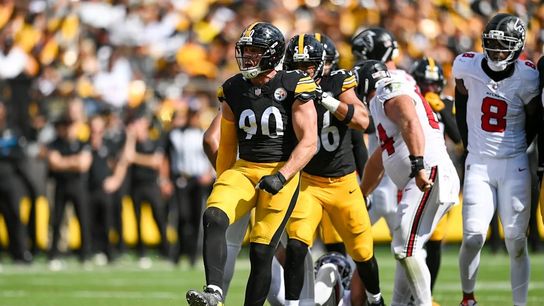
Taylor Ollason / Pittsburgh Steelers
Steelers linebackers TJ Watt (90) and Alex Highsmith (56) celebrate a big play in their Week 1 game against the Falcons on September 13, 2026.
Moving Watt would not have guaranteed a sack. Switching sides changes the tackle he sees, but it can also alter chip help, protection slides, the quarterback's clock and which rusher receives the cleanest one-on-one. Sometimes the value of moving a star is not that he immediately wins. It is that the offense has to spend another few seconds solving the location problem before it can solve the rush.
That is also where Highsmith enters Monson's argument. If Cincinnati was comfortable leaving Mims on an island more often, Pittsburgh needed somebody to punish the tradeoff elsewhere. Highsmith has already demonstrated this season that he can finish favorable matchups, so an afternoon where Watt was being erased should have increased the urgency to create cleaner work for the other rushers rather than waiting for the same picture to improve.
Steelers Can't Let Their New Flexibility Become Decorative
Pittsburgh eventually got its escape hatch from a different spot. For nearly 60 minutes, the answer off the edge never really arrived. Harmon's late rush created the fumble that slammed the door on Cincinnati, allowing the Steelers to survive a divisional game in which their most famous pass rusher never became the central wrecking ball everyone expected.
That should make Sunday useful rather than alarming. Graham now has a full game of evidence showing what happens when an elite tackle is capable of neutralizing Watt without the rest of the protection collapsing around him. The answer cannot simply be asking Watt to win the same fight harder, especially after an offseason spent building more options into the defense.
Pittsburgh did enough to leave Acrisure Stadium at 2-1. The more useful lesson is that when one door closes on Watt, this defense was specifically built to stop him from spending four quarters knocking on it.
#SteelerNation