


The Pittsburgh Steelers have never needed a clock on the wall to know when a contract negotiation is running out of time. Their deadline arrives with a kickoff, and the franchise has spent years refusing to let unfinished business follow players into the regular season. That discipline is meant to eliminate distractions. This fall, the disagreement refused to go away.
Jordan Schofield / SteelerNation (X: @JSKO_PHOTO)
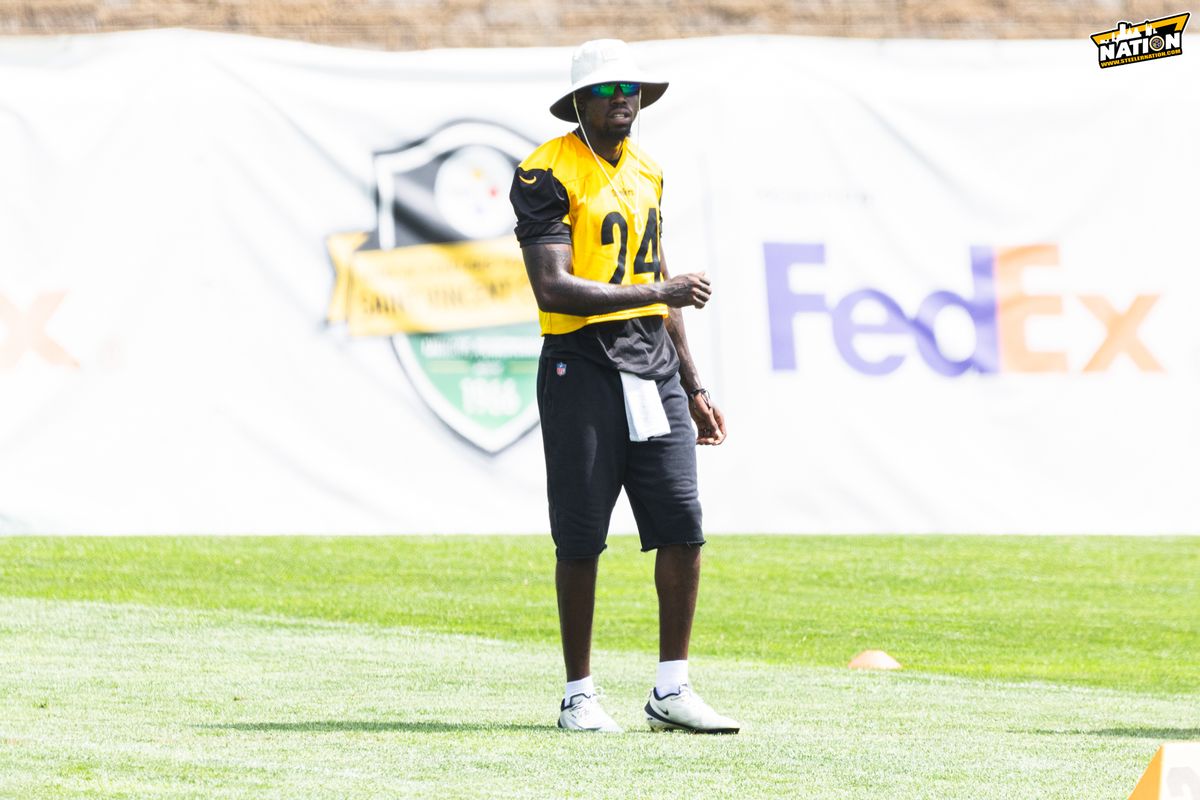
Pittsburgh Steelers star cornerback Joey Porter Jr. (24) stands on the field while his teammates get a workout in during a 2026 training camp practice taking place at Saint Vincent College in Latrobe, PA.
Former head coach Mike Tomlin offered a revealing explanation of that philosophy while discussing Joey Porter Jr.'s contract standoff. Speaking on Coach2Coach, Tomlin said he wasn't involved in the negotiations that ultimately preceded Porter's trade to the Dallas Cowboys. He did, however, know exactly when Pittsburgh would stop entertaining a new deal.
“The Steelers have had a longtime organizational philosophy that they’re no longer negotiating contracts once the season starts… What transpired with Joey Porter Jr. is an example of that most recently… I certainly wasn’t part of the discussions and didn’t understand the variables in the discussion, but I knew once that ball got kicked off Week 1, business was over. And that’s a hill that they’re willing to die on as an organization,” Tomlin said.
That last line is doing some heavy lifting. Tomlin didn't claim to know which side asked for what. He was describing an organizational boundary that survived his departure from the sideline and left little room for a traditional extension negotiation once September football began.
Porter entered 2026 in the final year of his rookie contract, seeking a long-term agreement after establishing himself as one of Pittsburgh's most important coverage players. He had 14 passes defensed in 2025, making his future a substantial roster question. The negotiations dragged through the offseason and into training camp without a deal. That left Porter's urgency on a collision course with Pittsburgh's deadline.
The Steelers publicly maintained their in-season position. General Manager Omar Khan had said the team would not negotiate after kickoff, and the impasse remained unresolved. Pittsburgh also had to deal with Porter's reported back injury, which kept him out throughout the preseason and the first three regular-season games. Those medical circumstances and the contract dispute should not be casually treated as the same thing.
By September, the standstill had become its own weekly storyline. Head Coach Mike McCarthy was fielding questions about Porter's availability while trying to prepare a defense for actual opponents. The cutoff was supposed to prevent distractions, yet Porter remained on the agenda.
There was speculation about whether Pittsburgh might make an exception. One September assessment even floated the possibility of revisiting an existing offer without reopening a full negotiation. That was an analyst's scenario, not confirmation the organization intended to bend its rule. Ultimately, there was no agreement that kept Porter in Pittsburgh.
On October 1, the Steelers dealt Porter to Dallas after weeks of uncertainty. Reports put the return at a second-round selection in 2028 and a sixth-rounder in 2027. It was a stark conclusion for a former second-round pick Pittsburgh had spent three seasons developing.
Karl Roser / Pittsburgh Steelers
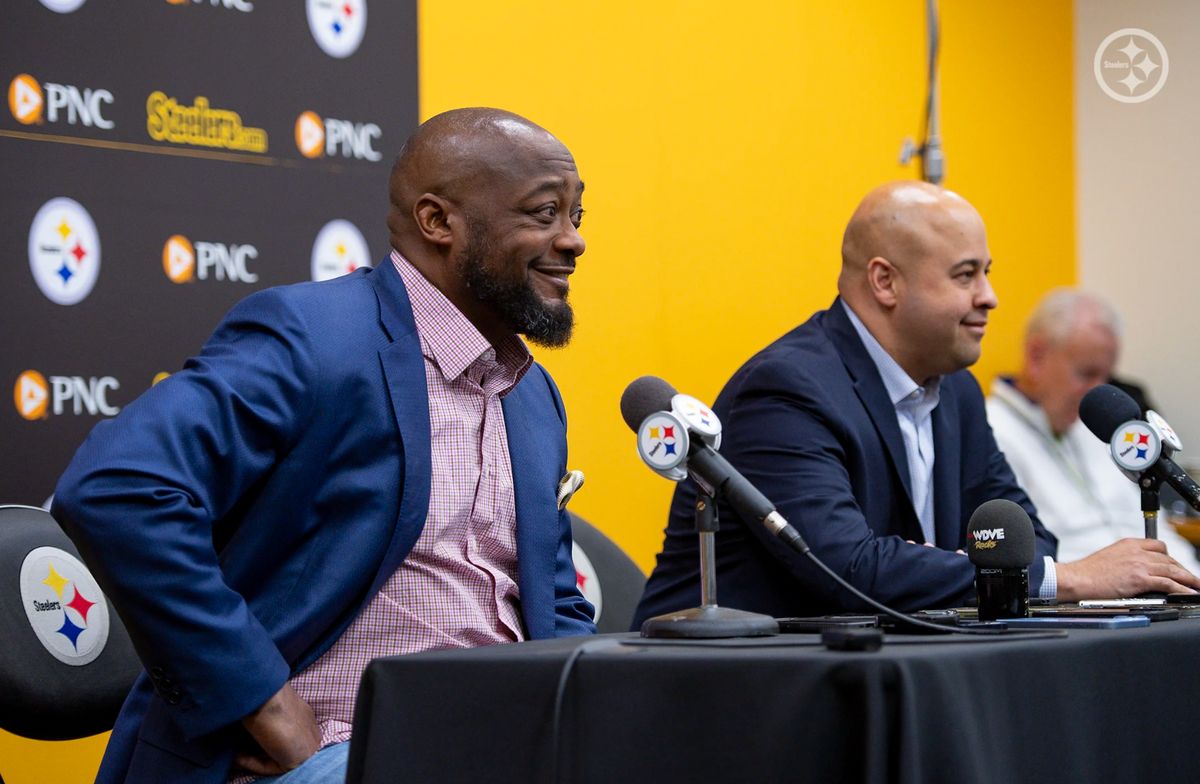
Steelers' Mike Tomlin and Omar Khan after the first round of the 2024 NFL Draft.
The cost wasn't limited to losing a name from the roster. Pittsburgh had to reorganize the cornerback rotation without a player it had expected to be part of its defensive future. Jalen Ramsey and the remaining defensive backs were left to move forward while teammates and fans continued debating how the relationship broke down.
Tomlin's comments explain one part of that story, not every part. The policy alone did not necessarily cause the trade. The financial gap, Porter's expectations and Pittsburgh's valuation still mattered. Tomlin explicitly acknowledged he did not know the variables.
There is a legitimate argument for the rule itself. A general manager negotiating extensions in November could face constant pressure from agents, public comparisons and players wondering why somebody else received attention. Setting a firm boundary makes the calendar predictable for everyone. Coaches can ask players to concentrate on the next opponent without treating every practice as a backdrop for contract discussions.
But predictability is not the same thing as flexibility, and Pittsburgh's experience with Porter illustrated the tradeoff. The rule can stop a meeting. It cannot stop an unhappy player from feeling undervalued, or prevent the entire league from discussing an unresolved standoff. A policy designed to silence the noise cannot guarantee a quiet season.
Steelers Should Question The Cost Of An Absolute Deadline
I understand why Tomlin respected that boundary. He coached Pittsburgh for 19 seasons, and clear organizational expectations can keep a locker room from becoming a collection of separate business negotiations. There is real value in knowing the front office will not rewrite its approach every time a player or agent applies pressure.
Still, I don't love the idea of treating an early-September date as more important than every circumstance that follows it. A club should be able to defend a consistent principle without pretending that rare exceptions amount to surrender. If a negotiation is genuinely close and the player is central to the roster, refusing even to reconsider the timing can turn discipline into an expensive point of pride.
That doesn't mean Porter should have received whatever contract he wanted. Pittsburgh had every right to set a price and walk away if the numbers didn't work. Those are football-business decisions worth defending on their merits. The calendar shouldn't have to make them for the organization.
Tomlin knew the deadline was final even without knowing the bargaining details. Porter is now in Dallas, and Pittsburgh has draft picks instead of the corner it developed. The Steelers avoided breaking their rule. Whether they protected the team as effectively is a much more interesting question.
#SteelerNation