


The Pittsburgh Steelers allowed another NFL trade deadline to pass without acquiring a wide receiver, leaving fans searching for an explanation. Much of the frustration has been directed toward General Manager Omar Khan, with one of his previous trades suddenly receiving renewed criticism. However, a longtime Steelers insider believes fans are connecting two transactions in a way that doesn't necessarily make sense.
Barry Reeger / Imagn Images
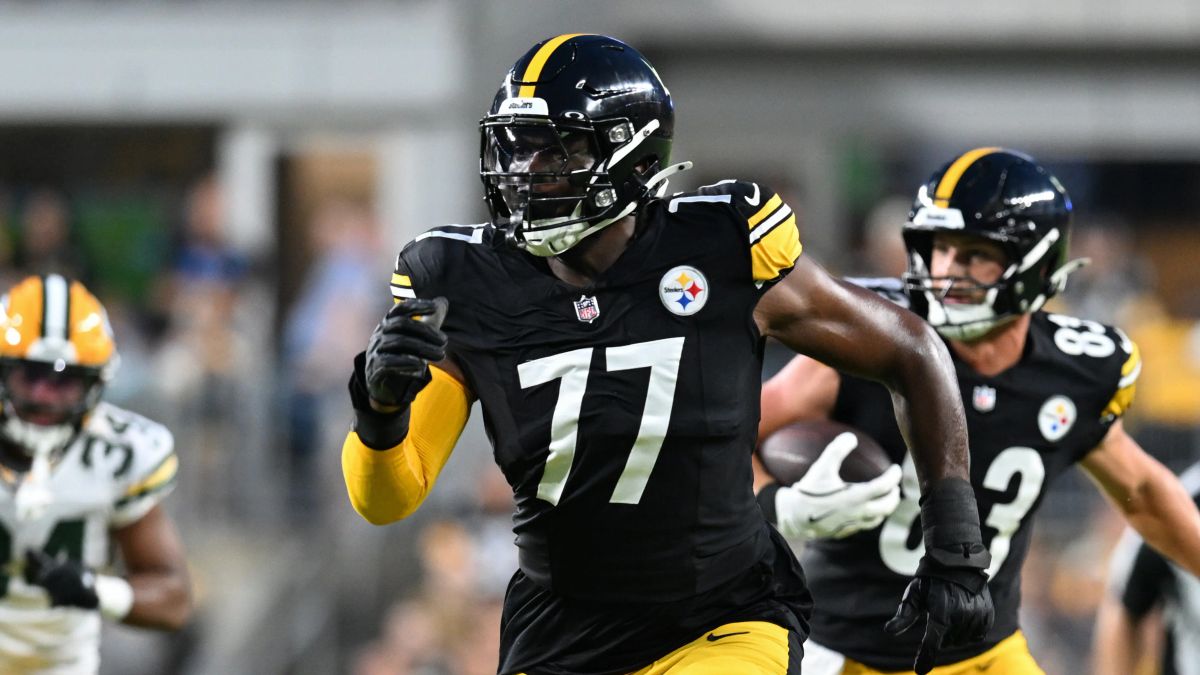
Pittsburgh Steelers’ Broderick Jones looks for a block as Robert Tonyan carries the ball at Acrisure Stadium in 2026.
The Steelers traded Broderick Jones to the Dallas Cowboys in August, receiving third- and sixth-round selections in the 2027 NFL Draft. Pittsburgh also included its 2027 fourth-round pick in the deal, which became particularly relevant when the Indianapolis Colts traded Josh Downs to the Kansas City Chiefs on Tuesday.
Kansas City surrendered fourth- and fifth-round selections in 2027 while receiving Downs and a seventh-round pick. ESPN reported that Pittsburgh's lack of a fourth-round selection complicated its pursuit of the receiver.
Longtime Steelers insider Jim Wexell isn't buying the argument that trading Jones prevented Pittsburgh from acquiring Downs. During a recent discussion, Wexell pointed out that Khan actually acquired a more valuable selection through the transaction.
“There's this nonsense about the Broderick Jones trade costing their fourth-round pick. They could have given one of their two third-round picks. They got a third-round pick for Broderick,” Wexell said.
It's an interesting distinction. Pittsburgh certainly lost some flexibility by surrendering that fourth-round selection, but Khan wasn't left without the resources necessary to make an alternative offer. If the organization desperately wanted Downs, it had other avenues to explore.
The more important question is whether Pittsburgh believed Downs justified sacrificing a third-round pick. Wexell doesn't appear convinced that he did, particularly considering the potential return of Michael Pittman Jr..
“They could have offered the third-round pick, but why would you do that for Josh for eight games? Is he that good? I don't know, man. Especially if your doctors say Pittman's close,” Wexell said.
Downs is in the final year of his rookie contract and is scheduled to become an unrestricted free agent after the season. Kansas City could certainly explore an extension, but Pittsburgh would have been acquiring a receiver without any contractual guarantees beyond this season.
The former North Carolina standout recorded 33 receptions for 354 yards and one touchdown through nine games with Indianapolis this year. He finished his Colts career with 231 receptions for 2,494 yards and 12 touchdowns across 56 appearances.
Jordan Schofield / SteelerNation (X: @JSKO_PHOTO)
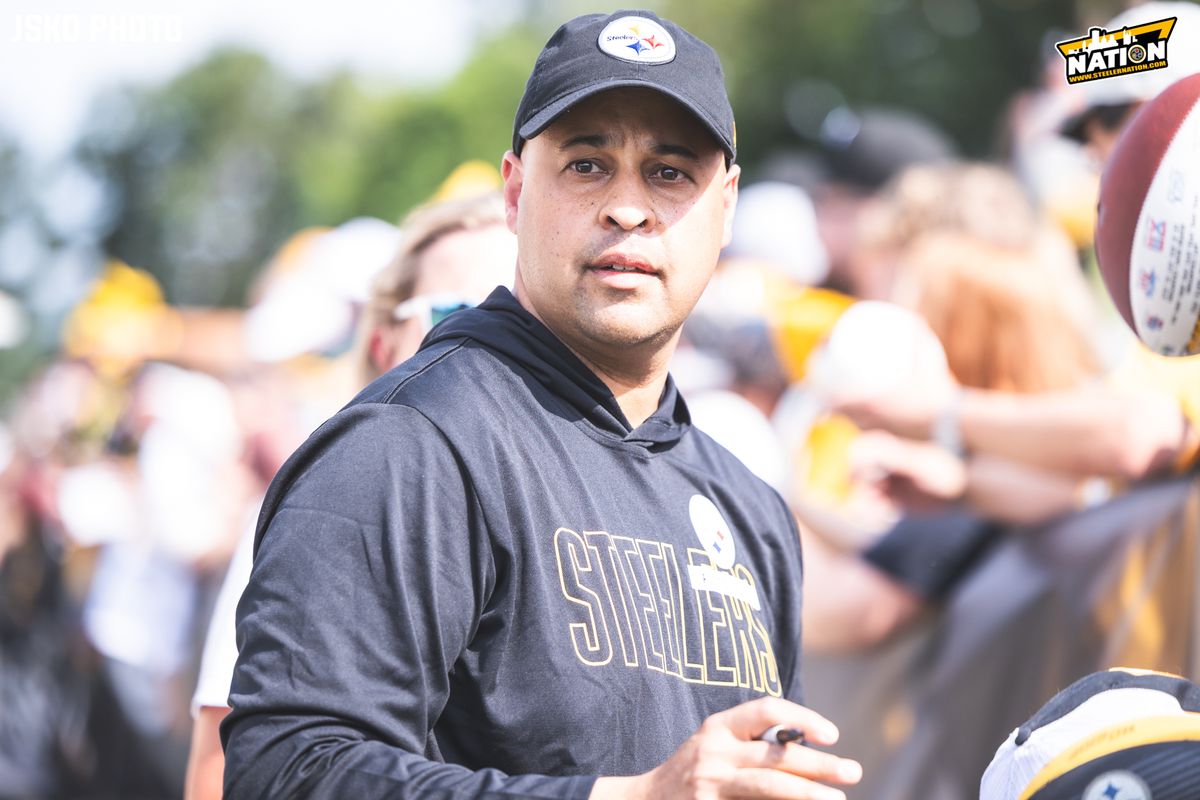
Steelers General Manager Omar Khan looks on as the team sets up in front of fans to workout at the annual Friday Night Lights training camp practice in Latrobe, PA
Downs would have addressed a legitimate weakness in Pittsburgh's offense. His quickness and ability to create separation would have given Aaron Rodgers another option against man coverage, something opposing defenses have exploited throughout the season.
However, acquiring Downs also would have required Pittsburgh to find a suitable role for him alongside its existing receivers. The Pittsburgh Post-Gazette reported Wednesday that the Steelers weren't necessarily convinced his smaller frame fit Head Coach Mike McCarthy's preferred receiver profile.
Pittsburgh also has a considerable investment in Pittman, who has been sidelined since October with a foot injury. McCarthy indicated Monday that the veteran was getting close to returning, although he hadn't resumed practicing as of Wednesday. There's reason for optimism, but the Steelers still don't know precisely when he'll become available.
Meanwhile, the original Jones trade deserves to be evaluated on its own merits. Pittsburgh had already selected Max Iheanachor in the first round of the 2026 NFL Draft and declined Jones' fifth-year option. The organization had evidently reached a point where it was comfortable moving on from its former first-round tackle.
Getting an earlier draft selection and an additional sixth-round pick for a player who no longer fit Pittsburgh's long-term plans wasn't necessarily a bad decision.
Steelers Have Bigger Plans For Their 2027 Draft Capital
The uncertainty surrounding Pittsburgh's quarterback situation beyond this season makes those third-round picks particularly valuable. Rodgers won't be around forever, and Khan may need considerable draft capital to acquire the organization's next franchise quarterback.
That doesn't excuse every missed opportunity at the deadline. Pittsburgh is 6-2, and there's a legitimate argument for being aggressive while a championship window remains open. Downs could have helped an offense that has struggled to consistently generate production through the air.
The mistake would be suggesting Khan had no choice because he traded Jones. Pittsburgh possessed the draft capital to put together a competitive offer if it believed Downs was worth the investment. There's no guarantee Indianapolis would have accepted it, but the possibility existed.
Ultimately, the Steelers decided their future draft selections were more valuable than adding another receiver at the deadline. Fans can disagree with that evaluation, especially if the offense continues to struggle. But blaming the Jones trade overlooks the fact that Khan had already acquired the very type of asset that could have helped him make another deal.
#SteelerNation
SteelerNation in your inbox
The biggest Steelers stories, free, straight to your email.