


The Pittsburgh Steelers have a quarterback math problem, and the cleanest football answer may not be the safest league-office answer. With Aaron Rodgers locked in as the starter, Mason Rudolph carrying veteran backup value, Will Howard trying to prove he belongs, and Drew Allar needing development, Pittsburgh cannot keep everyone without some roster creativity.
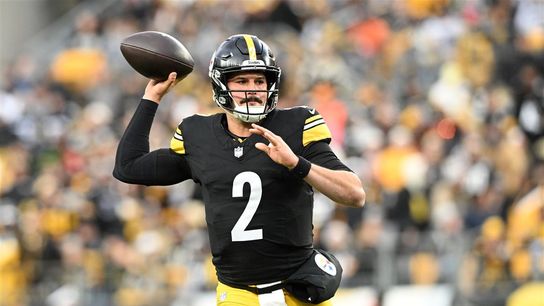
Sebastian Foltz / Pittsburgh Post-Gazette
Steelers quarterback Mason Rudolph getting ready to pass in a 2025 NFL game.
Roster creativity, however, has limits. Any outside idea involving a quarterback suddenly being “hurt” enough to stash would be dangerous if the injury designation did not line up with the medical reality. The NFL has detailed injury-reporting rules, and the league has multiple ways to investigate whether a team is being honest about a player’s participation, health, and availability.
The Steelers do not need that kind of problem. They already have enough pressure inside the quarterback room.
The team’s four-quarterback setup has created constant discussion entering training camp. Rudolph could have trade value if another club loses a backup. Howard has to show he can be trusted as the QB2. Allar is a third-round rookie who should not be exposed to waivers. Rodgers' age makes the backup situation more important than it would be behind a younger starter.
Pittsburgh’s current quarterback squeeze has already been part of the larger backup battle conversation. The temptation, from a fan-theory standpoint, is obvious. If one quarterback could be placed on injured reserve, the Steelers could create space without cutting or trading a player they still value.
The problem is the league does not treat injury designations like a wink-and-nod roster loophole.
The NFL’s Personnel Injury Report Policy states that injury information must be “credible, accurate, and specific” because it is tied to the integrity of the game. The policy also says clubs may be asked to submit written explanations, player medical records, physician treatment records, athletic trainer notes, diagnostic reports, and even practice video to verify a player’s participation level if a question arises. Violations can bring club fines, individual fines or suspensions.
That last part should get everyone’s attention. Losing money would be bad. Losing draft capital over a backup-quarterback stash attempt would be indefensible.
Steelers.com
Devin Bush and Roger Goodell pose for a photo after he's selected by the Steelers
This is especially true with quarterbacks. The league’s injury policy specifically calls for “particular attention” to key players such as quarterbacks, kickers, and punters. It also requires teams to specify “left” or “right” when a quarterback’s injury involves the shoulder, arm, or hand. A vague “upper body” explanation or a suspicious participation pattern would not be easy to hide.
The Baltimore Ravens learned how seriously the league can take quarterback reporting. In 2025, the NFL fined Baltimore $100,000 for violating the injury report policy after Lamar Jackson was incorrectly listed as a full participant before later being ruled out against the Chicago Bears. The Ravens accepted the ruling and said they had made an error while cooperating.
That situation was about reporting practice participation, not a fake IR stash. It still shows the league is willing to punish a team when quarterback injury information does not line up properly.
For the Steelers, the risk would not only be about the weekly injury report. The injured reserve rules matter too. The NFL explains that injured reserve is for players who suffered a football injury that makes them unavailable, and players placed on IR before the post-cutdown waiver period closes are ineligible to return that season. Players designated to return must miss at least four games.
That means a fake or exaggerated injury would create two problems. Pittsburgh would be using a player-health mechanism for roster manipulation, and it could also damage the player’s season if the timing is wrong.
The league’s video operation makes the idea even riskier. On game days, independent athletic trainer spotters use the injury video review system and broadcast footage to identify potential injuries, with the ability to tag and label video, call the bench, and send replays to medical staff. The NFL also warns that any deliberate attempt to stop play unnecessarily or improperly take advantage of an injury stoppage.
Practice is not invisible either. The injury policy allows the league to request practice footage during an investigation to verify participation. If a quarterback is supposedly too hurt to participate but practice video, medical notes, or team behavior tells a different story, the explanation would have to survive scrutiny.
That is why the Steelers should avoid anything that even looks cute. They can make a hard football decision without giving the league office a reason to ask questions.
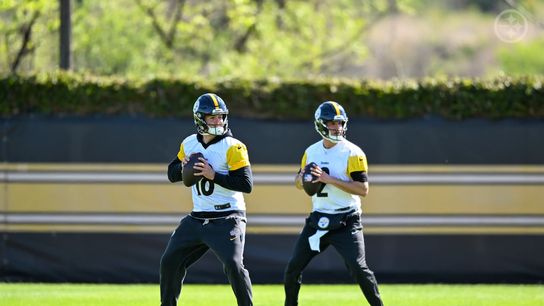
Karl Roser / Pittsburgh Steelers
Steelers QBs Will Howard and Mason Rudolph throw the football during the 2026 offseason workouts.
If Rudolph has value, trade him. If Howard wins the backup job, trust him. If Allar is too important to expose, keep him. If Pittsburgh wants a veteran emergency plan, the practice squad can be explored after cutdowns. Those are normal football solutions. A mysterious injury stash would invite a different conversation.
Steelers Cannot Let QB Math Turn Into League Trouble
The Steelers hired Mike McCarthy to stabilize the offense and help sort out the quarterback's future. That process already requires patience. Howard needs reps. Allar needs development. Rudolph needs a clear role. Rodgers needs protection behind him in case age or injury becomes a factor.
None of those issues justify bending the injury system.
The league has built too much process around injury reporting for a team to assume it can quietly hide a healthy player. Medical records can be reviewed. Practice participation can be checked. Video can be requested. Game-day injury systems already involve independent eyes. The risk is not worth the roster spot.
Pittsburgh’s front office may have to make an uncomfortable quarterback decision before Week 1. That could mean moving Rudolph if the offer makes sense. It could mean carrying three quarterbacks and trying to sneak another option onto the practice squad. It could even mean keeping four if the staff believes the room is too valuable to thin out.
Those choices may be difficult, but they are legitimate.
A fake injury plan would be something else entirely. In a league where quarterback availability affects competitive integrity, gambling markets, opponent preparation, and public trust, the NFL is not going to shrug off suspicious reporting.
The Steelers need a quarterback plan. They do not need an investigation.
#SteelerNation