


The Pittsburgh Steelers have spent years building an outside linebacker room where finding enough talent is rarely the problem. Finding enough snaps for everybody is much more annoying. Pittsburgh enters 2026 with established stars, an expensive young pass rusher demanding more work and another developing defender who could easily get buried behind all of them. Mike McCarthy apparently has no interest in letting that last part happen.
Charles LeClaire / Imagn Images
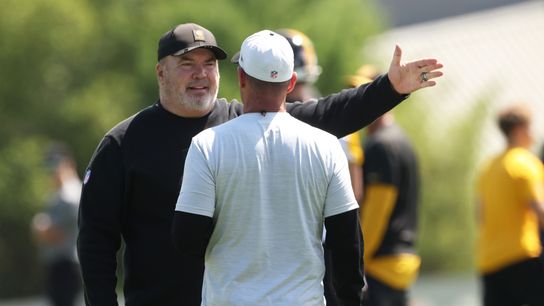
Steelers' Mike McCarthy gets animated during a training camp practice ahead of the 2026 season.
Mike McCarthy made it clear that Jack Sawyer is expected to contribute defensively rather than existing primarily as a special-teams piece. During a recent media availability, McCarthy explained that Pittsburgh plans to actually use the depth it has assembled over a season that will inevitably require far more than the nominal starters.
“I look for Jack. He’s got to be part of that also. He’ll be part of it on special teams. But we want to play. We want to play our players here… it’s a long year and it definitely takes more than 11 guys to play on offense and defense,” McCarthy said.
That is meaningful for Sawyer because there may not be a more difficult defensive rotation in Pittsburgh to crack. TJ Watt and Alex Highsmith remain the established starters, while Nick Herbig has already played himself into a significantly larger financial and football commitment. Pittsburgh's initial depth chart still identified Sawyer as part of the rotation behind those names.
In another position room, a player with Sawyer's résumé might already be receiving starter-level attention. Pittsburgh selected him 123rd overall in 2025, then watched the former Ohio State defender appear in all 17 regular-season games as a rookie. He finished with 20 tackles, three tackles for loss, six quarterback hits, one sack, two interceptions and four passes defensed while making one start.
The production was unusual for somebody transitioning from college defensive end into Pittsburgh's outside-linebacker responsibilities. Sawyer was not simply asked to run straight at quarterbacks. His two interceptions offered evidence that the Steelers were already expanding what he had to process, while his increased workload when injuries struck gave the organization a better idea of whether his physical style would survive extended NFL action.
His second preseason provided more encouragement. Sawyer recorded half a sack against the Green Bay Packers, then followed with four tackles, a sack and a pass defensed against the New York Jets. The numbers are not the larger point as much as the progression behind them. Pittsburgh already knew Sawyer could handle the dirty work of an edge rotation. McCarthy now sounds interested in making sure he receives enough defensive opportunities to continue growing.
That fits directly into Pittsburgh's larger plan for Watt.
McCarthy recently made clear that he does not want Watt routinely playing more than 60 defensive snaps per game, specifically emphasizing the importance of keeping the edge group fresh enough to remain dangerous in the fourth quarter. Every snap removed from Watt's workload has to go somewhere, and Pittsburgh's deep outside linebacker rotation gives the coaching staff options that do not require accepting a dramatic drop in talent.
Karl Roser / Pittsburgh Steelers
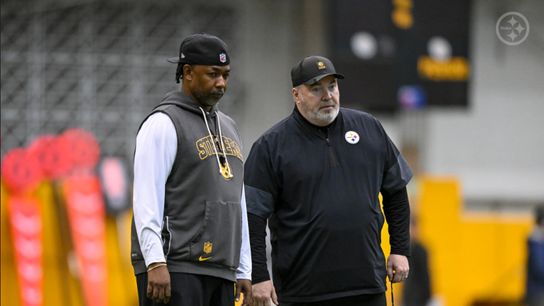
Steelers defensive coordinator Patrick Graham and head coach Mike McCarthy participate in Steelers 2026 rookie minicamp.
Sawyer may be particularly useful because he gives Pittsburgh a different flavor from Herbig. Herbig's burst and knack for creating splash plays can make him dangerous in obvious passing situations. Sawyer brings a bigger frame at 6-foot-5 and 260 pounds, along with the physical edge-setting style that helped him survive early in his rookie season.
That allows Patrick Graham to rotate based on the situation instead of simply removing one star and inserting the next name on the depth chart. Sawyer can handle snaps against heavier personnel, contribute when Pittsburgh needs disciplined run defense and still attack the quarterback when the opportunity appears. Herbig can be deployed differently, while Watt and Highsmith no longer need every meaningful rep for the defense to feel dangerous.
The benefit stretches beyond keeping Watt fresh. Seventeen games will eventually create an injury, an unfavorable matchup or an afternoon when one defender simply needs fewer snaps. Pittsburgh learned during Sawyer's rookie year that having another trustworthy edge option can prevent those moments from forcing an entire defensive plan to change.
Steelers Want Sawyer To Become Part Of The Solution
McCarthy's wording should eliminate one easy assumption about Sawyer's second season. Pittsburgh is not keeping him active merely because he can cover kicks while waiting another year for defensive opportunities to materialize.
Special teams will remain part of his job, but it will not define it.
The Steelers have invested heavily in the players ahead of Sawyer, which makes manufacturing opportunities for a fourth outside linebacker more complicated than simply moving him up the depth chart. The answer is using the rotation aggressively enough that Pittsburgh's depth becomes a competitive advantage instead of an expensive collection of players watching Watt and Highsmith take nearly every snap.
Sawyer already showed as a rookie that additional responsibility did not overwhelm him. Now McCarthy appears willing to test how much further that can go.
Pittsburgh does not need Sawyer to replace one of its stars in order for his second season to matter. It needs him to make removing one of those stars for a few snaps feel a lot less like removing one of those stars.
#SteelerNation