


The Pittsburgh Steelers gave national television almost everything it needed Thursday night to manufacture a week of locker-room body-language analysis. A division loss, visible frustration and enough sideline heat to keep lip readers busy made the pictures easy to sell. The harder question is whether any of it actually meant what it looked like.
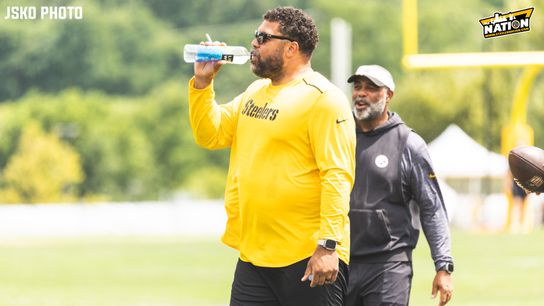
Jordan Schofield / SteelerNation (X: @JSKO_PHOTO)
Steelers defensive lineman Cam Heyward sips on some water as he watches the defense practice during his hold-in at 2025 training camp in Latrobe, PA.
Cameron Heyward does not believe it did. The veteran defensive leader pushed back on the idea that the heated exchange between Aaron Rodgers and Mike McCarthy, or TJ Watt grabbing a headset to speak directly with Defensive Coordinator Patrick Graham, exposed some deeper fracture inside Pittsburgh.
The visuals were dramatic enough. Rodgers became visibly frustrated while waiting for a play call during Pittsburgh's opening drive against the Cleveland Browns, and McCarthy responded with language he later said he wished he had not used. That possession still ended with a touchdown. Later, Watt took a headset on the sideline and spoke animatedly with Graham while Pittsburgh's defense was struggling to slow Cleveland.
Those moments quickly became part of the postgame conversation after a 27-24 loss dropped Pittsburgh to 2-2. The Steelers had allowed three second-quarter touchdown drives, then surrendered the field-goal march that decided the game after battling back to tie it. There were plenty of reasons for frustration before a television camera ever zoomed in on anyone.
During a recent episode of The Rich Eisen Show, Heyward argued that the emotional exchanges were being treated as more unusual than they actually are.
“I think sometimes we make so much of a big deal about, you know, being confrontational and not being able to deal with the confrontation. I think Mike and Aaron can both be that way with themselves. They feel honest enough to be able to do that… Me and T.J. have had plenty of arguments on the sideline… It’s part of the game. If you can’t be your authentic self… guys care a lot about this in this league,” Heyward said.
That is the part of the discussion that tends to get lost once a clip starts circulating. Football teams spend six months asking players and coaches to communicate honestly under pressure, then everyone acts surprised when the honesty occasionally comes with volume. Trust does not always look calm.
McCarthy and Rodgers are probably the easiest example. Their relationship stretches back to Green Bay, where they spent more than a decade together and accumulated enough arguments to fill several seasons of television. Pittsburgh's viral exchange in Cleveland looked ugly in isolation, but familiarity is exactly why both men can speak that bluntly without every disagreement becoming a referendum on whether they can work together.
The same logic applies to Watt and Graham. Watt was not wandering around the sideline looking for somebody to yell at. Graham was coaching from the booth, so the headset was the way to reach him. Heyward specifically pointed out that context when explaining what viewers saw.
“You see T.J. and you watch the way he’s communicating. He was only communicating with PG, Patrick Graham, and that’s the only way we can get in contact with him… Everything’s getting thrown into this one situation, but I think if we just take a step back and observe, we just got to clean up our mistakes, man,” Heyward said.
Heyward's explanation changes the image considerably. Watt was not bypassing the staff to stage some sideline revolt; he was using the available connection to tell his coordinator exactly what he was seeing.
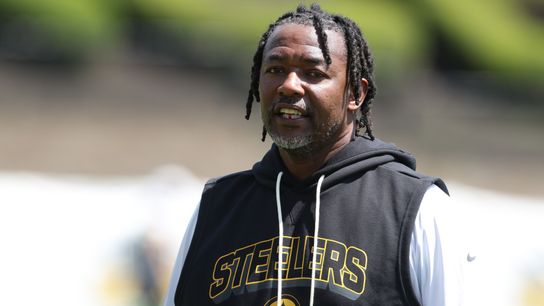
Charles LeClaire / Imagn Images
Pittsburgh Steelers’ Patrick Graham participates in training camp drills at Saint Vincent College in 2026.
Graham has since backed up that interpretation. He called the exchange with Watt “normal football conversation” and said he encourages players to bring emotion onto the field. More importantly, Graham said the staff wants relationships strong enough that conflict can be handled directly without anyone becoming sensitive about it. That sounds considerably more like a coaching staff trying to build trust than one frightened by disagreement.
There is still an important line here. Emotional honesty cannot become an excuse for sloppy communication, public finger-pointing or a sideline where nobody knows who is in charge. McCarthy himself acknowledged the wording of his Rodgers exchange went too far, and Pittsburgh's performance in Cleveland supplied enough actual football problems that nobody needs to invent organizational ones.
But the Steelers have plenty to fix. Competitive adults arguing during a division game is not automatically one of those things. If anything, a 2-2 team accepting another ugly loss with polite silence would be more concerning than Watt demanding answers from his coordinator or Rodgers demanding a play faster.
Steelers Have Bigger Problems Than Sideline Volume
Heyward's point does not require pretending Thursday was healthy in every way. Pittsburgh's defense struggled to finish the night, Cleveland moved too easily on the final possession and the offense disappeared for long stretches between its opening drive and fourth-quarter rally. Watt himself called the loss “extremely frustrating” and said getting to 2-2 was unacceptable.
Those are real problems. Coverage busts are real. Protection breakdowns are real. Poor tackling and late-game situational defense are real.
A quarterback barking at a head coach he has known for nearly two decades is mostly television. The same goes for Watt using the only available line of communication to tell Graham exactly what he thought in the middle of a bad defensive stretch. The substance of those conversations matters. Their existence does not prove dysfunction.
Heyward has been around enough Steelers teams to know the difference between conflict and collapse. His message is essentially that Pittsburgh should spend less time apologizing for caring loudly and more time correcting why everyone was angry in the first place. That is a much more useful place to start.
#SteelerNation