


The Pittsburgh Steelers did not spend the offseason ripping every page out of their defensive identity. Patrick Graham brought new language, new wrinkles and new priorities, but enough of the picture remained recognizable for veterans to feel at home. Five games into the experiment, that familiarity may be creating its own kind of trap: when something looks almost the same, the differences can become easier to miss until the ball is snapped and everybody has to be right at once.
Charles LeClaire / Imagn Images
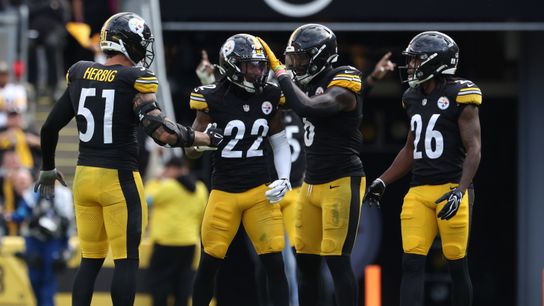
Pittsburgh Steelers linebacker Nick Herbig (51), cornerback Asante Samuel Jr. (22), linebacker Patrick Queen (6) and cornerback Brandin Echols (26) celebrate in the second half against the Indianapolis Colts at Acrisure Stadium.
Nick Herbig put a name to that gray area Monday. During his Monday media availability after Pittsburgh’s 34-22 win over the Indianapolis Colts, the fourth-year defender explained that Graham’s system can feel familiar while still asking enough differently to create mistakes as everyone adjusts.
“Essentially it’s the same defense, but is different in its own aspect. So I think we’re all adjusting to that, coaches, players included. So obviously, there’s going to be some communication errors and there’s going to be some positives and some negatives, but we’re working through it,” Herbig said.
Herbig is a useful voice for this because he is not a rookie learning pro football for the first time. The Steelers drafted him 132nd overall in 2023, and he is now in his fourth NFL season. He has enough experience to recognize what feels familiar while still living inside the new details.
That answer is more revealing than a generic “we need to communicate better” line. Herbig is describing the awkward middle ground of a scheme change. Pittsburgh did not replace its entire defensive vocabulary with something from another planet. The structure still contains concepts experienced players recognize, but the rules attached to those concepts can change. One coverage can look familiar before the snap and still ask for a different leverage call, handoff, rotation or adjustment once the offense moves.
That is where NFL defense gets annoying in a hurry. Eleven players can understand the broad idea and still lose a rep because two of them processed the fine print differently. The whiteboard does not care how close everybody was. A receiver running free through a busted zone rarely gets tackled by good intentions.
Pittsburgh spent much of the offseason treating communication as a priority because the old version of this issue had already become exhausting. Early in the season, the organization had seen enough improvement to believe Graham was cleaning up those communication breakdowns. Herbig’s admission does not erase that progress. It does show the job is not finished simply because the terminology occasionally sounds familiar.
Sunday offered a pretty good snapshot of both sides. The Steelers held Indianapolis to four conversions on 15 third downs and kept the run game under control, but the Colts still produced five pass plays of at least 20 yards. Pittsburgh won 34-22 without forcing a turnover and recorded only one sack. The defense was good enough to keep the afternoon from becoming a track meet, yet it was not clean enough to pretend every adjustment has already settled.
Barry Reeger / Imagn Images
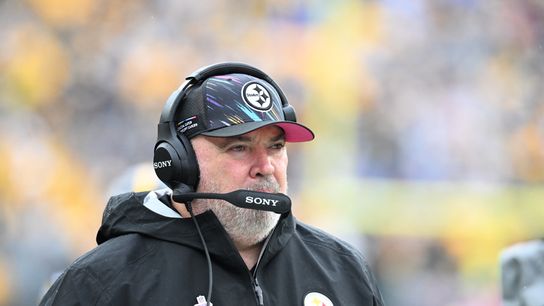
Steelers’ Mike McCarthy looks on at Acrisure Stadium before a 2026 game against the Indianapolis Colts.
Mike McCarthy made another revealing move before the Colts game by shifting Graham from the coaches’ box to the sideline. McCarthy later said the defensive communication network looked more like what he wanted and emphasized the value of direct interaction with players. That is a practical response to the same issue Herbig described: if the system is still being learned at full speed, shortening the distance between the play-caller and the people executing it is a sensible place to start.
The Steelers should also be careful not to grade every communication mistake on a curve forever. Five games is enough time for an adjustment period to be real, but it is also enough time for the standard to start rising. This roster is too experienced and too expensive on defense for “we’re still learning it” to become a weekly escape hatch whenever somebody ends up in the wrong patch of grass.
Herbig deserves credit for including the coaches in the adjustment, too. He did not frame the issue as one player forgetting an assignment or a coordinator handing out impossible calls. His point was that the entire operation is still learning how the familiar and unfamiliar pieces fit together. That sounds healthy internally. It also creates a very obvious deadline: eventually the learning phase has to become execution.
Steelers Need The Details To Match The Talent
Graham’s defense was never supposed to succeed because it was radically different. The appeal was flexibility. Pittsburgh could keep the physical identity it values, use familiar fronts and still become less predictable through personnel movement, coverage variation and game-to-game adjustments. None of that works if the details required to disguise those intentions create confusion on the wrong side of the ball.
The encouraging part is that Pittsburgh has already shown it can correct things in real time. Graham moved downstairs. The defense stiffened on third down against Indianapolis. Players continue speaking openly about what still needs work. There is no evidence of a unit rejecting the system or pointing fingers at the staff.
The tougher truth is that communication errors do not become harmless because everyone understands why they happened. A defense can survive one against an average offense. Against the teams Pittsburgh expects to see if this season goes where it wants, one busted responsibility can be seven points before anybody finishes explaining the call.
Herbig described a defense that feels the same until it doesn’t. Graham’s next job is making sure those differences stop showing up after the snap.
#SteelerNation