


The Pittsburgh Steelers built one of the NFL’s most expensive defensive fronts to make quarterbacks uncomfortable, yet the last three weeks have looked strangely restrained. Pittsburgh has only four sacks over that stretch, several of its highest-paid rushers have disappeared from the box score, and the easy conclusion is that the front has stopped winning. There may be a more complicated explanation. The quieter rush could be part of a deliberate tradeoff in Patrick Graham’s defense, and the bill may be showing up somewhere else.
Barry Reeger / Imagn Images
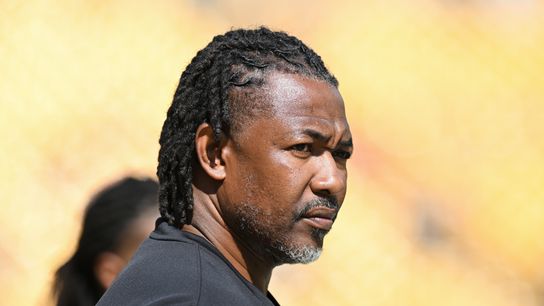
Pittsburgh Steelers’ Patrick Graham watches warm-ups at Acrisure Stadium in 2026.
Team insider Christopher Carter believes Pittsburgh’s declining sack production is not simply a collection of individual pass-rush failures. During a recent appearance on 93.7 The Fan, Carter argued that Graham has adjusted the rush because opponents are increasingly trying to neutralize Pittsburgh’s edge talent with quick throws.
“The Steelers pass rush, it’s kind of been compromised by the game plan. They recognize teams are trying to get the ball out quick, so they’re trying to take away other things. And so they haven’t been focused on just trying to sack the quarterback the way they have the past several years. And, you know, it’s worked here and there, but it’s also allowed a lot of points,” Carter explained.
That explanation changes the way Pittsburgh’s 14 sacks through five games should be read. The distribution is the concern. The Steelers piled up 10 sacks during their first two games and have managed only four across the last three, while allowing 76 points during that same stretch.
For years, the Steelers could build a large portion of their defensive identity around asking TJ Watt and Alex Highsmith to wreck the pocket before a route had time to develop. If the football leaves in two seconds, even an elite edge rusher can win cleanly and still arrive after the play is over.
Graham’s answer appears to involve making the rush more connected to what is happening behind it. That can mean controlling lanes instead of flying upfield, dropping an edge defender, disguising who is coming or asking the front to occupy protection while the coverage takes away the quarterback’s first answer. The sack becomes less important than forcing the ball somewhere Pittsburgh expects it to go.
There is real football logic there. Graham has described pass rush as a collective plan, not four independent players racing toward a quarterback. The front has to understand the offensive set, escape lanes and whether the defense is in an aggressive rush mode or asking somebody to contain.
The problem is that a compromise only works if Pittsburgh is getting enough in return.
Karl Roser / Pittsburgh Steelers
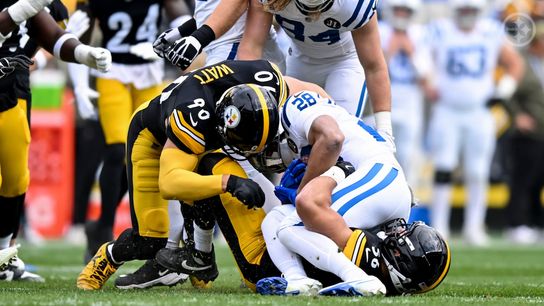
Steelers' TJ Watt and Alex Highsmith make a tackle against the Colts.
The last three games have made that part difficult to defend. Cleveland and Cincinnati repeatedly found completions before Pittsburgh’s rush could affect the quarterback, while Indianapolis threw for 266 yards and moved the ball well enough to attempt five field goals. Graham may be sacrificing some pass-rush aggression to protect against quick answers, but the defense has still given up too many easy throws and explosive gains.
That is where Carter’s criticism lands. If the rush is being restrained because Pittsburgh wants to take away something else, the “something else” has to actually disappear. A defense cannot willingly reduce one of its greatest advantages and then continue conceding the same underneath completions and coverage breakdowns it was trying to prevent.
The personnel makes the calculation even harder to accept for long. Watt has 4.5 sacks, but only one has come in Pittsburgh’s last three games. Highsmith recorded all three of his sacks during the first two weeks. Nick Herbig remains sackless after signing a four-year, $100 million extension, and his sackless start has already created questions about whether Pittsburgh is getting enough from one of its best natural rushers.
Herbig’s situation is especially relevant because the Steelers have lined him up inside, used him off the ball and asked him to handle responsibilities that do not always end with attacking an offensive tackle. His versatility gives Graham options, but Pittsburgh did not pay him nine figures because he can make a protection call look confusing before the snap. At some point, the investment needs to reach quarterbacks.
Cameron Heyward has one sack through five games, and Pittsburgh’s interior rush has not consistently punished offenses for focusing protection outside. Graham has an enviable collection of rushers. Building a system that makes all of them slightly less dangerous would be a strange way to exploit it.
Steelers Cannot Let Current Strategy Derail The Defense
Carter’s explanation gives Graham more benefit of the doubt than simply saying the pass rush has disappeared. Pittsburgh is seeing a specific offensive response and trying to counter it. That is what defensive coordinators are paid to do.
My problem is the return on the tradeoff. If the Steelers were limiting explosive passes, forcing checkdowns and suffocating scoring drives, fewer sacks would be an easy price to pay. They are not doing enough of those things yet. Over the last three games, Pittsburgh has allowed more than 25 points per contest while its most talented defensive unit has become less disruptive.
The answer is not telling Watt, Highsmith and Herbig to ignore the structure and chase quarterbacks like a sack bonus is due at midnight. Graham needs the rush and coverage connected. He also needs to make sure “connected” does not become another word for cautious.
Pittsburgh has invested too much money and too much roster capital in people who can ruin passing plays. The scheme should occasionally ask them to sacrifice for the defense. It cannot make the sacrifice the identity.
#SteelerNation