


The Pittsburgh Steelers spent most of Sunday making life difficult for their own quarterback. Pass rushers kept arriving, drives kept stalling, and a 16-3 fourth-quarter deficit threatened to turn the trip to Tampa Bay into an ugly afternoon. Then the offense found a way out. The interesting part is that Pittsburgh's 42-year-old passer didn't need to start running around like he was 25 to change the game. One defensive captain believes the way he moves inside trouble is still a miserable assignment for opponents.
Morgan Tencza / Imagn Images
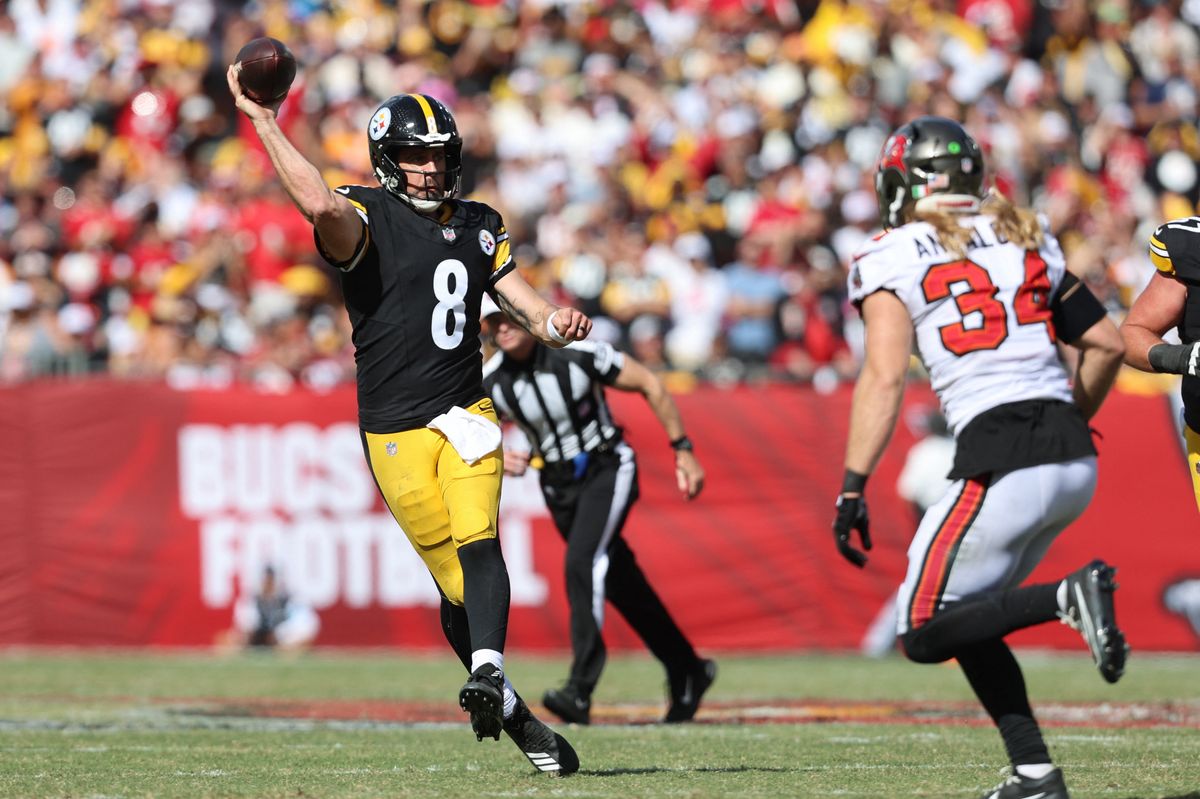
Steelers quarterback Aaron Rodgers prepares to throw a pass against the Buccaneers during a regular season game in October 2026.
Cameron Heyward sees something in Aaron Rodgers that rushing statistics cannot measure. During a conversation on The Rich Eisen Show, the longtime Steelers captain explained why Rodgers remains so frustrating to defend, even when a pass rusher gets close enough to deliver a hit.
“I don’t like my quarterback getting hit, but, you know, he’s able to bounce back. We’ve had some big explosive plays off of those big hits… You look at Aaron in the pocket, it’s not like he’s a mobile quarterback, you know, rushing for 30, 40 yards. He’s able to just escape and step up in the pocket and deliver the ball on time, and it just wears out a defense when he’s able to extend the pocket,” Heyward said.
Heyward knows the difference between a quarterback who can run and one who can make a pass rush look foolish without traveling very far. A defender can win around the edge, get a hand near Rodgers and still watch the ball leave cleanly because the quarterback climbed two steps into the space that opened in front of him.
For a pass rusher, those two steps are maddening. The tackle has already been beaten, the quarterback is right there, and suddenly the angle no longer exists. If Rodgers keeps his eyes downfield while moving, the coverage behind that rush has to survive another beat. A receiver who was covered when the play started might not stay that way.
That is the kind of movement Heyward is praising. Rodgers is not threatening defenses with 40-yard scrambles. His feet buy him throwing windows, and the punishment can arrive through the air before the edge rusher gets another chance. It is a skill built on timing, awareness and an understanding of where pressure is coming from, not straight-line speed.
Sunday offered plenty of reasons for Pittsburgh to appreciate it. Rodgers finished 33-of-49 for 253 yards, two touchdowns and an interception in a 26-19 overtime win over the Tampa Bay Buccaneers. The offense had managed only three points through three quarters before scoring 23 in the fourth and overtime. A comeback like that requires a quarterback willing to keep operating after a rough afternoon.
Rodgers still took four sacks, which should prevent anybody from romanticizing the protection. Escaping pressure is useful; consistently needing to escape it is not an offensive philosophy. The Steelers have already experienced the cost of a collapsing pocket this season, including five sacks against the Cleveland Browns earlier in October.
Morgan Tencza / Imagn Images
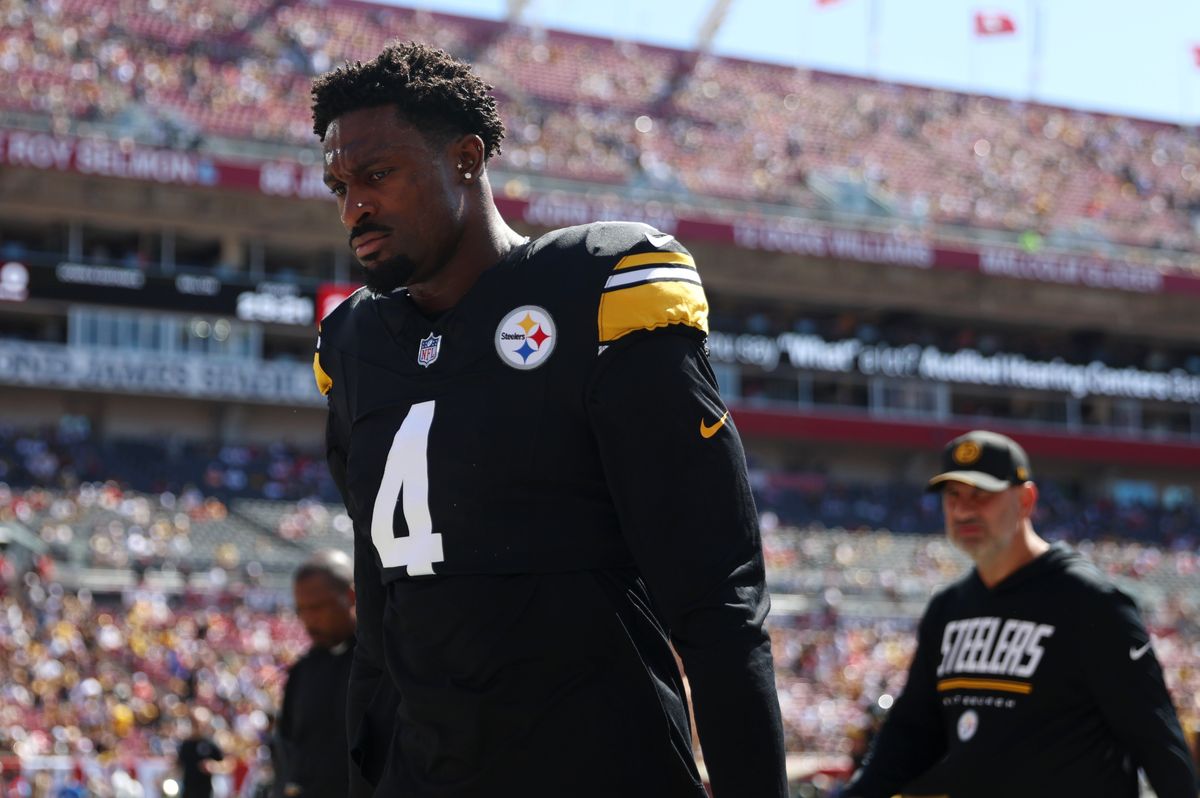
Pittsburgh Steelers’ DK Metcalf looks on at Raymond James Stadium before a 2026 game against the Tampa Bay Buccaneers.
The encouraging part was how Rodgers responded when the game finally opened up. He found Darnell Washington for a fourth-quarter touchdown, then guided a 12-play, 70-yard overtime drive. A third-and-long completion to DK Metcalf helped keep that march alive before rookie Germie Bernard caught the six-yard score.
Not every one of those completions required Rodgers to escape a defender, and Heyward did not identify a specific Tampa Bay snap as the example behind his comments. The larger picture still fits: an offense that looked trapped early found answers late because its quarterback continued reading, adjusting and throwing even after the hits piled up.
That also explains why the detail Heyward mentioned about extending the pocket is different from extending a play by sprinting out of it. When a quarterback steps up, he can preserve the structure of the route concept. Receivers know roughly where to expect the ball, and linemen still have a chance to keep rushers on the outside. A scramble can create magic, but it can also turn the whole play into an unscheduled meeting.
Mike McCarthy should see both the benefit and the warning. Rodgers' subtle movement can rescue imperfect protection, yet Pittsburgh cannot ask him to perform escape acts every week and expect the offense to remain healthy. His improved mobility this season is an advantage worth exploiting, not a reason to excuse free rushers.
Steelers Need To Match Rodgers' Pocket Savvy With Better Protection
My takeaway from Heyward's comments is that Pittsburgh has a quarterback who can still frustrate a defense in ways most 42-year-olds cannot. The Steelers would be foolish to interpret that as permission to keep letting him get hit. The same pocket awareness that saved plays against Tampa Bay becomes less useful if every dropback begins with a defender in his lap.
Rodgers does not need to resemble the athlete he was in his twenties. He needs a firm enough pocket to climb, the time to recognize the coverage and targets ready when he delivers. That is a realistic formula for an offense leaning on his experience while its younger receivers develop.
Heyward has spent enough Sundays trying to chase quarterbacks to recognize the difference. The best escape artists do not always travel far. Sometimes they move just enough to make a defense chase the same play twice, and the second chase is the one that finally breaks it.
#SteelerNation