




The Pittsburgh Steelers turned a routine midweek quarterback appearance into something worth revisiting by Tuesday night: Aaron Rodgers discussed his receivers and the upcoming opponent, and hours later, he was no longer the starter. That sequence has invited questions about what changed, including whether one of his public endorsements landed differently with the people making roster decisions.
Jordan Schofield / SteelerNation (X: @JSKO_PHOTO)
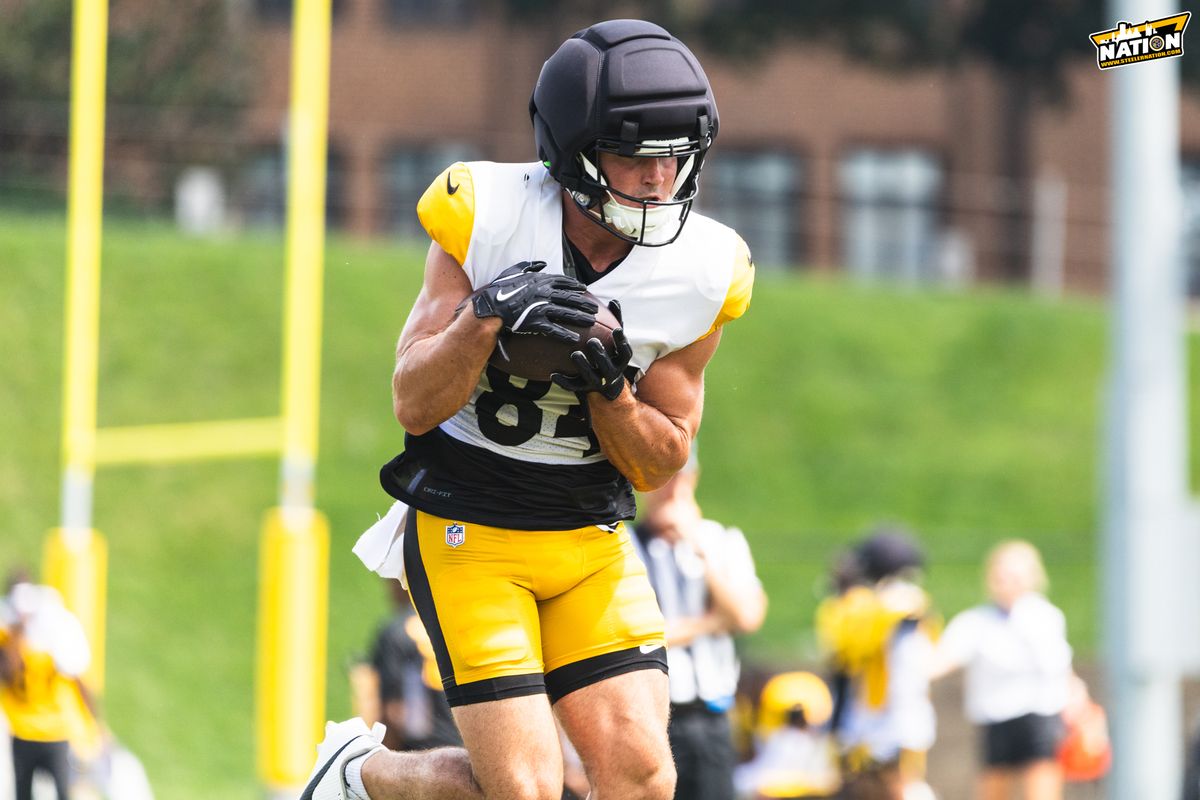
Pittsburgh Steelers wide receiver Max Hurleman (84) during 2026 training camp at Saint Vincent College in Latrobe, PA.
Ray Fittipaldo raised that possibility while discussing Pittsburgh's decision to start Mason Rudolph against the Denver Broncos on Friday, November 27. The Steelers also announced Rodgers would be inactive. Fittipaldo wondered whether the quarterback's increasingly public support for Max Hurleman had become a point of friction with the organization.
During the YouTube discussion, Fittipaldo described speculation surrounding Rodgers' approach to the receiver's role. He did not present the connection as a confirmed explanation for Mike McCarthy's quarterback change.
“There's been a lot of speculation that maybe Aaron overstepped a little bit the last couple of weeks, where last week he lobbied for Max Hurleman to get a helmet,” Fittipaldo said.
The underlying endorsement is real. In comments published by the Steelers on Tuesday, Rodgers said he and others in the quarterback room believed Hurleman belonged on the 53-man roster before his training-camp injury. He also said the receiver's performance after finally being elevated had not surprised them.
Fittipaldo interpreted those remarks as something more pointed than routine praise for a teammate. In his reading, Rodgers was publicly pushing the organization to make a specific personnel decision.
“Yesterday, the way I read it, it was basically, ‘Hey, you know, we got to sign this guy to the 53. I want him in the lineup.’ And I don't know if that maybe ticked off the front office a little bit or ticked off the coaching staff,” Fittipaldo explained.
The wording inside that quote is Fittipaldo's characterization of Rodgers' message, not a separate verbatim quote from the quarterback. His uncertainty about how the comments were received is also essential. He was questioning whether the relationship had deteriorated, not reporting that a coach or executive had confirmed being angered by the request.
Hurleman gave Rodgers a fairly persuasive football argument. In his regular-season debut against the Philadelphia Eagles, the second-year receiver caught six passes for 61 yards and a touchdown. Pittsburgh lost 19-16, but a practice-squad call-up finished as its leading receiver. That is usually a decent way to earn another conversation about playing time.
He also handled return duties, adding another reason for coaches to consider his game-day value. His receiving performance was the headline, but his special-teams contribution made the discussion about his role broader than simply finding another target for Rodgers.
Jordan Schofield / SteelerNation (X: @JSKO_PHOTO)
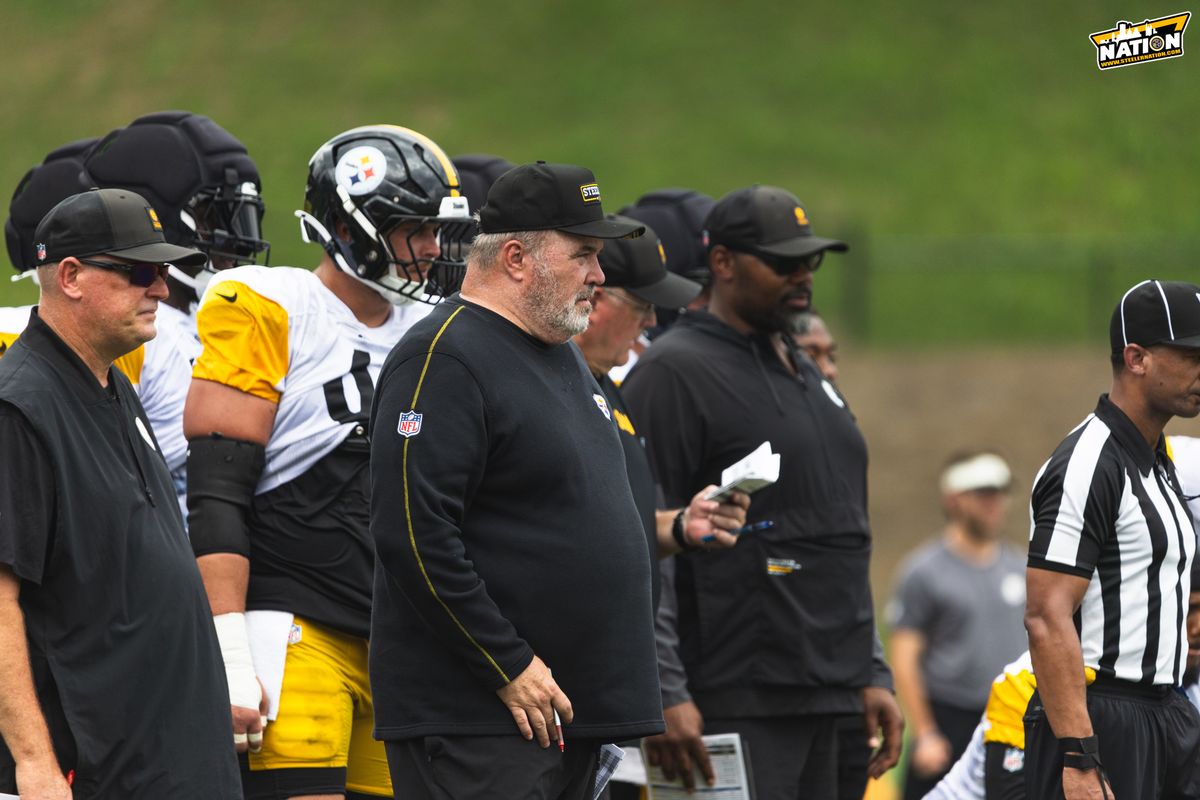
Pittsburgh Steelers Head Coach Mike McCarthy during 2026 training camp at Saint Vincent College in Latrobe, PA.
There is a roster distinction here, too. Hurleman was elevated from the practice squad for the Eagles game, with the team announcing that he would revert afterward. That temporary promotion was different from signing him to the permanent 53-man roster, which explains why Rodgers could still advocate for that step after Hurleman had already played.
My view is that Rodgers had every reason to argue for more opportunities for a player who had just delivered. A quarterback identifying someone he trusts can help the offense. The more delicate question is whether public lobbying turns that input into pressure on the staff, particularly when the offense itself is struggling.
Fittipaldo also questioned the timing of the benching, coming shortly before a game with Pittsburgh still in playoff position. McCarthy had publicly supported Rodgers on Monday. By late Tuesday, the organization had changed starters, creating an obvious opening for questions about what happened between those points.
Steelers Must Separate The Hurleman Debate From Rodgers' Performance
The offensive results provide an explanation that does not require a private feud. Pittsburgh was 6-4 after consecutive losses, and Rodgers had completed 60.9% of his passes for the season. Against Philadelphia, he threw 44 times for 227 yards while taking five sacks. The passing game was already giving McCarthy plenty to evaluate.
Those struggles don't prove that every conversation behind the scenes was comfortable. They do mean the Hurleman theory cannot be treated as the only plausible reason for the change. Two developments occurring on the same day establish a timeline, not a confirmed cause.
Hurleman also deserves to have his next opportunity judged on his own work. His debut supplied evidence that he could contribute, regardless of which quarterback preferred him or how that preference was expressed. Turning him into the symbol of a supposed power struggle would obscure the most useful part of his afternoon: he made plays.
For now, Fittipaldo has identified a question worth asking about Rodgers' relationship with the organization. The answer remains unconfirmed, and the distinction matters when the allegation involves a coaching staff benching its quarterback partly over roster input.
Rudolph will get the next start. Hurleman's performance still merits consideration on its own, and Pittsburgh would be wise to keep those evaluations grounded in football rather than whatever interpretation of Tuesday makes the loudest argument.
#SteelerNation
SteelerNation in your inbox
The biggest Steelers stories, free, straight to your email.