


The Pittsburgh Steelers' defense has long been criticized for failing to live up to the heavy investment the organization has made in it. With star veterans like TJ Watt and Cameron Heyward still searching for postseason success, new Steelers head coach Mike McCarthy made a significant move by hiring Patrick Graham as his defensive coordinator.
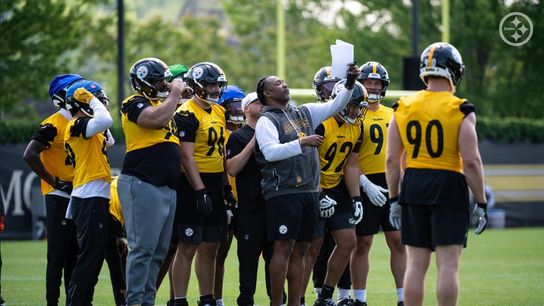
Taylor Ollason / Pittsburgh Steelers
New Steelers defensive coordinator Patrick Graham works with the defense as the team practices during an Organized Team Activities (OTAs) workout in Pittsburgh, PA.
The hiring was widely viewed as an exciting addition. During his time as the Las Vegas Raiders' defensive coordinator, Graham consistently limited explosive plays despite working with a roster that lacked the financial investment the Steelers have made in its defense. Now, he inherits one of the NFL's most talented defensive units on paper. The challenge, however, will be getting that group to finally perform at the elite level Steelers fans have expected for years.
In a recent ESPN article by Kris Rhim, Kalyn Kahler, and Jason Reid, the authors take an in-depth look at how the Rooney Rule has reached a crossroads. At the center of that conversation is Graham, whose experiences with the NFL's hiring process have become one of the most compelling stories surrounding the league's efforts to improve diversity in head coaching.
"Coaches remain so fearful and distrustful of the hiring process that many are not comfortable speaking publicly about it, but ESPN interviewed more than 20 executives, coaches and agents about how they view the league's efforts and the rule's effectiveness," Rhim, Kahler, and Reid said. "Graham spoke with ESPN last summer about his experiences, but declined to revisit them this offseason. More than a dozen minority coaches declined to comment for this story, citing concerns that speaking candidly would jeopardize future opportunities. Among the 13 Black coaches who did speak -- some on the record, but most anonymously -- the issue is clear: Even with hiring rules in place, they feel they cannot overcome ownership bias or the long-established relationships that shape hiring."
Graham's story began in January 2025, when the Jacksonville Jaguars were searching for their next head coach. After interviewing for the job, Graham was scheduled to meet with Jaguars owner Shad Khan and team executives, but nobody showed up. He later believed the team had already moved forward with plans to hire Liam Coen while he was still being interviewed.
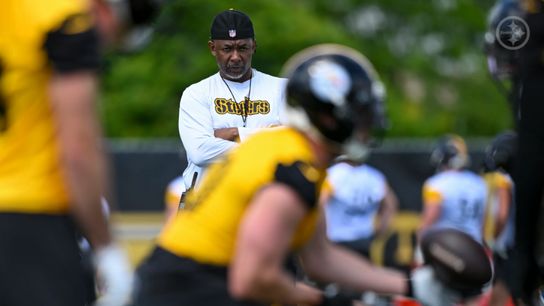
Karl Roser / Pittsburgh Steelers
Steelers new defensive coordinator Patrick Graham watches on as defense works in minicamp.
After his experience became public, other NFL coaches began anonymously sharing similar stories, creating more questions about whether some coaching interviews are genuine opportunities or simply part of the process.
"In April of 2025, Graham stood in front of his defensive players and showed them the photo he'd taken while he sat alone at the Jacksonville steakhouse table set for five," the ESPN article stated. "It was the first day of the Raiders' offseason program, and he wanted his new group of players to see him at his most vulnerable. As Raiders players listened to Graham's story, some shook their heads and muttered, 'Can't believe it went down like that.' 'Part of him was broken,' said Las Vegas defensive end Maxx Crosby, who was in the meeting that day... 'You're telling somebody they got a chance, but really, they already had their mind made up, which is super disrespectful.'"
For Graham, his story resonated with many minority coaches across the NFL who feel they have experienced similar situations throughout the hiring process. It is a difficult reality that a rule created by the legendary Dan Rooney has reached this point, where many coaches still question whether they are receiving genuine opportunities.
Steelers Coach Leading The Charge Against The Rooney Rule
There may not be a perfect solution, but one thing is clear: the NFL's efforts so far have not fully addressed the concerns of minority coaches. In Graham's case, the experience was deeply personal and left him questioning something he had spent his entire career building: his worth.
As Graham said, "For my life's work, I never wanted there to be a question about my worthiness, aside from my merit."
Now, he is sharing his story in hopes that the conversation can move forward.
Please feel free to share your Steelers takes with me on X (@anthonyghalkias) and consider following for more Steelers-related content and discussion.
#SteelerNation