


The Pittsburgh Steelers are building a defense designed to create uncertainty before the snap, and one of their fastest rookies may eventually give them another way to do it. The path will not open because of one impressive testing number. A veteran leader wants to see whether the young defensive back can play with enough aggression to turn rare speed into a real role.
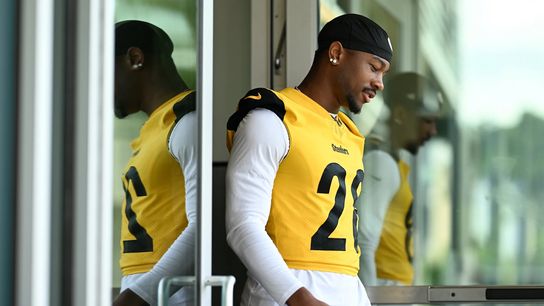
Jordan Perez / Pittsburgh Steelers
Steelers' Robert Spears-Jennings during the 2026 offseason.
Patrick Graham has enough experienced pieces to experiment with heavier defensive-back packages. A dime defense places six defensive backs on the field, usually removing a traditional linebacker to create more coverage speed on obvious passing downs. Pittsburgh needs players who can handle space without making the unit vulnerable against a draw, screen or quarterback run.
That possibility has placed Robert Spears-Jennings under an interesting spotlight. The seventh-round pick arrived from the Oklahoma Sooners with the range to cover ground quickly and the physical profile to work closer to the box. His 4.32-second 40-yard dash immediately separated him from most late-round prospects, but the Steelers still have to determine whether the speed appears at the correct time.
A fast safety can erase mistakes only after he recognizes the play. Spears-Jennings must process formations, react to motion and understand which route is entering his area before the quarterback delivers the football. The difference between running fast and playing fast will decide whether Pittsburgh can trust him with specialized defensive work.
DeShon Elliott has begun pushing the rookie toward that standard. Elliott sees the athletic ability, but he also wants Spears-Jennings to attack his opportunities rather than waiting for the play to reach him. During his latest camp comments, the veteran safety explained how the rookie answered that challenge.
“The kid has excellent speed,” Elliott said. “I challenged him today to be more aggressive, and he stood up to that. I’m excited to see him play in the preseason, see what he can do because you never know… He might be our dime one day. I’m proud of the kid. He’s going to keep growing.”
Elliott did not hand Spears-Jennings an immediate place in Graham’s defense. He described a developmental possibility that must be earned through physical football. The rookie has to close downhill, tackle in space and show that his speed comes with the willingness to finish a play.
Pittsburgh identified those traits before selecting him 224th overall. Spears-Jennings appeared in 47 college games and finished his Oklahoma career with 178 tackles, 8 tackles for loss, 2.5 sacks and 2 interceptions. His final season included 59 tackles, an interception and a forced fumble across 13 games.
The production shows he was more than a workout result, but NFL responsibilities will test him differently. Dime work can place a defensive back near the middle of the formation, where traffic forms quickly and one late read can open an easy completion. Spears-Jennings may have to match a tight end, close on a running back or become part of a pressure package without revealing the call.
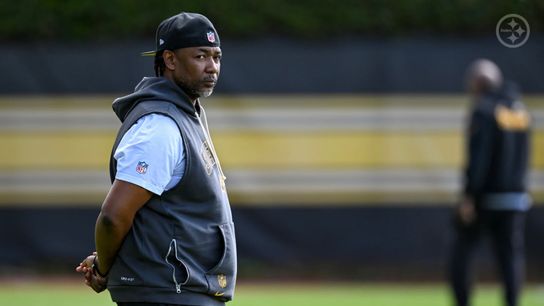
Karl Roser / Pittsburgh Steelers
Steelers' Patrick Graham coaches during voluntary veteran minicamp in 2026.
His best immediate route to the roster still runs through special teams. Seventh-round defensive backs rarely receive a game-day helmet because of one future package. They earn it by covering kicks, tackling cleanly and providing dependable depth. Spears-Jennings’ speed gives him a clear advantage in that competition if his angles and technique remain disciplined.
The need for patience with the rookie has not disappeared because Elliott praised one practice. Spears-Jennings entered the league with questions about coverage processing and consistency. Training camp gives him a chance to show that the athletic traits are becoming functional football.
The preseason will reveal whether his aggression remains controlled. Flying downhill can create a highlight, but an overaggressive safety can also run past the ball carrier or surrender leverage. Elliott wants Spears-Jennings to play decisively, not recklessly. The distinction will become obvious when the rookie faces opponents operating at full speed.
Steelers Could Turn Raw Speed Into A Dime Answer
Pittsburgh does not need Spears-Jennings to become its full-time dime defender during his rookie season. Graham already has veterans who can handle specialized assignments, and the safety room contains enough experience to avoid forcing a seventh-round pick into action before he is ready.
The value comes from developing an option the defense may need later. Injuries can change the secondary quickly, while different opponents demand different personnel. A young safety with legitimate range, box ability and special teams value gives Graham more flexibility without requiring a roster move.
Elliott’s involvement should help accelerate the process. He can show Spears-Jennings how to recognize route combinations, when to trigger downhill and how to communicate with the defenders around him. The rookie still has to prove he can apply those lessons when a preseason offense changes the picture after the snap.
A strong August would not guarantee a major defensive role. It could secure his roster spot, establish him as useful depth and give Pittsburgh a reason to begin installing a limited dime package around his strengths. For a player selected near the end of the draft, that would represent meaningful progress.
The Steelers knew they were drafting speed. Elliott is now demanding the aggression and awareness required to make it matter. If Spears-Jennings combines all three, Pittsburgh’s 4.32-second lottery ticket could eventually become much more than a special teams project.
#SteelerNation