


The Pittsburgh Steelers have spent decades treating money as something that can change a locker room long before it changes a scoreboard. A receiver chasing one more catch, a pass rusher hunting another sack or a veteran nearing a bonus can all face the same temptation: the personal number suddenly looks almost as important as the play call. One of the franchise's most influential figures believed that temptation was worth addressing before a season ever began, and a former head coach has now explained how Pittsburgh tried to do it.
Ron Chenoy / Imagn Images
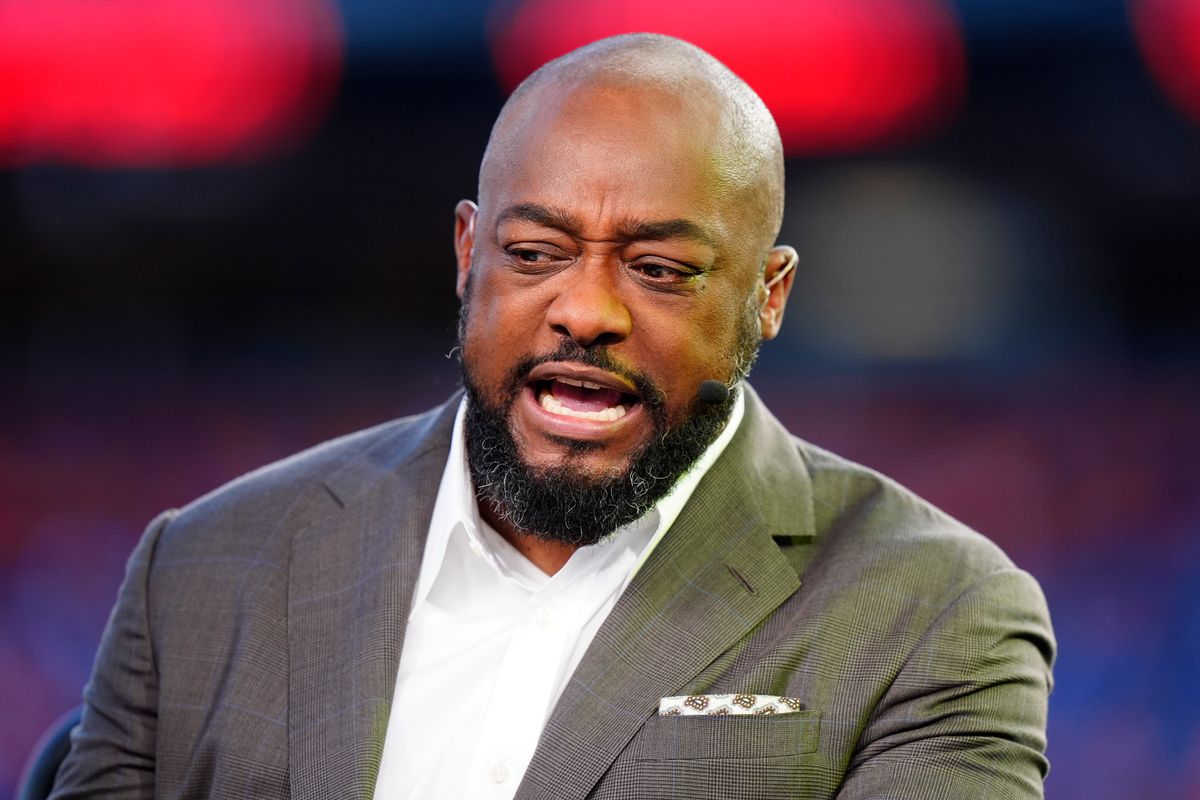
NBC broadcast analyst Mike Tomlin before a game between the Los Angeles Rams and the Denver Broncos at Empower Field at Mile High.
Former Steelers head coach Mike Tomlin says the late Dan Rooney helped shape a contract philosophy designed to reward winning without encouraging players to chase individual milestones at the team's expense. During a conversation on Coach2Coach, Tomlin explained why Pittsburgh historically approached incentive clauses differently from many teams.
“Very rarely are contracts written by the Pittsburgh Steelers performance- or incentive-oriented… They’re win-oriented. People have an opportunity to make more money if they perform and the Steelers win. It was never just based on performance… We had very few incentive-laden contracts, and I really think it minimized that component of it,” Tomlin said.
The distinction might sound like accounting language, but it gets much more interesting with two minutes left in a close game. Imagine a receiver needing one catch to unlock a payment while the offense needs to run the ball and drain the clock. Nobody has to be dishonest for the incentive to create tension. The player wants to reach a legitimate contractual milestone; the coach needs everyone thinking about the scoreboard first.
Rooney's idea, as Tomlin describes it, was to reduce the chances of those two objectives pulling in opposite directions. It was not a declaration that statistics are meaningless, or that productive players should earn less money. The former coach specifically said players could make more when their performance contributed to Steelers victories. Winning was the condition that tied the individual reward back to the group's purpose.
That approach can also change the conversations happening between plays. A pass rusher knows his sack total affects his reputation and future earning potential regardless of whether a particular deal includes a bonus. Add a financial trigger at a specific number, though, and the temptation to abandon contain for an extra chance at the quarterback becomes harder to ignore. A coach cannot afford that gamble when the quarterback needs only one escape lane to win the game.
Of course, a contract clause does not turn a professional athlete into a selfish teammate. Plenty of players earn statistical incentives without changing how they operate, and modern NFL deals can include bonuses tied to individual achievements, playing time or team success. Tomlin was describing a longstanding organizational preference, not an NFL-wide ban or proof that every Steelers contract followed exactly the same formula.
His perspective carries weight because he spent 19 seasons running Pittsburgh's sideline after Rooney hired him in 2007. Tomlin stepped down after the 2025 season, but he worked under the family through different rosters and salary-cap decisions. When he credits Rooney, he is speaking about an operating philosophy he witnessed firsthand, not guessing from the outside about what made the organization tick.
Karl Roster / Pittsburgh Steelers
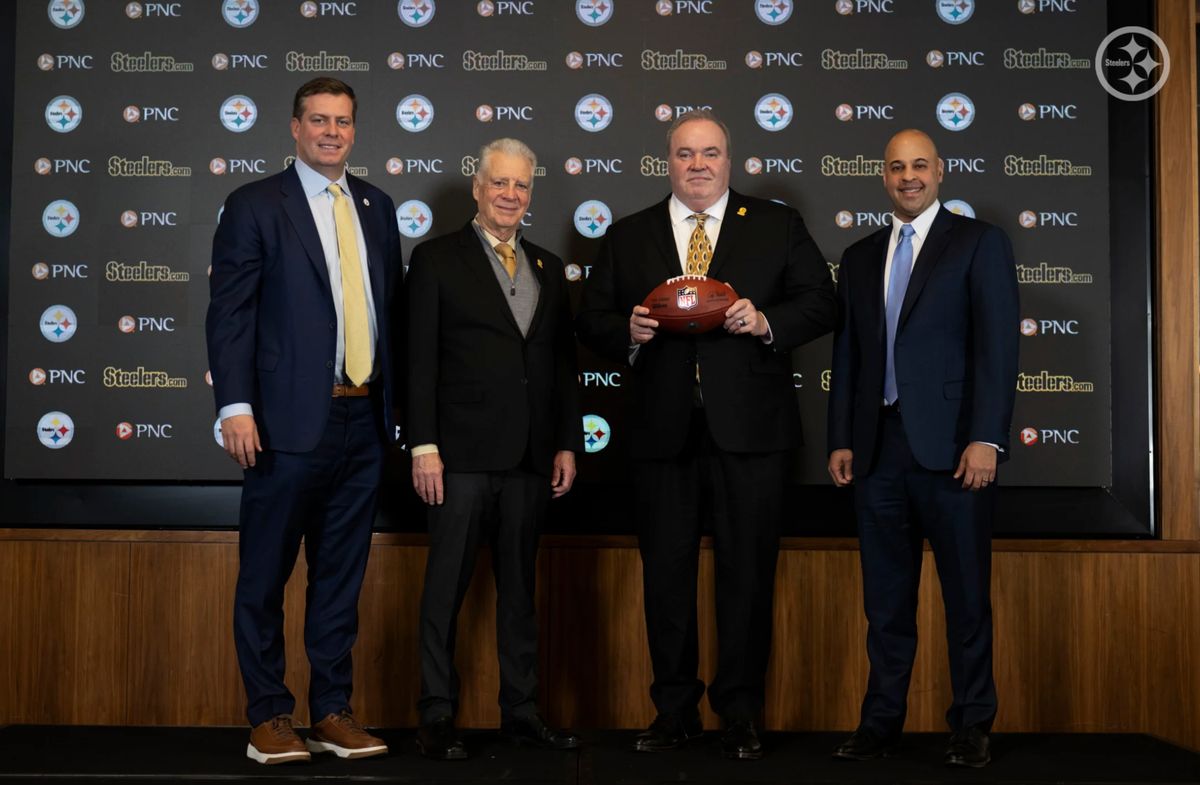
Dan Rooney III, Art Rooney II, Head Coach Mike McCarthy, and Omar Khan after McCarthy signed his contract to become the next head coach of the Pittsburgh Steelers.
It fits with another Steelers tradition that has attracted attention recently: the reluctance to negotiate extensions once the regular season begins. Pittsburgh has long viewed that deadline as a way to keep contract business from becoming a weekly distraction, an approach that drew fresh scrutiny during the 2026 offseason. The two practices are not the same rule, but they share an underlying belief that a team should establish its financial boundaries before Sunday becomes everybody's job.
The limitations of that philosophy have also been on display. Pittsburgh's contract standoff with Joey Porter Jr. continued into the season and ended in a trade to the Dallas Cowboys. That dispute concerned negotiations over a new deal, not statistical incentives, and it would be wrong to suggest Tomlin's comments explain why Porter left. It does show that a policy designed to reduce distractions can create a different sort of controversy when the parties cannot find common ground.
Current team president Art Rooney II and General Manager Omar Khan still have to operate in a league where guaranteed money, cap accounting and a player's market value shape negotiations. Head Coach Mike McCarthy has inherited the on-field responsibility for making them work. Tomlin's recollection is valuable context, but it does not establish how every contract signed under the current regime is structured.
Steelers Should Preserve Rooney's Purpose Without Worshiping Every Policy
I think Rooney had the right instinct. The best contract structure should make the easiest decision for a player the one that also helps his team win. Nobody wants a defense choosing between sound rush lanes and a bonus-triggering sack, or a receiver worried about his targets when a three-yard run ends the game. Coaches already spend enough energy getting 11 people to agree on one plan.
But there is a difference between protecting that principle and treating every old business practice as untouchable. Players deserve fair compensation for outstanding work, and an incentive can recognize contributions that help the team. The question should be whether the terms reward the right behavior, not whether the contract contains a bonus at all.
Tomlin's comments offer a revealing look at the thought behind Pittsburgh's old approach. Rooney did not want a paycheck to become a competing playbook. Decades later, with salaries larger and negotiations more public than ever, the challenge is still making sure the football decision wins when the money decision starts whispering in somebody's ear.
#SteelerNation