


The Pittsburgh Steelers have spent the last several years trying to figure out what the next version of their offense is supposed to look like. The team has changed quarterbacks, rebuilt the offensive line, added young weapons and searched for a new identity, but one thing has been difficult to replace since the end of the Ben Roethlisberger era: true veteran leadership.
Peter Diana / Post-Gazette
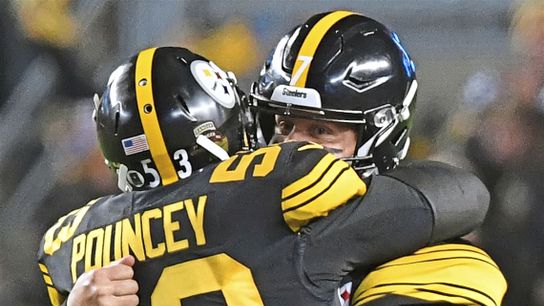
Pittsburgh Steelers' former center Maurkice Pouncey never got a Super Bowl ring despite the talent on the teams he played on.
Former Steelers tight end Eric Ebron recently joined the Not Just Football podcast and offered a strong reminder of how important Maurkice Pouncey was inside the building. Ebron only played one season with Pouncey in Pittsburgh, but that was enough time for him to understand why the former center meant so much to the franchise.
"Besides [Calvin Johnson], Pouncey is probably one of the best leaders I’ve seen, and it has nothing to do with talking. It’s like aura, presence, what I do when I’m here," Ebron explained.
That is not a small statement from Ebron. He spent the early part of his career with the Detroit Lions, where he was around Calvin Johnson, one of the most respected players of his generation. For Ebron to put Pouncey in that same leadership conversation says a lot about what he saw during his brief time with the Steelers.
Pouncey was not the type of leader who needed to make everything about himself. He did not have to talk constantly to get his point across. His presence did a lot of the work for him. Players knew he had the trust of Roethlisberger, and they knew he had earned respect from the locker room after years of setting the tone up front.
Ebron also explained that Pouncey helped him understand what it actually meant to become part of the Steelers’ offense.
"The talks with Pouncey on how to become a Steeler, what I need to do, how do I become Ben’s favorite target… all of those leadership qualities on offense, we were losing that," said Ebron.
That is the kind of detail that often gets overlooked from the outside. Fans see the starting lineup, the box score and the results on Sunday. What they do not always see is the way certain veterans help new players learn how to operate inside a specific organization.
Caitlyn Epes / Pittsburgh Steelers
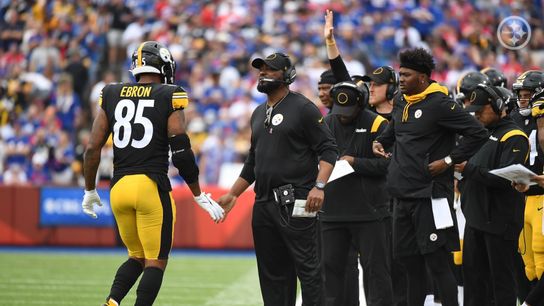
Former Steelers tight end Eric Ebron walks off the field during a road game against the Buffalo Bills in 2021.
Pouncey was clearly one of those players. He could help a new teammate understand Roethlisberger, the offense and the standard that came with playing in Pittsburgh. That matters, especially for a player like Ebron, who arrived as an established veteran but still had to learn a completely new environment.
Roethlisberger has made a similar point before when discussing the lack of tradition that was passed down after some of the longtime veterans left. His comments then lined up with what Ebron is saying now. Once Pouncey was gone, the Steelers did not just lose a talented center. They lost one of the main people who knew how to hold the offense together.
The 2020 season now feels like the closing chapter of that version of Steelers football. Pittsburgh started 11-0, then fell apart late and suffered a brutal playoff loss to the Cleveland Browns. It was also the final season that Roethlisberger and Pouncey played together.
Pouncey started 13 games that year, while Ebron was a regular part of the passing game. The offense still had recognizable names like JuJu Smith-Schuster, Diontae Johnson, Chase Claypool, James Washington, Alejandro Villanueva and David DeCastro. There was plenty of experience on paper, but the foundation was already starting to change.
Matt Freed / Pittsburgh Post-Gazette
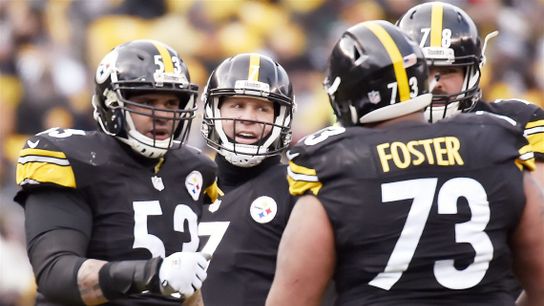
Former Steelers quarterback Pittsburgh Steelers Ben Roethlisberger with Maurkice Pouncey, Ramon Foster, and Alejandro Villanueva.
That is why Ebron’s comments are important. The Steelers’ offensive issues after that era were never about just one thing. They were about the quarterback transition, offensive line changes, inconsistent play-calling, injuries and personnel misses. They were also about the loss of voices who knew exactly what Pittsburgh expected.
Steelers Still Have To Find That Same Presence
Centers are natural leaders because they touch the football every snap and communicate so much before the play. Pouncey had those responsibilities, but his value went well beyond the job description. He knew Roethlisberger. He knew the locker room. He knew how to help others understand the standard.
That kind of leadership cannot just be assigned to the next veteran in the room. It has to be earned through production, trust and consistency. Pouncey had all of that with the Steelers.
Pittsburgh is now trying to build a new version of that with its younger core. That process takes time, and it requires the right players to become steady voices when things get difficult.
Ebron saw Pouncey’s impact up close, and his message is hard to ignore. The Steelers lost one of their most important offensive leaders, and replacing that presence was nearly impossible.