


The Pittsburgh Steelers scored 13 offensive points during their 20-13 victory over the Atlanta Falcons, while the defense supplied the decisive touchdown. Aaron Rodgers threw for 221 yards and one touchdown, and Pittsburgh converted only three of 13 third downs. Those numbers suggest a struggling offense, but Rodgers believes they conceal how close the unit came to producing more.
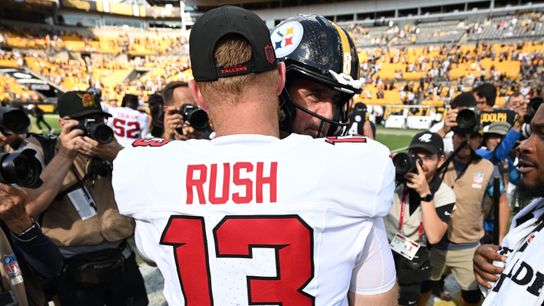
Barry Reeger / Imagn Images
Steelers' Aaron Rodgers embraces Cooper Rush after a win over the Falcons to open the 2026 season.
Several plays separated an uneven statistical performance from a potentially explosive one. Pittsburgh drew one pass interference penalty on a deep throw and believed others went uncalled. The Steelers also had catchable opportunities near the end zone that their receivers could not finish.
Rodgers explained that box scores can be deceptive when a handful of high-impact plays decide how an offense is judged. One completed deep ball, one additional penalty call or one difficult catch could have changed Pittsburgh's point total and the entire conversation surrounding the offense. Rodgers detailed those missed chances while speaking to reporters after the season opener.
"I mean, the whole thing can be deceiving," Rodgers said. "We had the PI on third down that could have been the touchdown. We had a PI on DK that wasn't called. We had an opportunity to [Roman Wilson] down the field that was not called. He didn't come up with it. Had DK in the end zone, for sure PI, and he still almost made a ridiculous catch, and the one that DK obviously usually catches. One or two of those goes, and it's a whole different conversation. That's the way the league goes. You can't get caught up in too many specific numbers without looking at what happened in the game."
Rodgers is describing box-score distortion. The numbers record a completion or incompletion, but not whether a receiver was interfered with, landed awkwardly or let a catchable ball escape. They cannot show how one near touchdown might have changed Atlanta's defense for the remainder of the game.
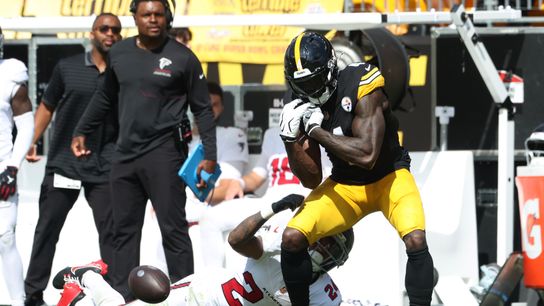
Charles LeClaire / Imagn Images
Steelers' DK Metcalf drops a pass during a win over the Atlanta Falcons to open the 2026 season at home.
The most revealing portion involved DK Metcalf nearly making what Rodgers called a "ridiculous catch" through contact. Rodgers believed interference occurred, yet still focused on how close Metcalf came to finishing. Great pass-catchers are paid to occasionally defeat the coverage, contact and imperfect circumstances together.
Pittsburgh's receivers did not consistently provide that margin against Atlanta. Metcalf caught four passes for 40 yards on 10 targets, while Roman Wilson secured three of six targets for 26 yards. Both players created opportunities, but neither finished the afternoon with the kind of defining play that would have transformed the offensive evaluation.
That does not mean every incompletion belonged to the receivers or that Rodgers played perfectly. He missed throws, the protection had uneven moments and the unit failed to sustain enough drives. His point is that Pittsburgh generated more legitimate chances than the totals suggest.
Michael Pittman Jr. offered the clearest example of what Pittsburgh needs more often. Pittman caught all three of his targets for 58 yards, including a crucial 28-yard reception along the sideline. He did not receive overwhelming volume, but he turned every opportunity into production and gave Rodgers a dependable answer when the ball came his way.
Steelers Must Turn Rodgers' Hidden Production Into Real Points
The encouraging part is that Pittsburgh does not need a complete offensive reconstruction. Rodgers saw the matchups, delivered several competitive throws and gave his receivers opportunities to make game-changing plays. The Steelers need cleaner execution at the catch point so those promising moments stop disappearing from the final numbers.
There is also a difference between explaining missed production and excusing it. Pass interference will go uncalled, defenders will arrive early and receivers will be forced to land in uncomfortable positions. Pittsburgh's pass catchers must begin finishing through that adversity instead of needing every play to unfold perfectly.
Rodgers is correct that one or two conversions would have produced a completely different discussion. However, those plays will continue deciding whether the Steelers merely survive games or build an offense opponents genuinely fear. The opportunities were present against Atlanta, and Week 2 must show that Pittsburgh can finally cash them in.
Did the Steelers' offense perform better than its Week 1 numbers suggest, or are missed opportunities simply part of the final evaluation? Share your Steelers takes with @anthonyghalkias on X, and follow for more weekly offensive breakdowns.
#SteelerNation