




The Pittsburgh Steelers head across the state this weekend looking to bounce back from a 38-18 loss to the Cincinnati Bengals, and the offense is under the microscope. The run game has carried this team for much of the season, but the passing attack has struggled to create big plays, especially on the road. A new set of numbers points to one habit that could be part of the problem before the ball is even snapped. It is a small detail, but it shows up every week, and it may help explain why the offense looks so different away from home.

Jordan Schofield / SteelerNation (X: @JSKO_PHOTO)
Steelers quarterback Aaron Rodgers (8) during 2025 training camp in Latrobe, PA.
Steelers Nation Radio host Matt Williamson laid out the numbers in his weekly Matt's Stats column on Steelers.com ahead of Sunday's game against the Philadelphia Eagles. One of the first things that jumped out was how long the Steelers take to get the ball snapped.
"On average, the Steelers leave just 6.92 seconds on the play clock. Only the Buccaneers (6.91) leave less time. The NFL average is 8.3," Williamson wrote.
That means the Steelers are snapping the ball later than 30 other teams. Some of that is likely by design. Aaron Rodgers likes to get to the line, read the defense and change the play when he sees something he likes, and a 42-year-old quarterback with his experience has earned that freedom.
The downside is that a late snap gives defenses more time to settle in and disguise what they are doing. It also leaves the offense with little room for error when a call has to change at the line. And it lines up with other numbers that show the passing game has struggled to push the ball down the field.
Rodgers has thrown behind the line of scrimmage on 26.5% of his attempts, the second-highest rate among qualified quarterbacks, according to Williamson. Those short throws have produced 726 yards after the catch for his receivers, the most in the league, but they have not led to many big plays. Only 20.1% of the Steelers' pass plays gain 10 or more yards, which ranks last in the NFL. Pittsburgh's average time to throw of 2.71 seconds is also higher than only four offenses.
The problem showed up in Cincinnati. Rodgers threw for 143 yards on 29 attempts, and the Steelers finished with 120 net passing yards, an average of 3.4 yards per attempt. The team had just two catches by a wide receiver through three quarters.
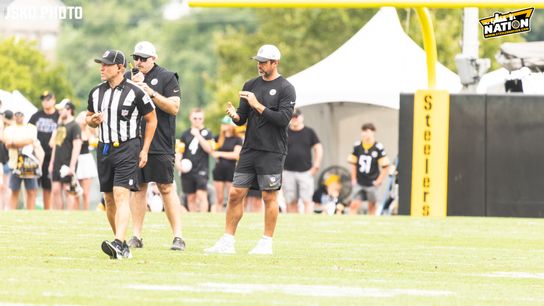
Jordan Schofield / SteelerNation (X: @JSKO_PHOTO)
Steelers quarterback Aaron Rodgers during 2025 training camp in Latrobe, PA.
The biggest concern might be what happens away from Acrisure Stadium. Williamson pointed to a split that stands out ahead of a trip to Philadelphia.
"Pittsburgh averages 1.55 points per drive on the road (29th) compared to 2.36 at home (ninth)," Williamson wrote.
That is a big gap. At home, the Steelers rank in the top 10 in scoring per drive. On the road, only three teams are worse. Crowd noise can make it harder to communicate at the line, and an offense that already uses most of the play clock has even less margin when the noise picks up.
There are reasons for hope. Jaylen Warren has 719 rushing yards, and 301 of them have come on runs of 15 or more yards, according to Williamson. The Steelers are also fourth in the league in explosive run rate. Getting the ground game going early would make it easier for Rodgers to play at a faster pace and take a few more shots down the field.
Steelers Get A Chance To Fix Their Road Struggles In Philadelphia
The matchup sets up well on paper. The Eagles are 2-7 and have lost seven straight games, the longest active losing streak in the NFL. Philadelphia has forced just five turnovers this season, a league low, and its defense has allowed 338 more rushing yards than its offense has produced.
The Steelers have also answered blowout losses well. They are 16-3 since 2000 after losing by 20 or more points, including six straight wins in that spot. If the offense can snap the ball with more time to spare and find a few more big plays, SteelerNation could see a much different unit on Sunday.
This story was produced with the help of AI and reviewed by SteelerNation editors.
#SteelerNation
SteelerNation in your inbox
The biggest Steelers stories, free, straight to your email.